1961–1966
Project Gemini
Developed the techniques needed for lunar missions, including rendezvous, docking, and long-duration flights.
10
Missions
3
Spacecraft
23
Images
10
Completed
Historical archive
Missions, spacecraft, imagery, and milestones from the Project Gemini program.
Program Overview
The program
Developed the techniques needed for lunar missions, including rendezvous, docking, and long-duration flights.
Program Timeline
Program Flights
Missions
Explore every Project Gemini mission currently preserved in the OrbitingTruths archive.
Gemini 3
Launch
March 23, 1965
Status
Successful
Duration
4 hours, 52 minutes, 31 seconds
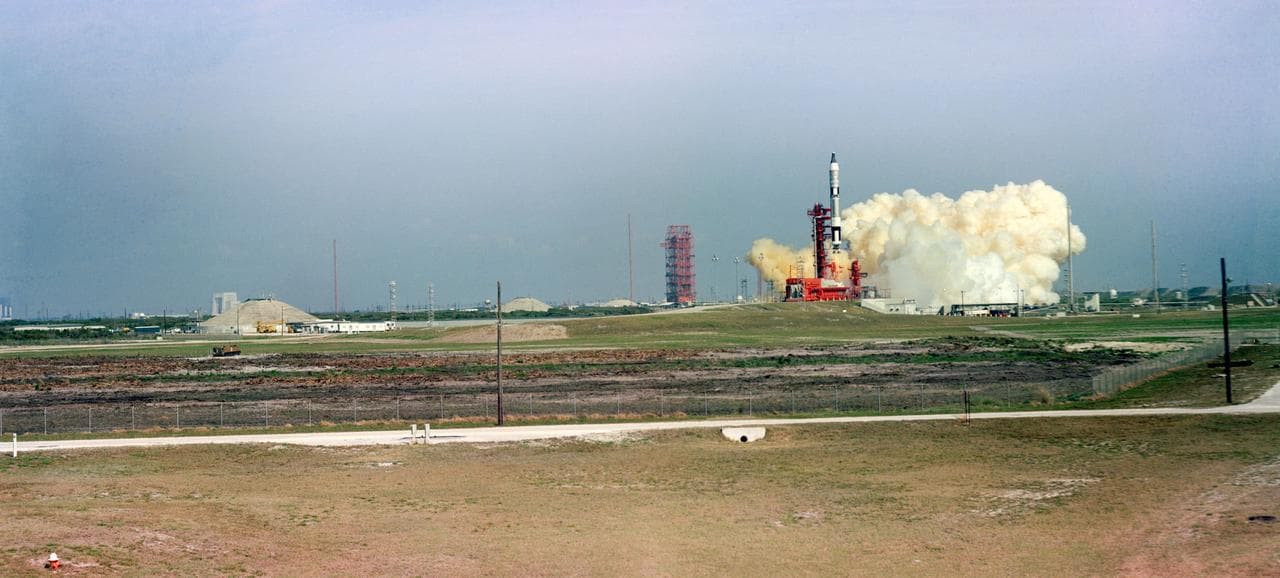
Gemini 3 was the first crewed flight of Project Gemini, carrying Gus Grissom and John Young on three orbits and demonstrating, for the first time, that a crewed spacecraft could actively change its own orbit.
View Mission →
Gemini 4
Launch
June 3, 1965
Status
Successful
Duration
4 days, 1 hour, 56 minutes
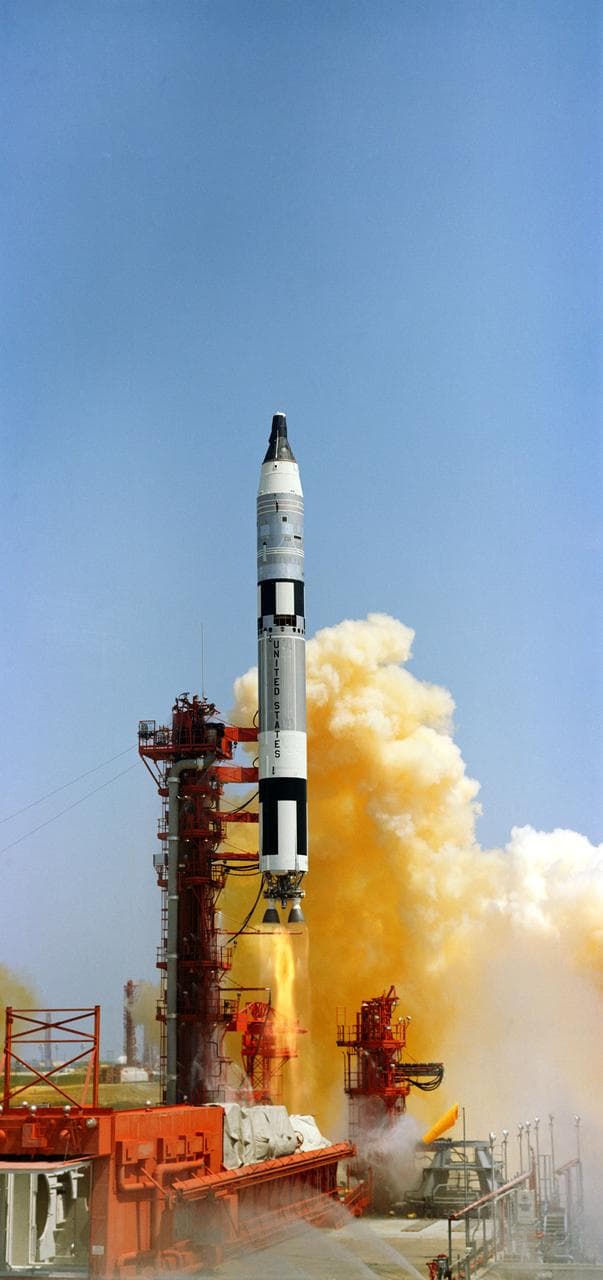
Gemini 4 sent James McDivitt and Ed White on a four-day flight remembered above all for White's spacewalk, the first time an American ventured outside a spacecraft in orbit.
View Mission →
Gemini 5
Launch
August 21, 1965
Status
Successful
Duration
7 days, 22 hours, 55 minutes
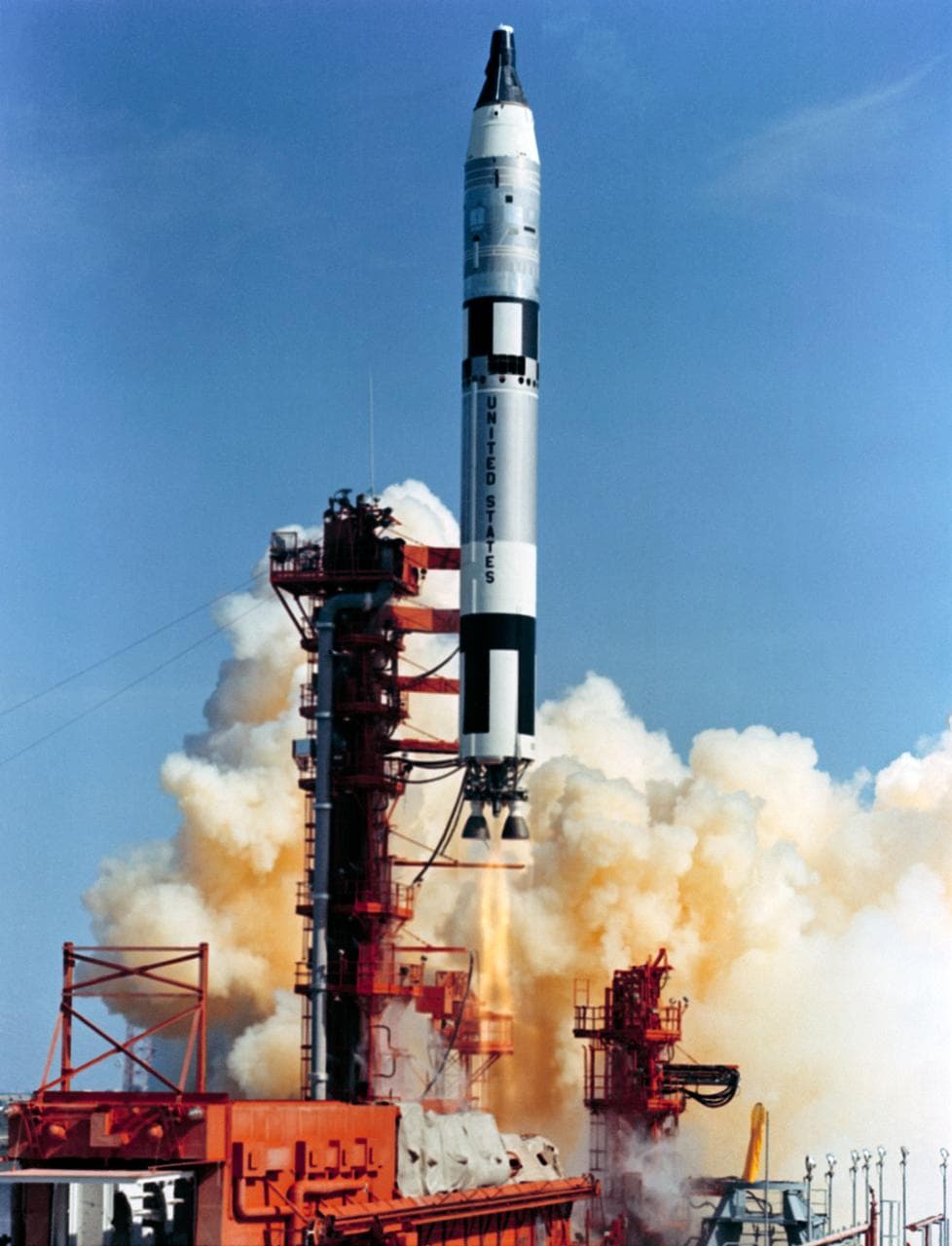
Gemini 5 set a new spaceflight endurance record of nearly eight days, proving astronauts could survive a mission as long as a round trip to the Moon, despite a fuel cell problem that threatened to cut the flight short.
View Mission →
Gemini 7
Launch
December 4, 1965
Status
Successful
Duration
13 days, 18 hours, 35 minutes
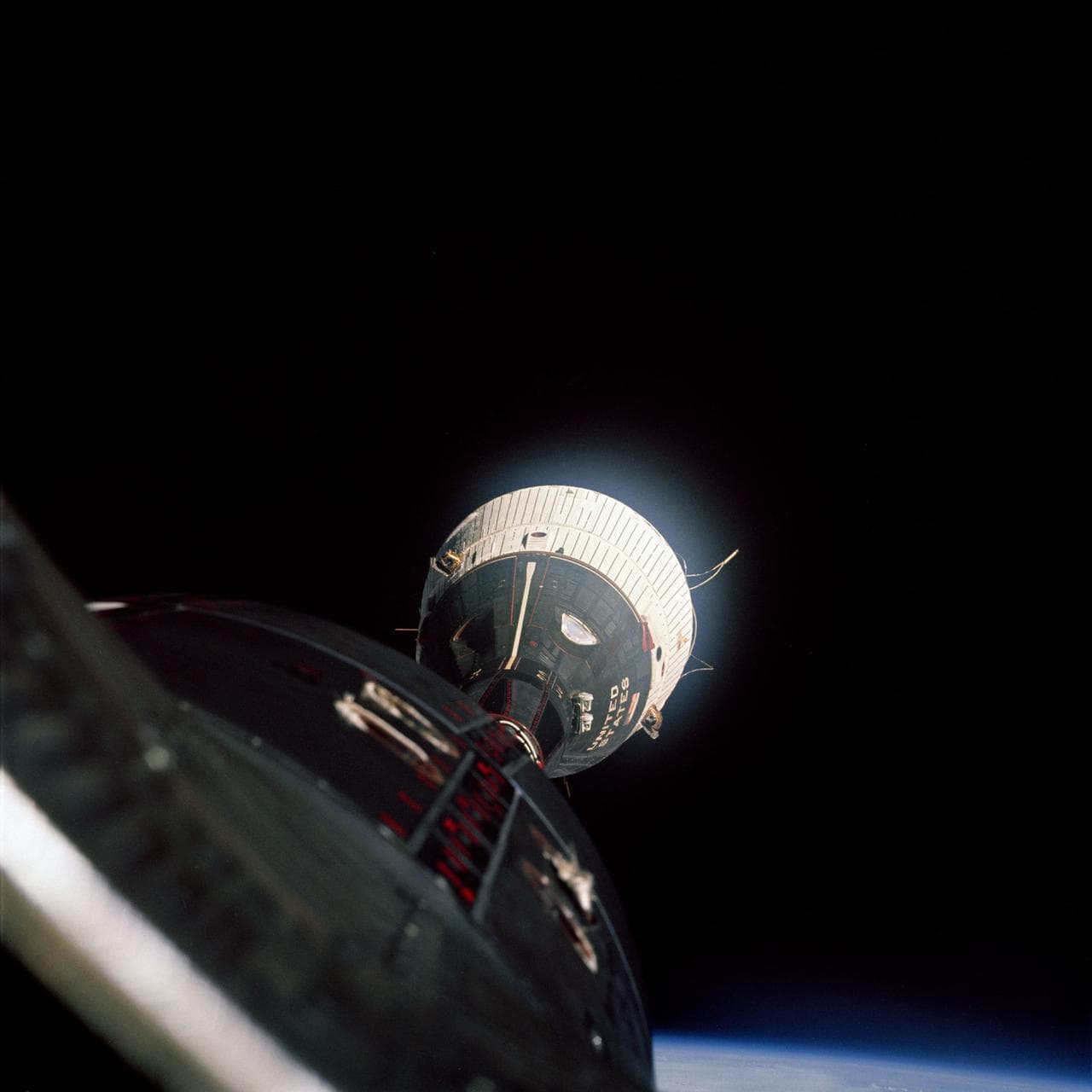
Gemini 7 sent Frank Borman and Jim Lovell on a grueling fourteen-day flight, the longest crewed spaceflight of its era, while also serving as the target for history's first space rendezvous with Gemini 6A.
View Mission →
Gemini 6A
Launch
December 15, 1965
Status
Successful
Duration
1 day, 1 hour, 51 minutes
Gemini 6A achieved history's first rendezvous between two crewed spacecraft, closing to within a foot of Gemini 7 in orbit after its original Agena docking target was lost in a launch failure.
View Mission →
Gemini 8
Launch
March 16, 1966
Status
Successful
Duration
10 hours, 41 minutes
Gemini 8 achieved the first docking between two spacecraft in orbit, but a stuck thruster sent the combined vehicles into a violent spin minutes later, forcing Neil Armstrong to abort the mission in one of the most dangerous emergencies of the space program.
View Mission →
Gemini 9A
Launch
June 3, 1966
Status
Successful
Duration
3 days, 0 hours, 20 minutes
Gemini 9A attempted three different rendezvous techniques and a docking with a backup target vehicle whose stuck shroud made docking impossible, while Gene Cernan endured one of the most physically punishing spacewalks of the program.
View Mission →
Gemini 10
Launch
July 18, 1966
Status
Successful
Duration
2 days, 22 hours, 46 minutes
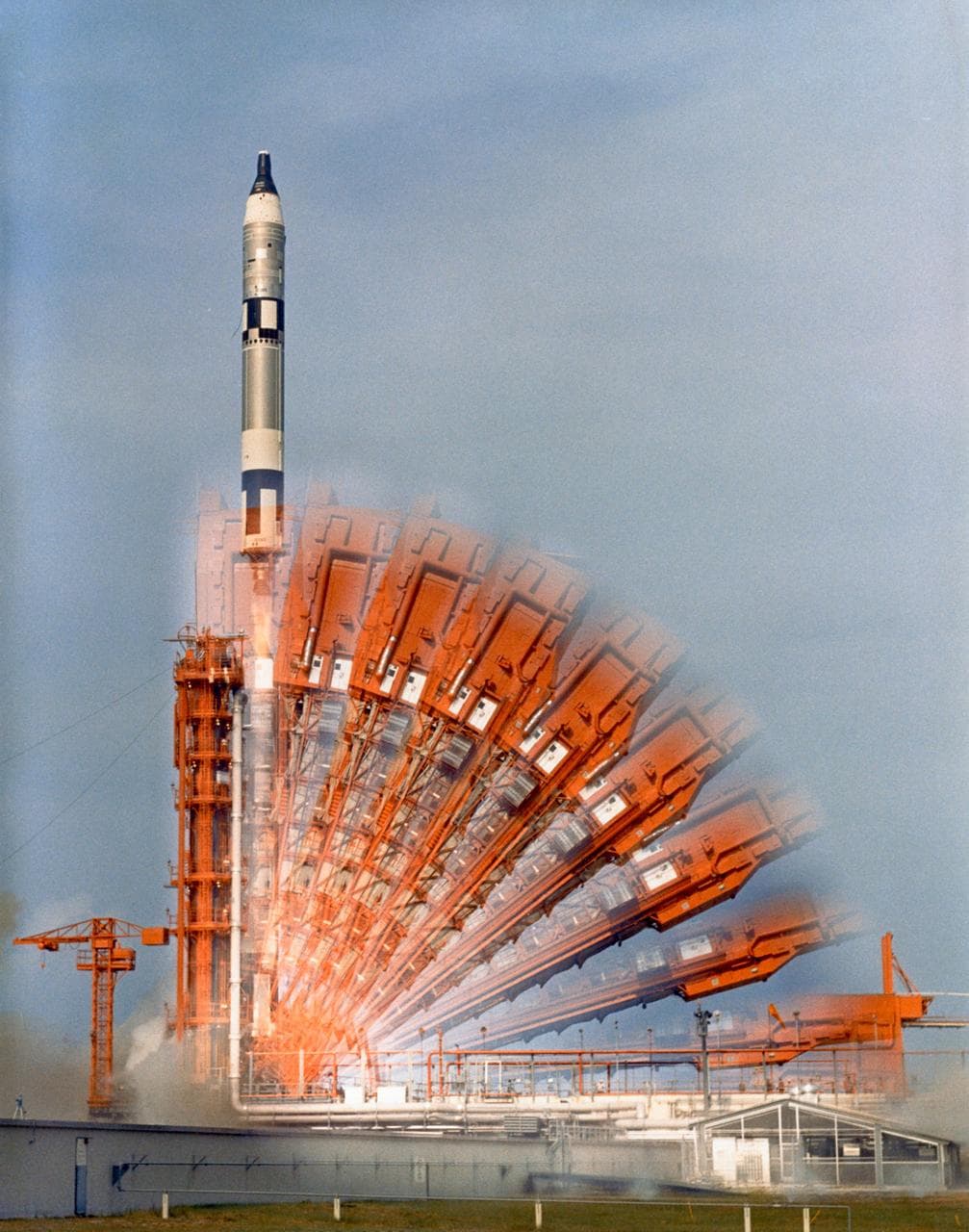
Gemini 10 docked with its own Agena target vehicle and used its engine to reach a new altitude record, then rendezvoused with a second, dormant Agena left over from Gemini 8 while Michael Collins performed two spacewalks.
View Mission →
Gemini 11
Launch
September 12, 1966
Status
Successful
Duration
2 days, 23 hours, 17 minutes
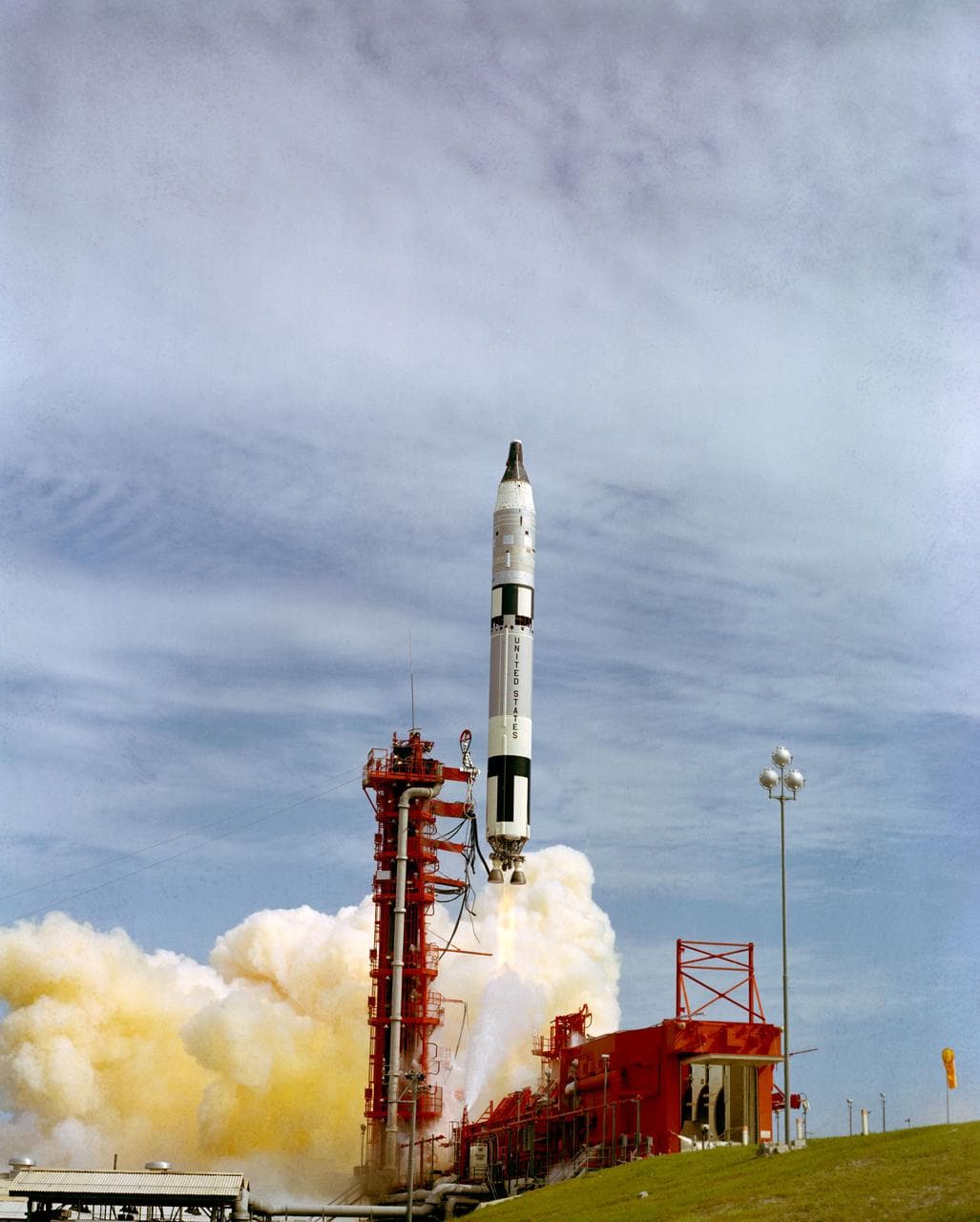
Gemini 11 docked with its Agena target vehicle in the first orbit, used its engine to set a new altitude record of roughly 850 miles, and conducted the first artificial-gravity experiment by spinning the two spacecraft on a tether.
View Mission →
Gemini 12
Launch
November 11, 1966
Status
Successful
Duration
3 days, 22 hours, 34 minutes
Gemini 12 closed out Project Gemini with a hand-flown rendezvous after a radar failure and three spacewalks by Buzz Aldrin that finally solved the exhausting EVA workload problem that had plagued earlier missions.
View Mission →
Program Hardware
Spacecraft
The launch vehicles, capsules, modules, landers, and other systems associated with Project Gemini.
 Launch Vehicle
Titan II GLV
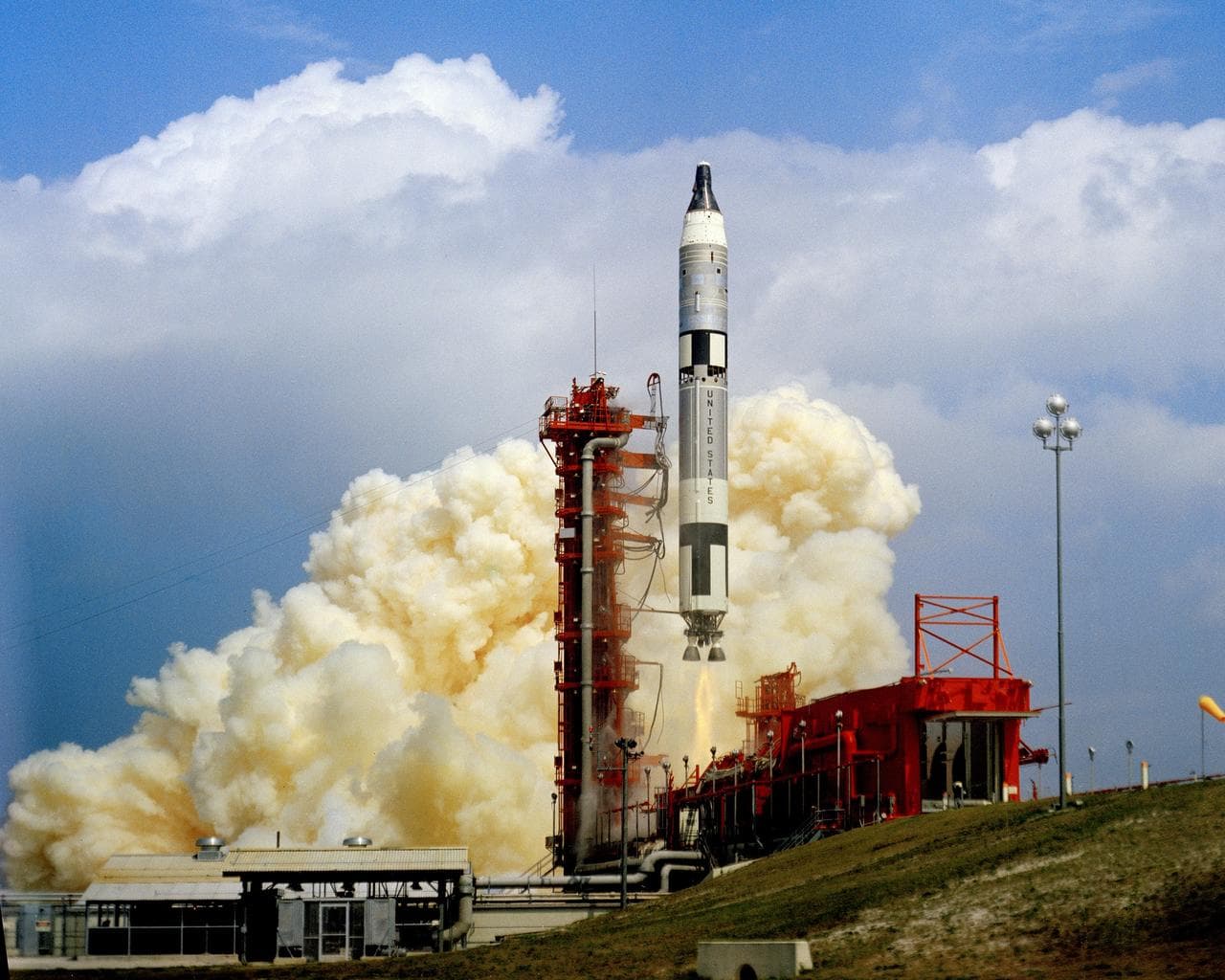
A modified Titan II intercontinental ballistic missile that launched every Gemini mission, chosen for its reliability and its hypergolic propellants, which allowed a rapid-response launch escape system.
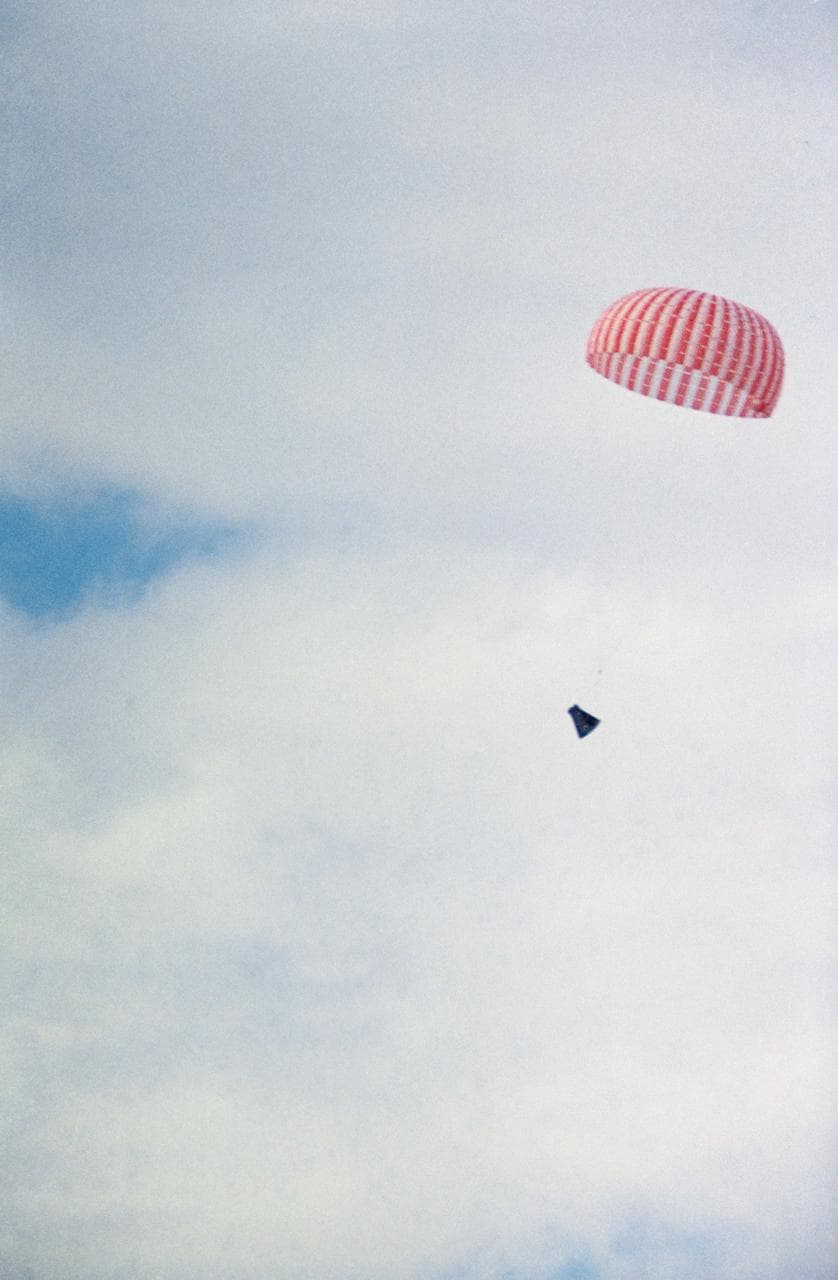 Crew Capsule
Gemini Spacecraft
A two-seat spacecraft built by McDonnell Aircraft that carried NASA through the rendezvous, docking, and long-duration flights needed to prepare for Apollo.
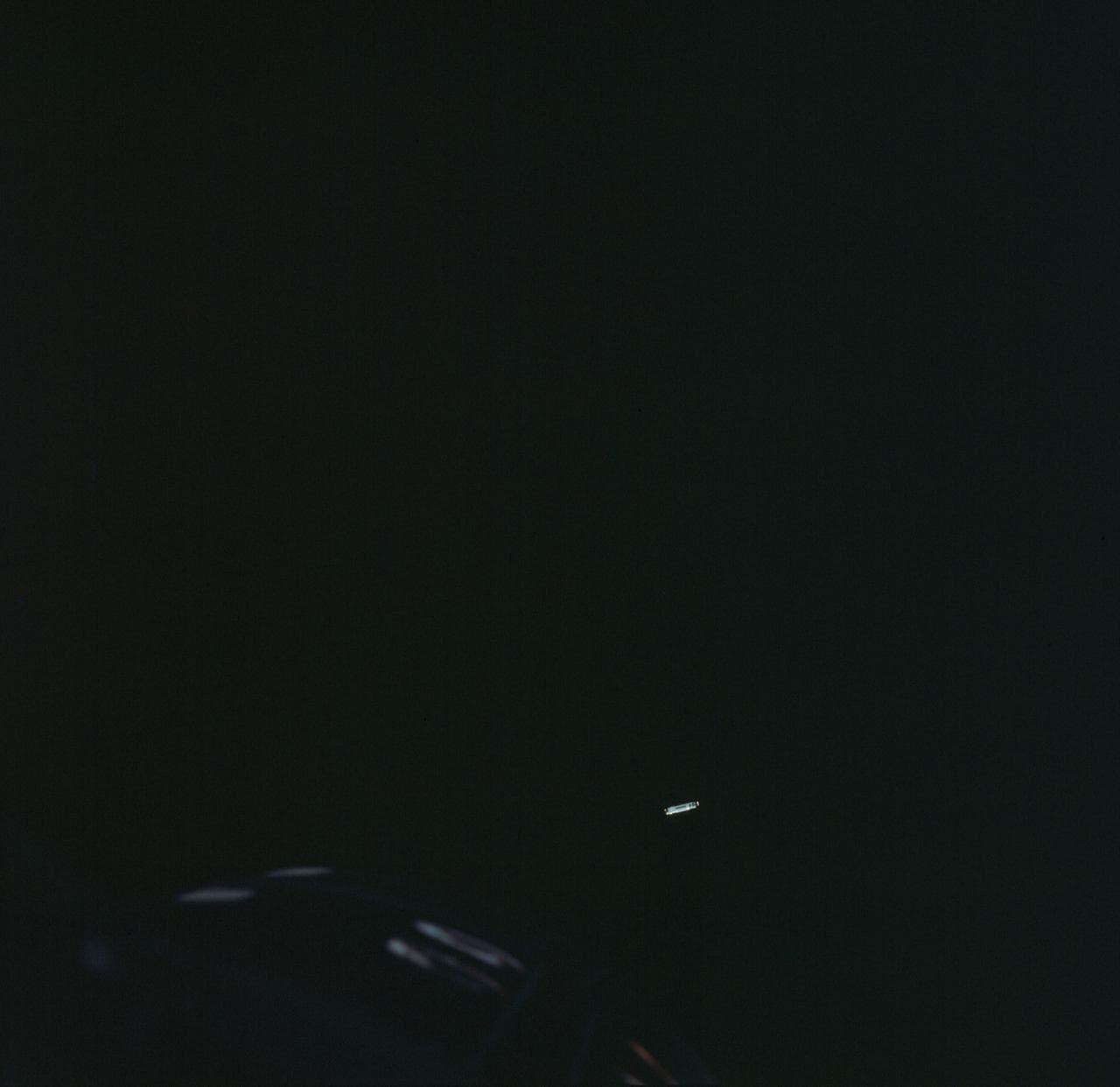 Docking Target
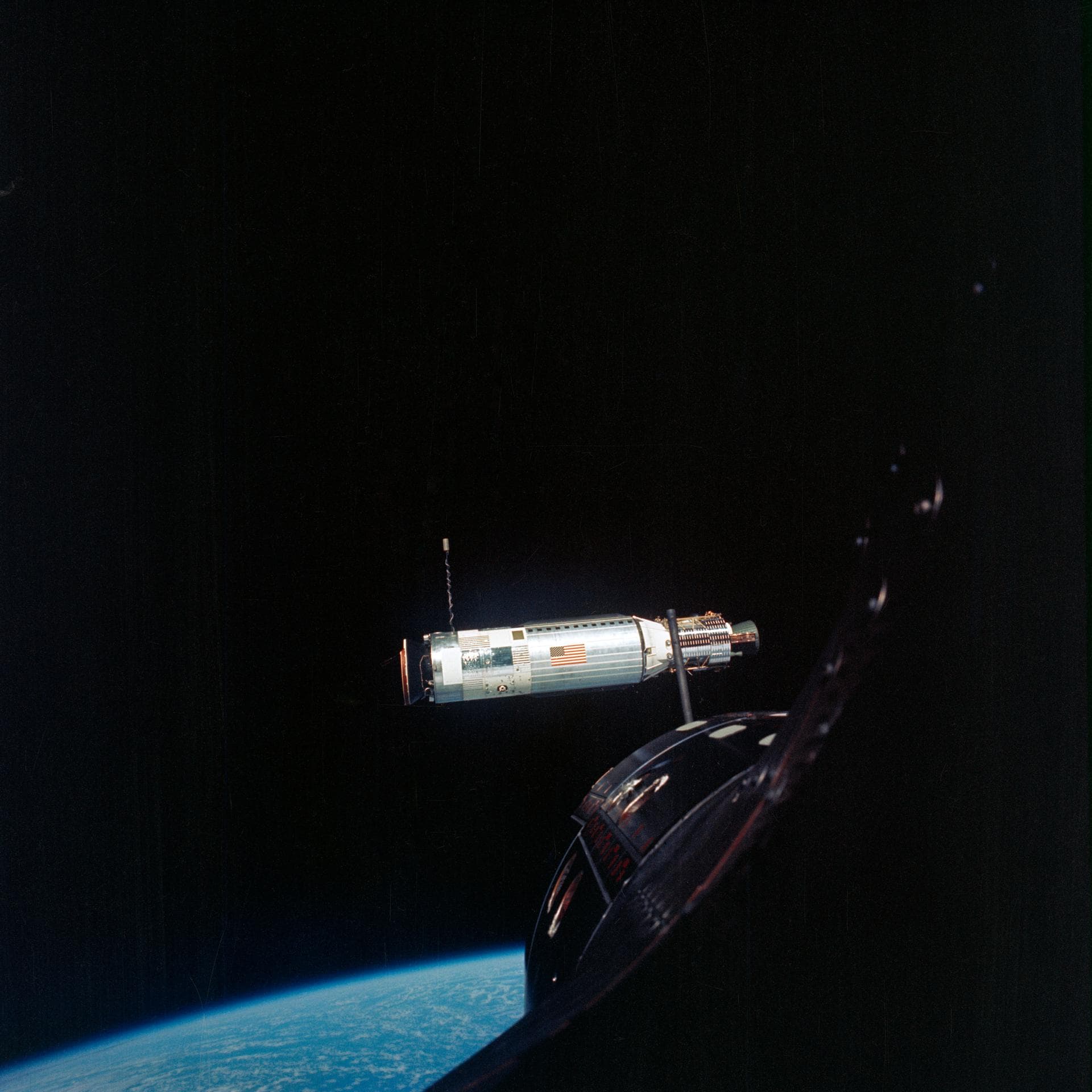
Agena Target Vehicle
An uncrewed rocket stage launched ahead of several Gemini missions to serve as a docking target, its restartable engine later used to boost docked Gemini spacecraft to record altitudes.
NASA Photography
Program Images
Archive photography connected to the Project Gemini program.
Gemini
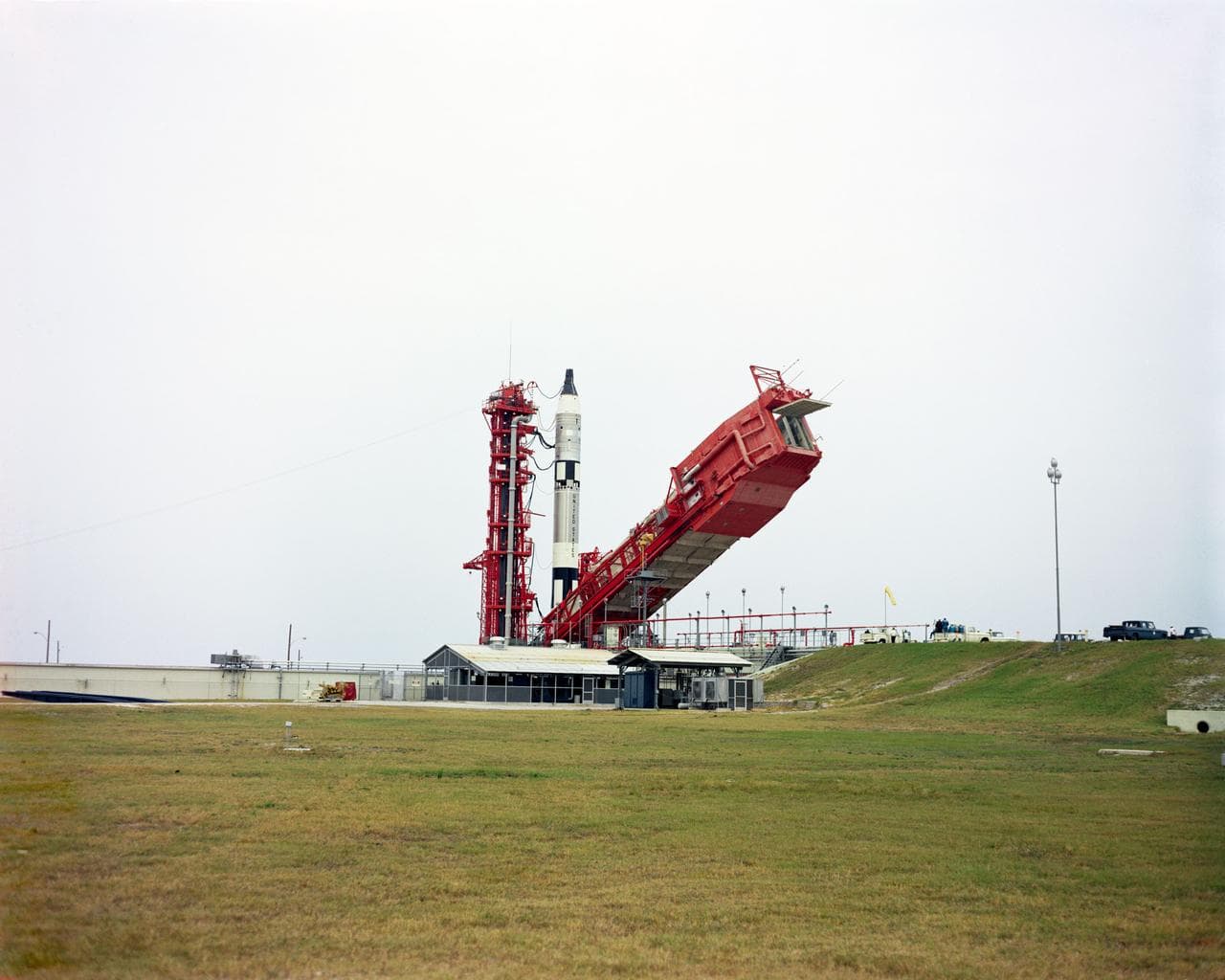
Liftoff of Gemini 3
NASA ID: S65-21520
Gemini 3 lifts off from Cape Canaveral, carrying Gus Grissom and John Young on the first crewed Gemini flight, nicknamed 'Molly Brown' by Grissom after his Liberty Bell 7 capsule sank on splashdown four years earlier. During the three-orbit mission, Grissom became the first astronaut to manually change a spacecraft's orbit, a maneuver essential to the rendezvous techniques NASA would need for the Moon landings.
View Image →
Gemini
Liftoff of Gemini 4
NASA ID: S65-29635
Gemini 4 launches from Cape Canaveral, carrying James McDivitt and Ed White on a four-day mission best remembered for White's twenty-minute spacewalk, the first ever performed by an American astronaut. Tethered to the spacecraft and using a hand-held maneuvering gun, White drifted alongside Gemini 4 as it orbited Earth, and later said he was reluctant to climb back inside, calling it the saddest moment of his life.
View Image →
Gemini
Liftoff of Gemini 5
NASA ID: S65-28694
Gemini 5 lifts off carrying Gordon Cooper and Pete Conrad on an eight-day endurance flight designed to prove astronauts could survive long enough in space for a round trip to the Moon. The mission flew under the slogan 'Eight Days or Bust' and tested the fuel cells that would power later Gemini and Apollo spacecraft, though a pressure drop in the system forced the crew to power down non-essential systems for much of the flight.
View Image →
Gemini
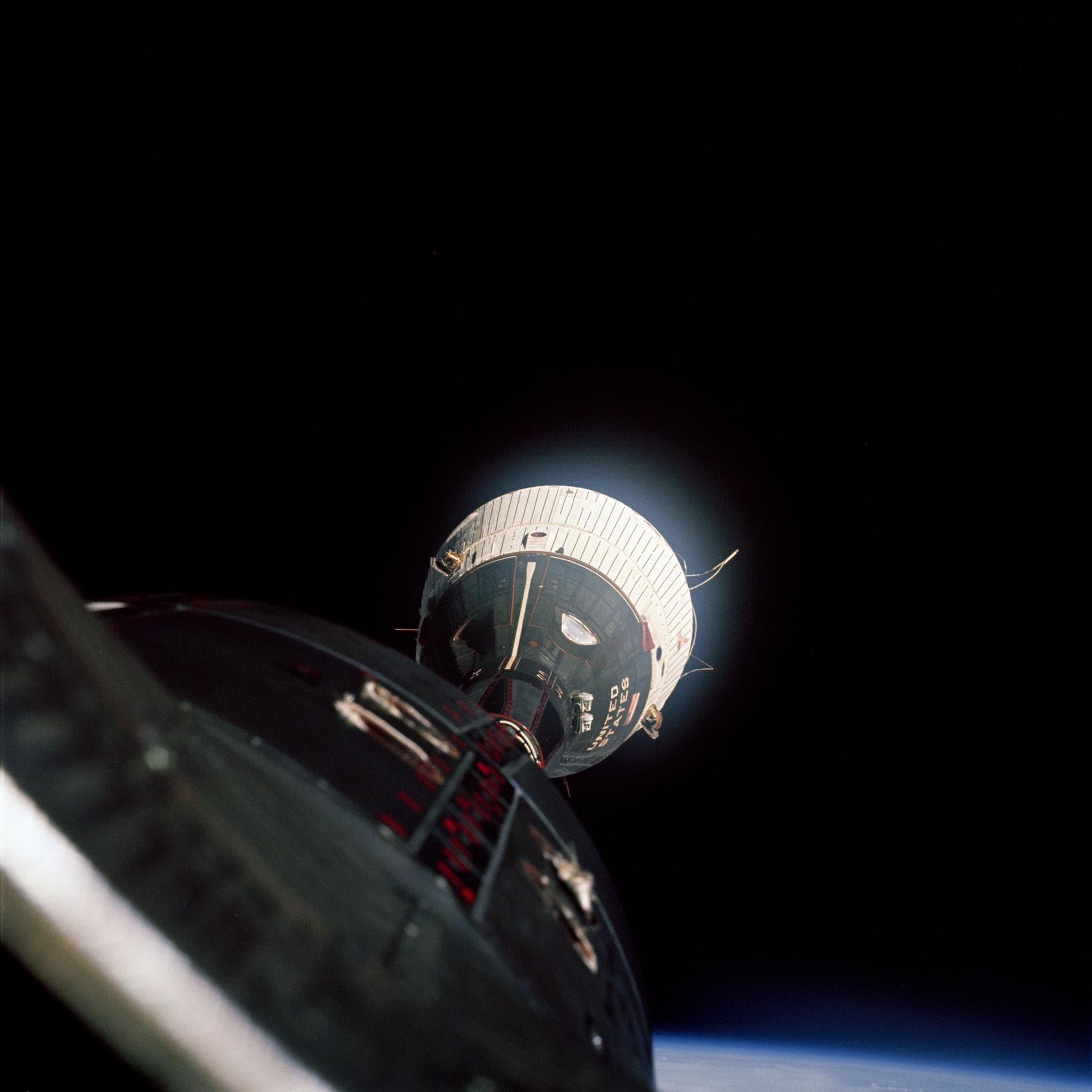
Gemini 7 Seen From Gemini 6A
NASA ID: S65-63171
Gemini 7, carrying Frank Borman and Jim Lovell, is photographed from Gemini 6A during history's first rendezvous between two crewed spacecraft in orbit. Wally Schirra and Tom Stafford flew Gemini 6A to within a few feet of Gemini 7, station-keeping for more than five hours and proving that precise orbital rendezvous — a technique essential to the Apollo Moon landings — was achievable.
View Image →
Gemini
Liftoff of Gemini 7
NASA ID: S65-61632
Gemini 7 launches from Cape Canaveral, carrying Frank Borman and Jim Lovell on a nearly fourteen-day endurance flight, the longest crewed spaceflight of its era. Confined to a cabin roughly the size of the front seat of a car, the two astronauts endured cramped, uncomfortable conditions to prove humans could survive long-duration missions, and the flight also served as the target vehicle for Gemini 6A's historic rendezvous.
View Image →
Gemini
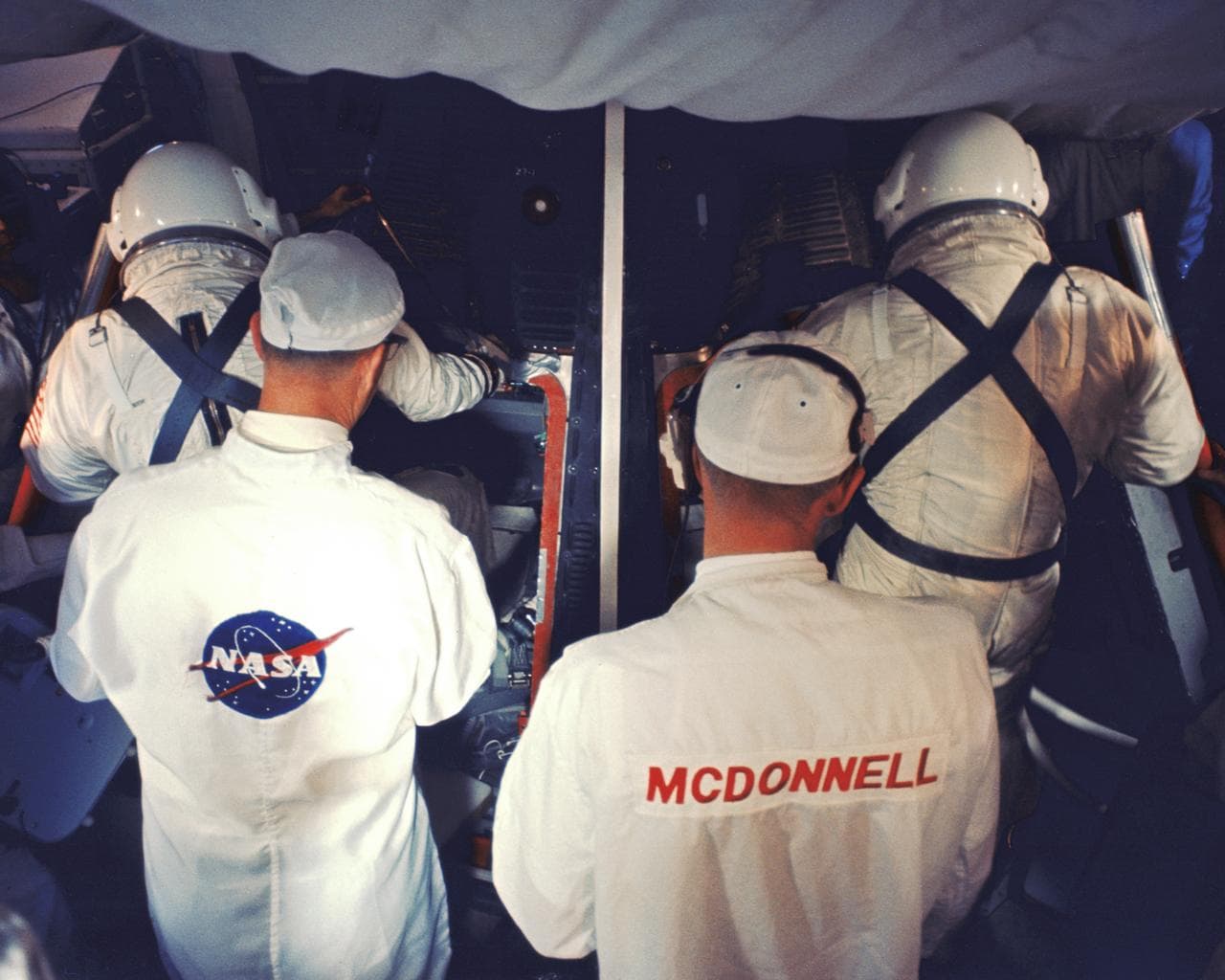
Gemini 8 Crew Preparation
NASA ID: 104-KSC-66C-1852
Neil Armstrong and David Scott are helped into their spacesuits ahead of the Gemini 8 mission, which achieved the first docking between two spacecraft in orbit when it linked up with an uncrewed Agena target vehicle. Shortly after docking, a stuck thruster sent the joined spacecraft into a dangerous spin; Armstrong undocked and used his reentry control system to regain control, a display of composure under pressure that ended the mission early but safely.
View Image →
Gemini
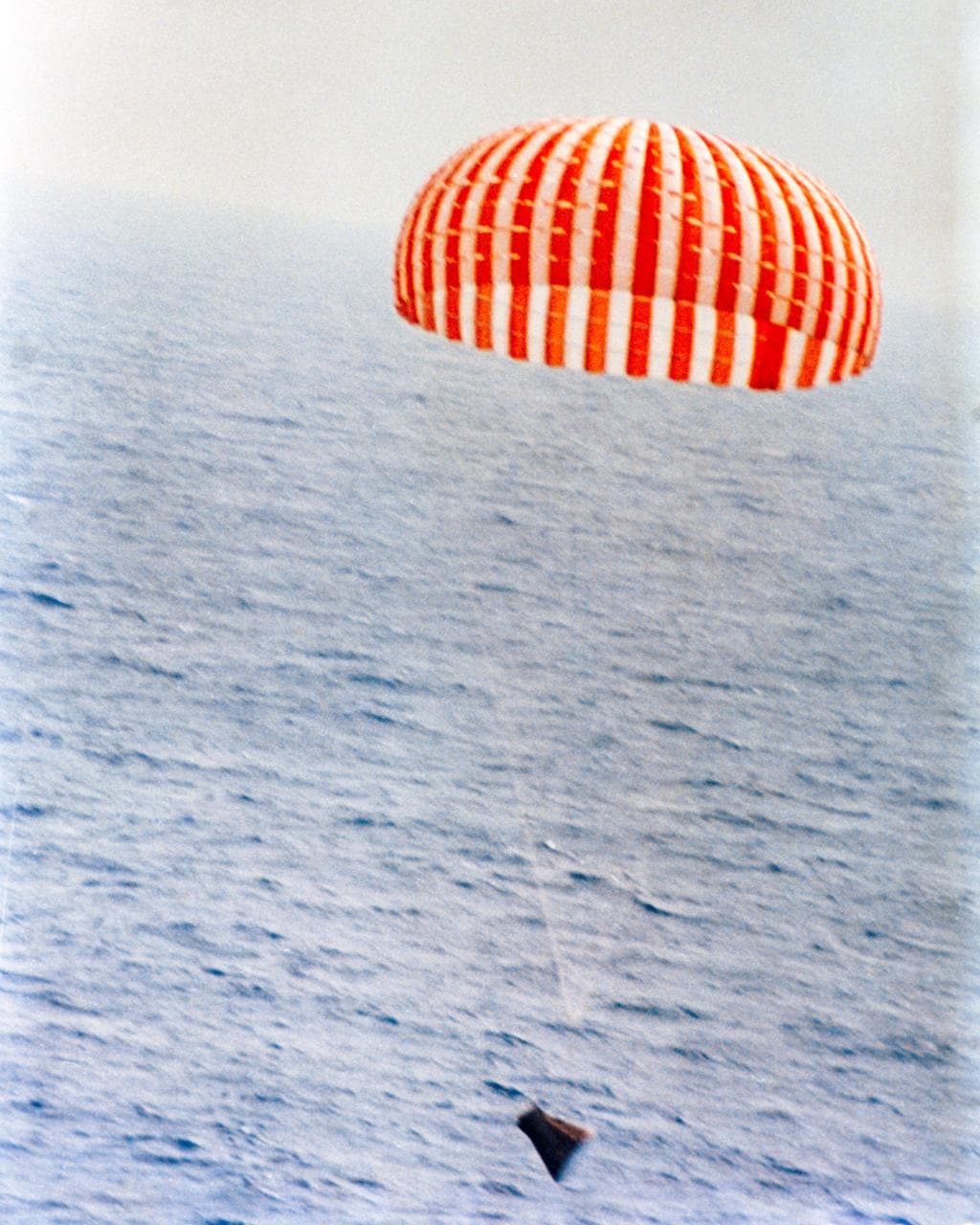
Gemini 9A Recovery
NASA ID: s66-34115
The Gemini 9A spacecraft is recovered from the Atlantic Ocean after Tom Stafford and Gene Cernan's mission, which achieved three different rendezvous techniques but was unable to dock with its target vehicle after its protective shroud failed to separate. Cernan also endured an exhausting two-hour spacewalk, later nicknamed the 'spacewalk from hell,' that revealed how much harder it was to work in the vacuum of space than engineers had anticipated.
View Image →
Gemini
Liftoff of Gemini 10
NASA ID: s66-42762
Gemini 10 launches from Cape Canaveral, carrying John Young and Michael Collins toward a dual rendezvous with two separate Agena target vehicles. The crew used one Agena's engine to boost themselves to a record altitude of over 400 miles, and Collins performed a spacewalk to retrieve a micrometeorite collection package from the second Agena, becoming the first astronaut to visit another spacecraft in orbit.
View Image →
Gemini
Liftoff of Gemini 11
NASA ID: S66-53900
Gemini 11 lifts off carrying Pete Conrad and Richard Gordon, who docked with their Agena target within the first orbit of the mission — the fastest rendezvous of the program. The crew then used the Agena's engine to reach an altitude record of more than 850 miles and conducted the first experiment in artificial gravity, spinning the tethered spacecraft to generate a small centrifugal force.
View Image →
Gemini
Gemini 12 Crew Preparation
NASA ID: KSC-66P-0516
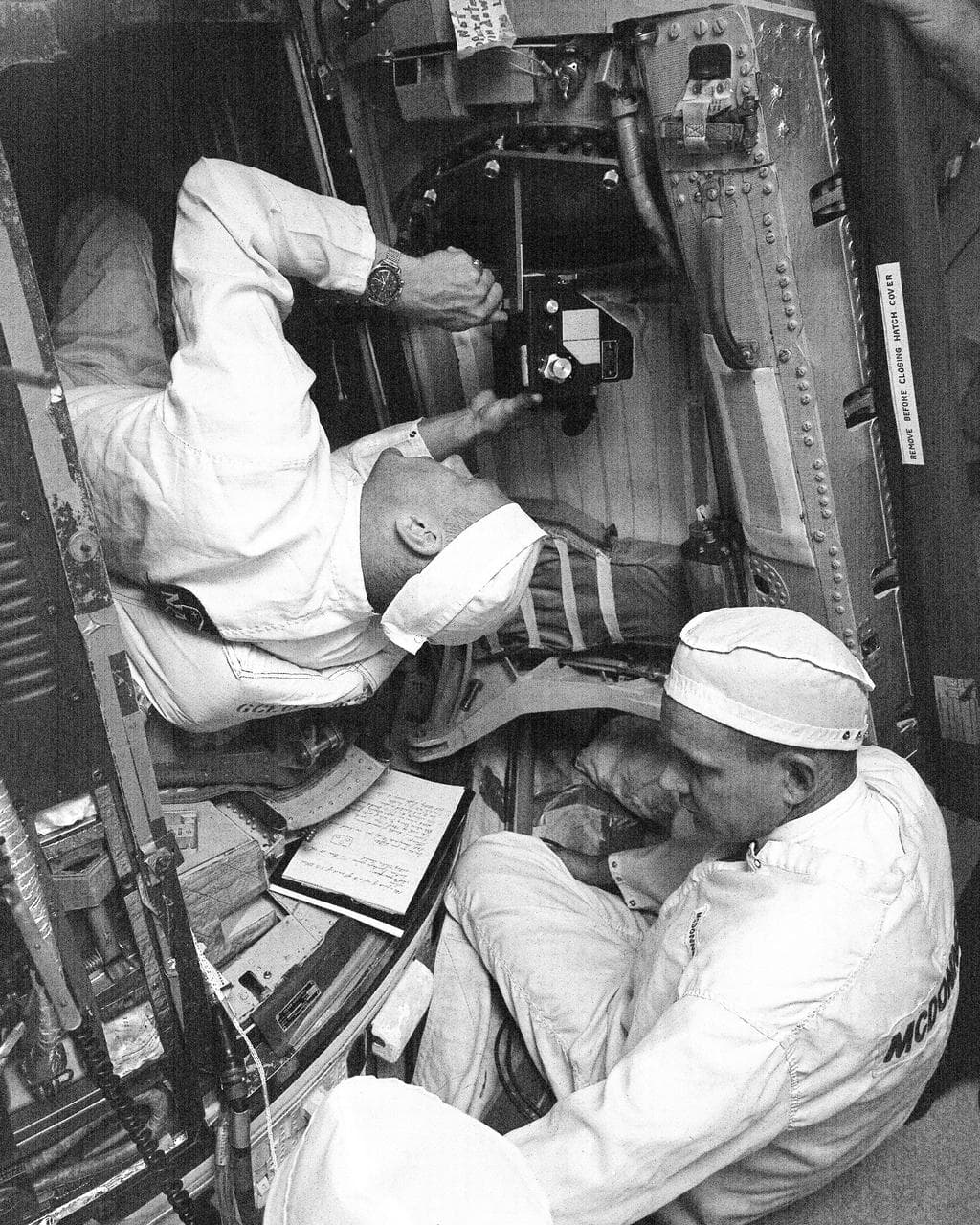
Buzz Aldrin practices stowing equipment ahead of Gemini 12, the final flight of Project Gemini. Aldrin's three spacewalks on the mission finally solved the exhaustion problems that had plagued earlier astronauts, thanks to new handholds, foot restraints, and underwater training that simulated weightlessness — techniques that became standard practice for every spacewalk that followed, including those of the Apollo program.
View Image →
Gemini
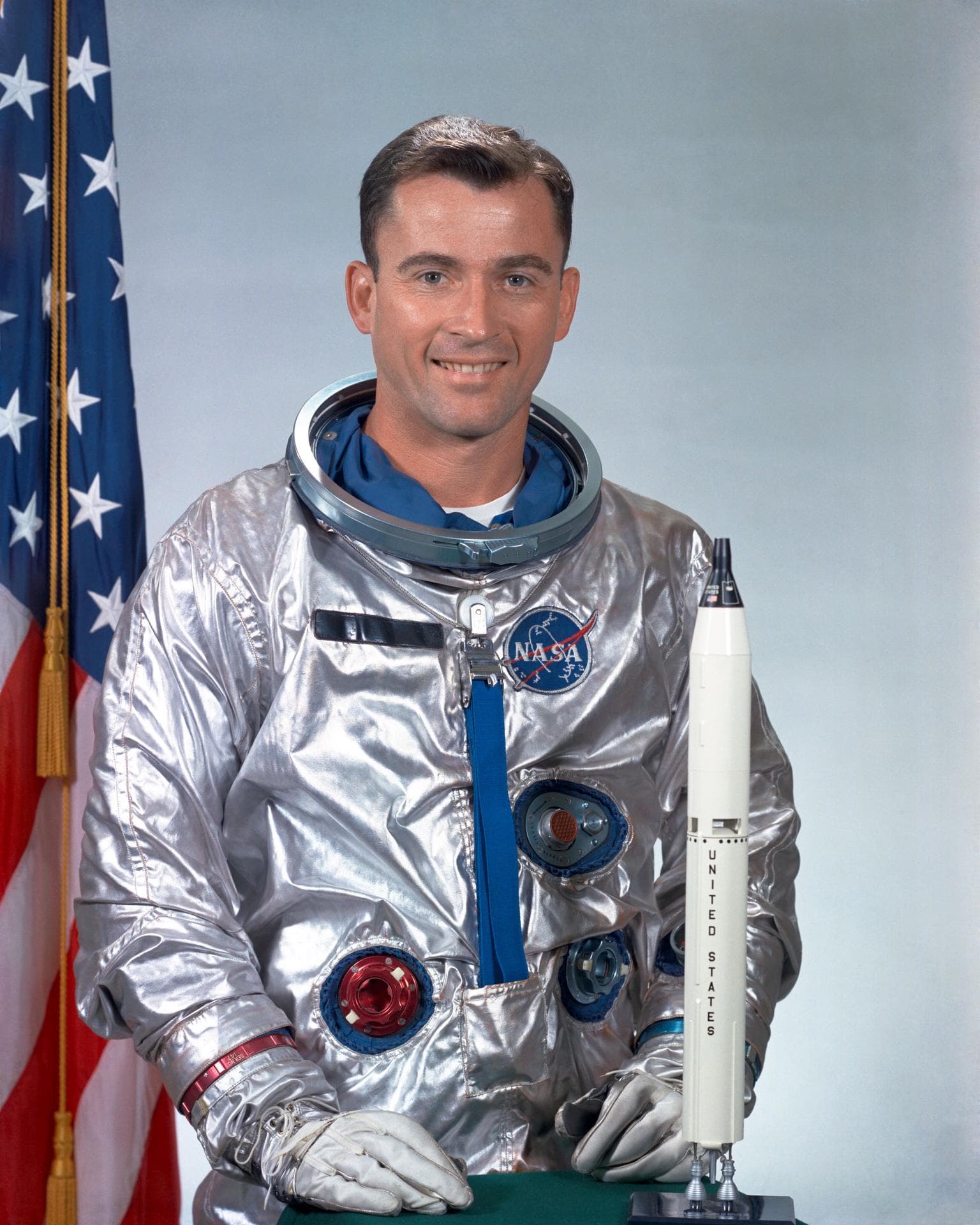
Portrait of John Young
NASA ID: s64-29940
Astronaut John W. Young ahead of his first spaceflight aboard Gemini 3. Young went on to fly six space missions across more than two decades, including a Moon landing on Apollo 16 and command of the first Space Shuttle flight, STS-1 — the only astronaut to fly in the Gemini, Apollo, and Space Shuttle programs.
View Image →
Gemini
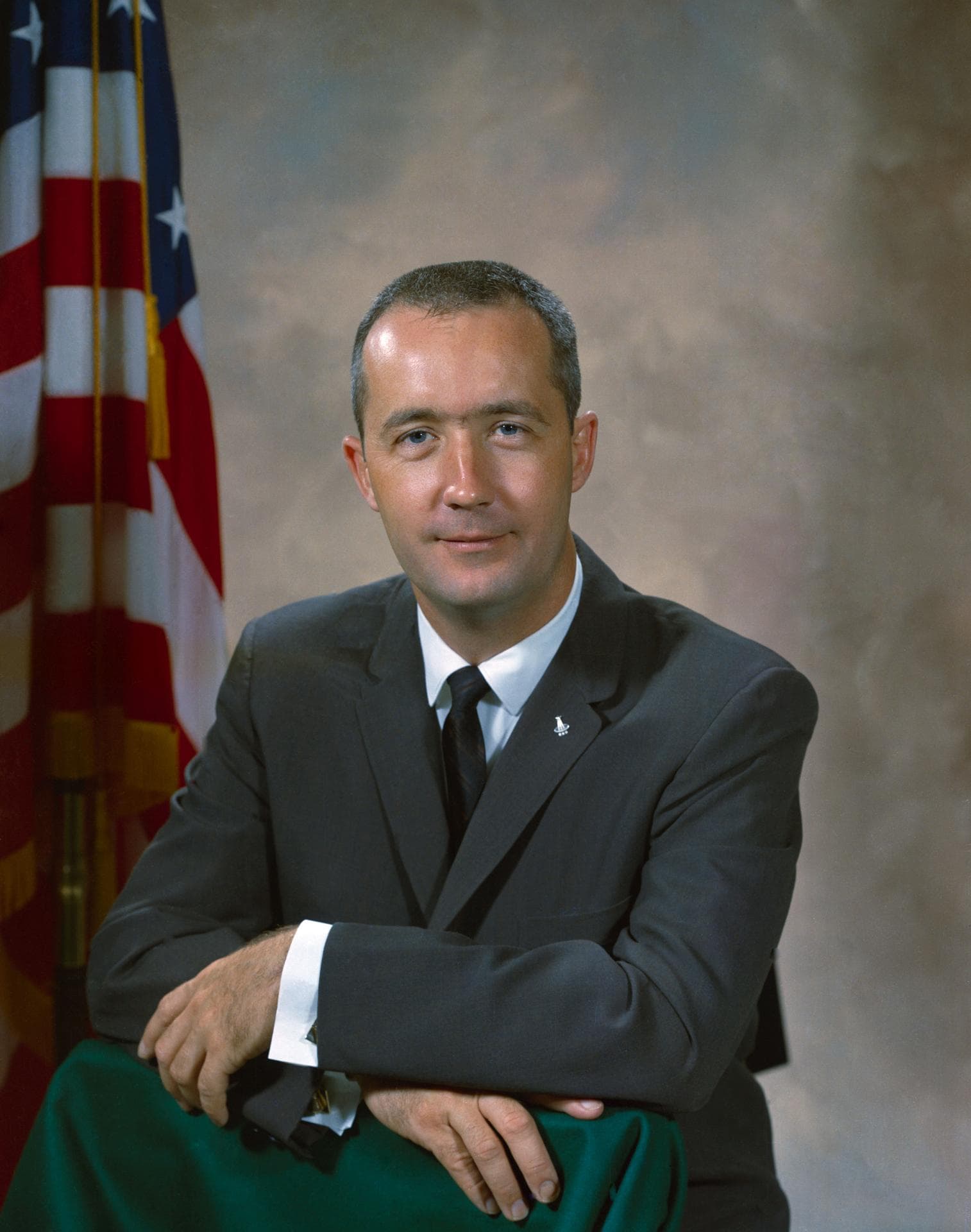
Portrait of James McDivitt
NASA ID: s64-31852
Astronaut James A. McDivitt ahead of his command of Gemini 4, the mission that included the first American spacewalk. McDivitt later commanded Apollo 9, the first crewed test flight of the Lunar Module, and went on to lead NASA's Apollo Spacecraft Program Office, overseeing the vehicles that carried astronauts to the Moon.
View Image →
Gemini
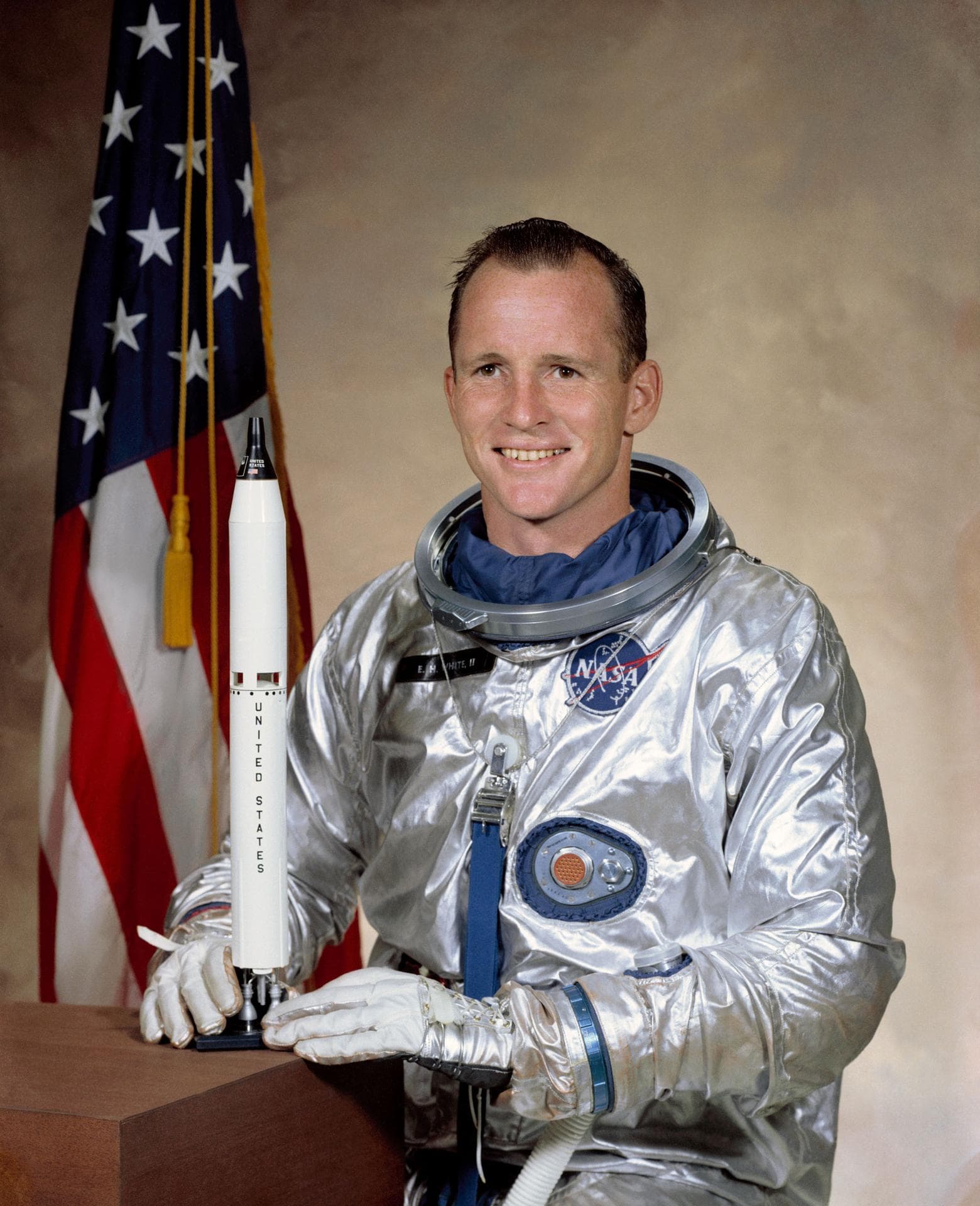
Portrait of Ed White
NASA ID: S64-31631
Astronaut Edward H. White II, who became the first American to walk in space during a twenty-minute excursion outside Gemini 4 in 1965. White was later selected for the first crewed Apollo flight, but was killed alongside Gus Grissom and Roger Chaffee in the Apollo 1 fire during a launch pad test in January 1967.
View Image →
Gemini
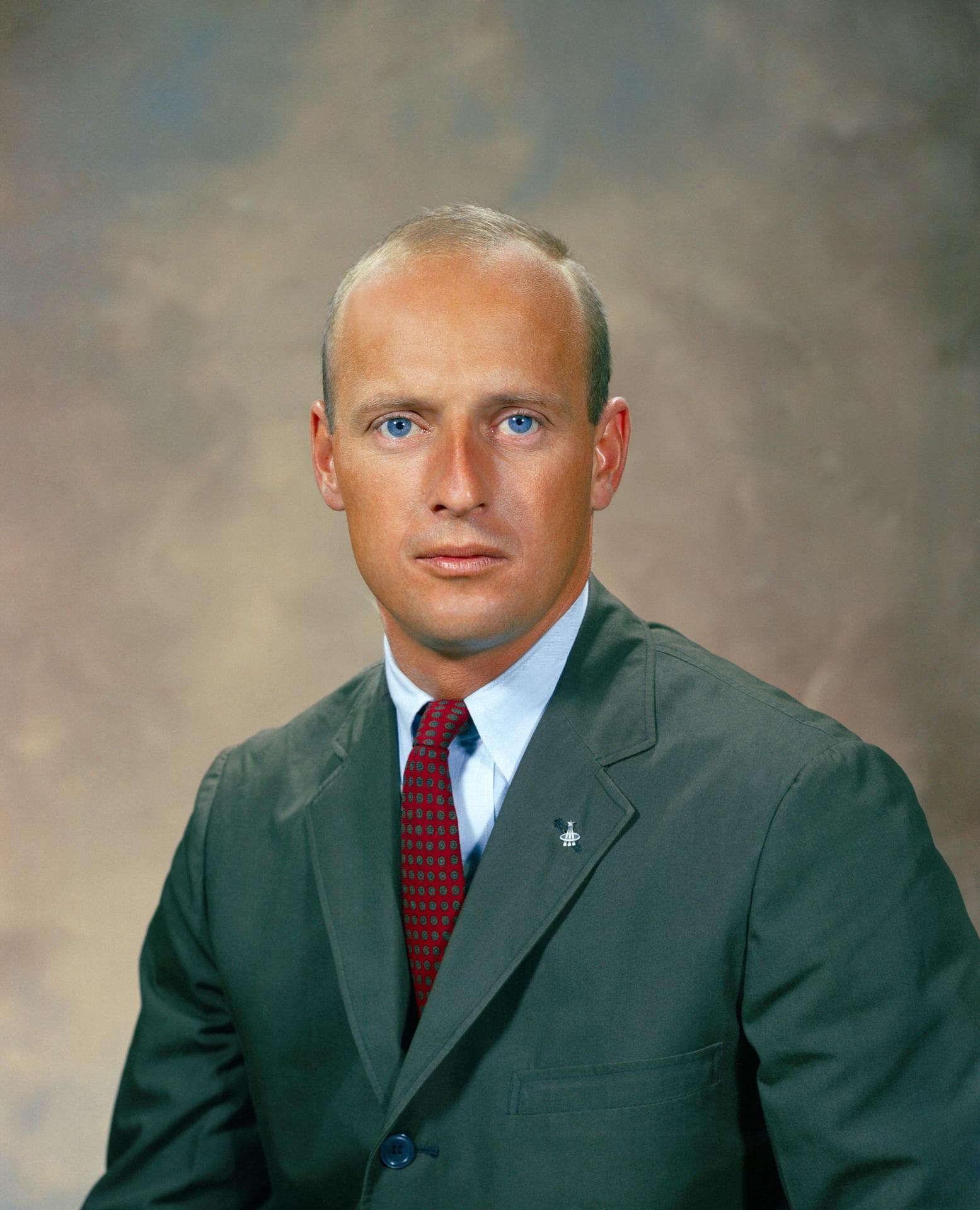
Portrait of Pete Conrad
NASA ID: s64-31465
Astronaut Charles 'Pete' Conrad Jr. ahead of his Gemini 5 flight. Conrad went on to command Gemini 11, then Apollo 12 in 1969, becoming the third person to walk on the Moon, and later commanded the first crewed Skylab mission, where his crew made emergency repairs that saved America's first space station.
View Image →
Gemini
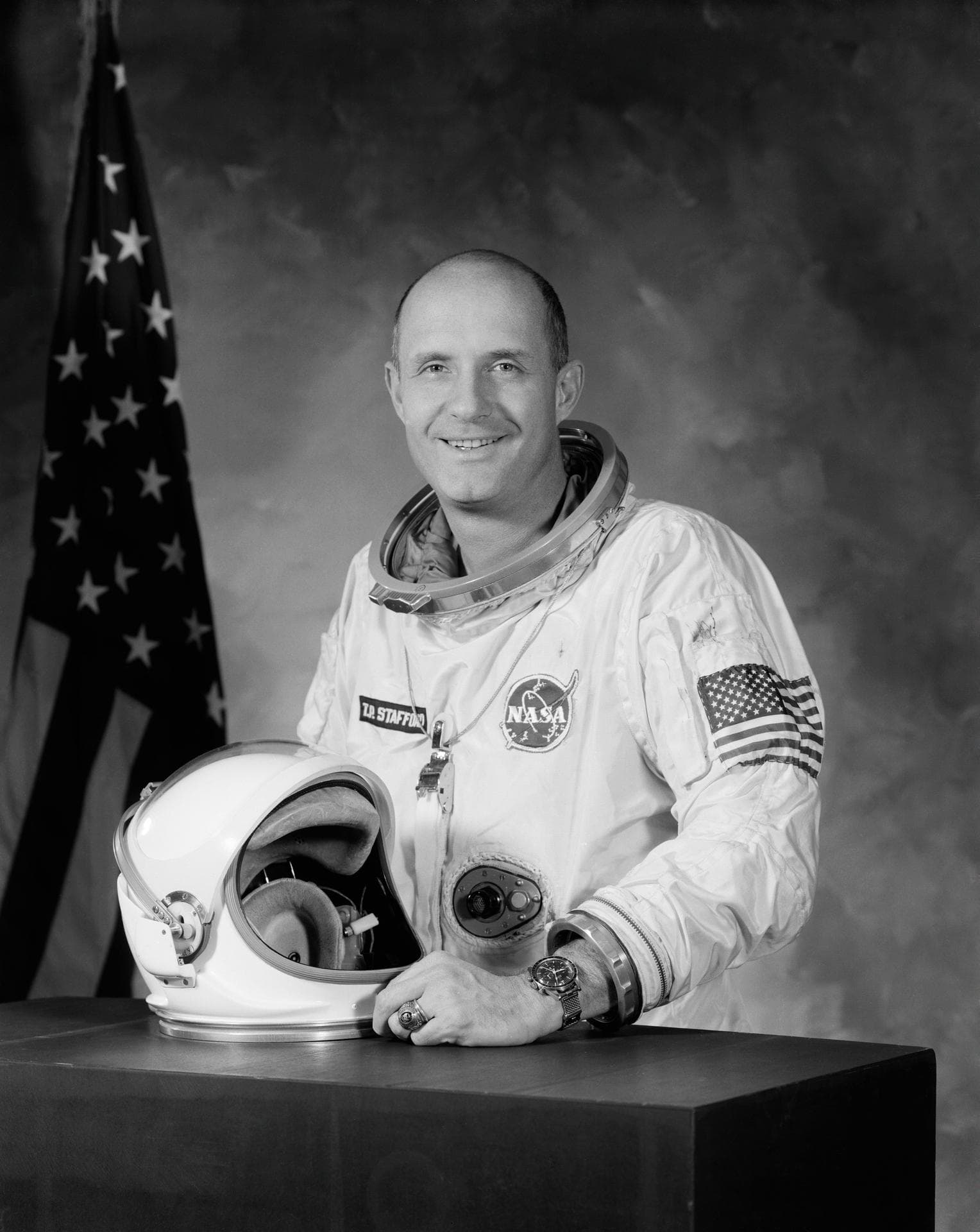
Portrait of Tom Stafford
NASA ID: s66-15994
Astronaut Thomas P. Stafford in his spacesuit ahead of Gemini 6A, which achieved history's first space rendezvous. Stafford later commanded Gemini 9A and Apollo 10, then commanded the Apollo-Soyuz Test Project in 1975, the first joint spaceflight between the United States and the Soviet Union.
View Image →
Gemini
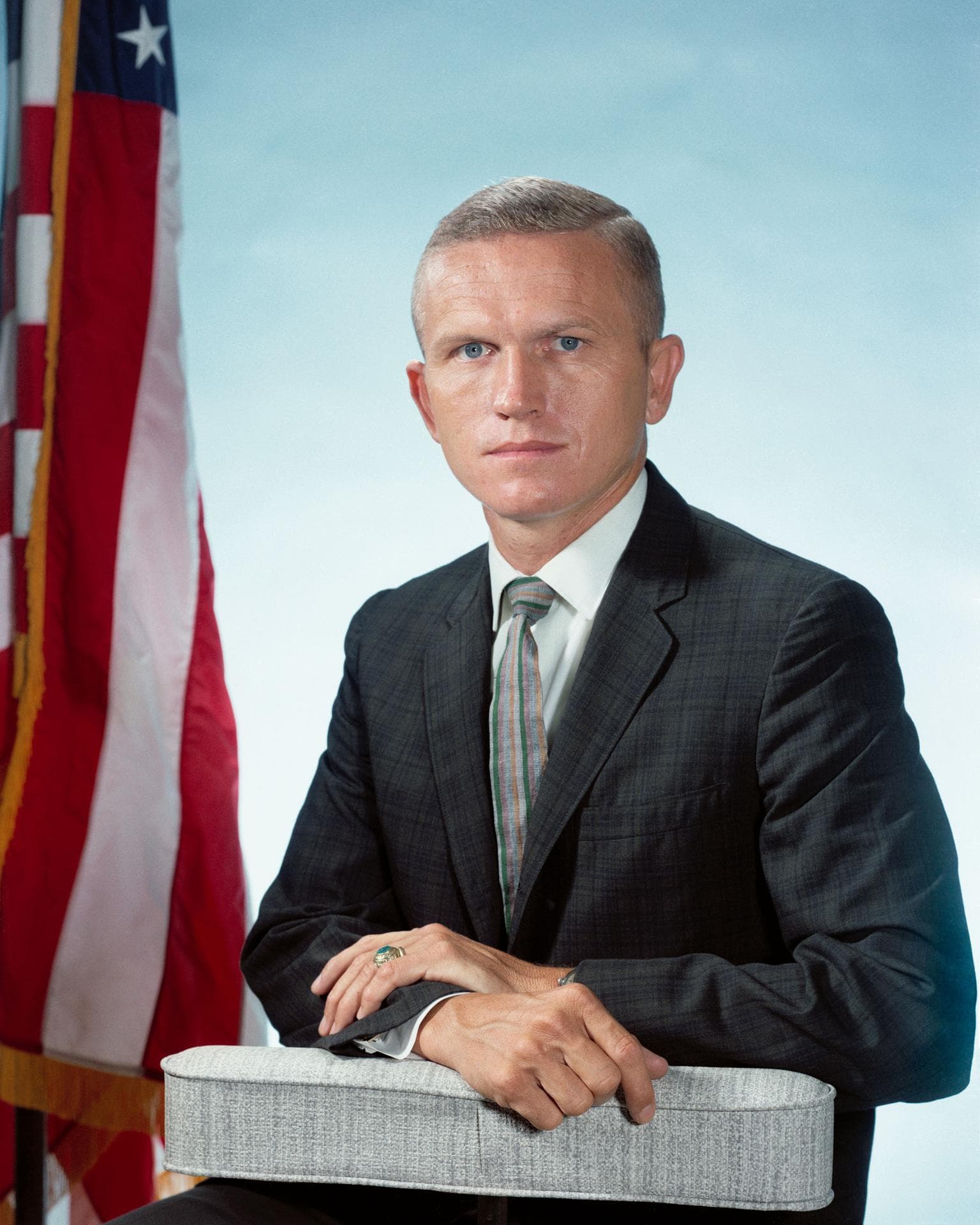
Portrait of Frank Borman
NASA ID: S64-31456
Astronaut Frank Borman ahead of his command of Gemini 7, a nearly fourteen-day endurance flight. Borman went on to command Apollo 8 in 1968, the first crewed mission to leave Earth orbit and circle the Moon, and read from the Book of Genesis during a Christmas Eve broadcast watched by a huge global audience.
View Image →
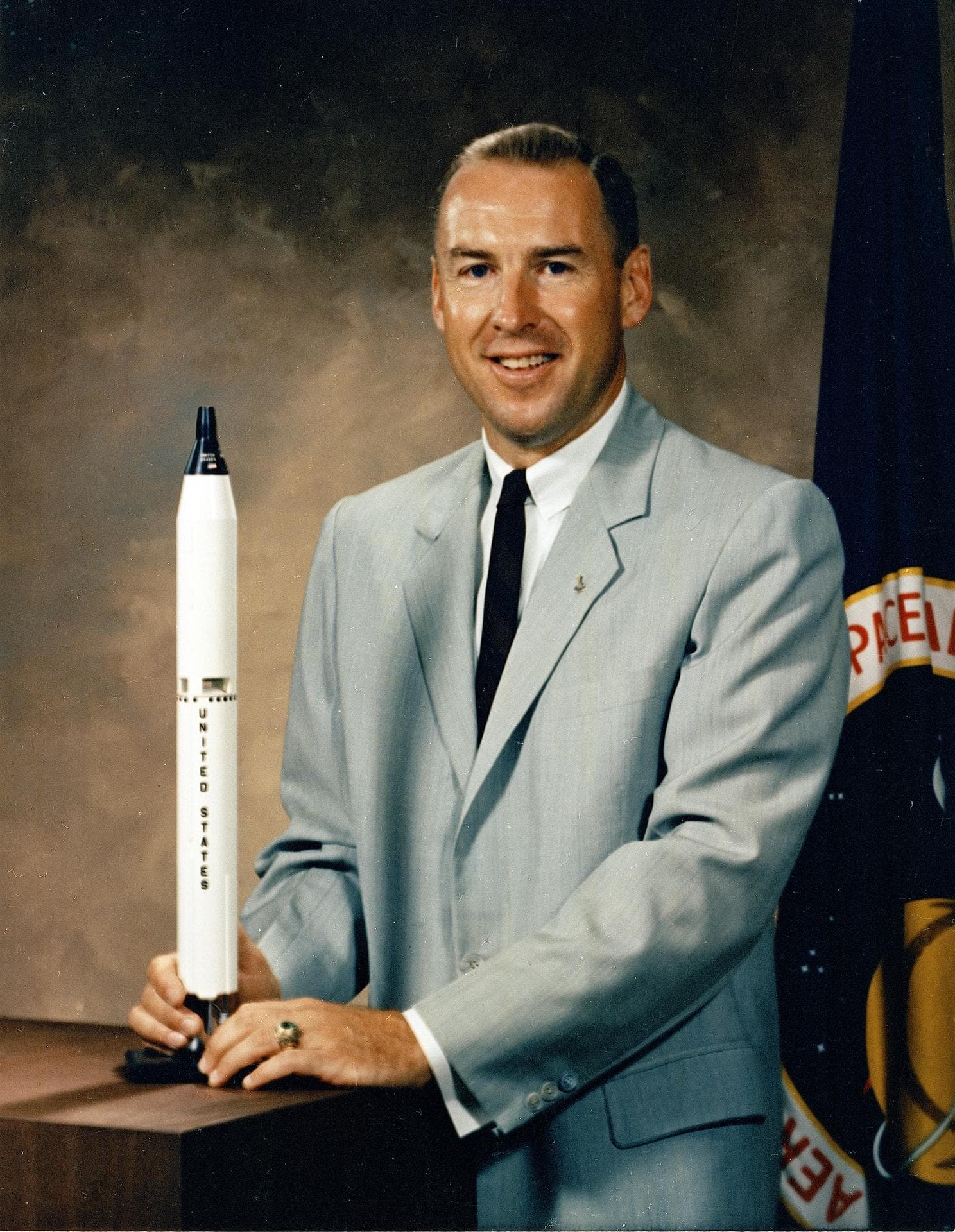
Gemini
Official Portrait of Jim Lovell
NASA ID: 6635141
Official NASA portrait of astronaut James A. Lovell Jr. Lovell flew to the Moon twice, first aboard Apollo 8 in 1968 and again as commander of Apollo 13 in 1970, when an oxygen tank explosion forced his crew to abandon their planned landing and fight for survival on the journey home — a story later dramatized in the film Apollo 13.
View Image →
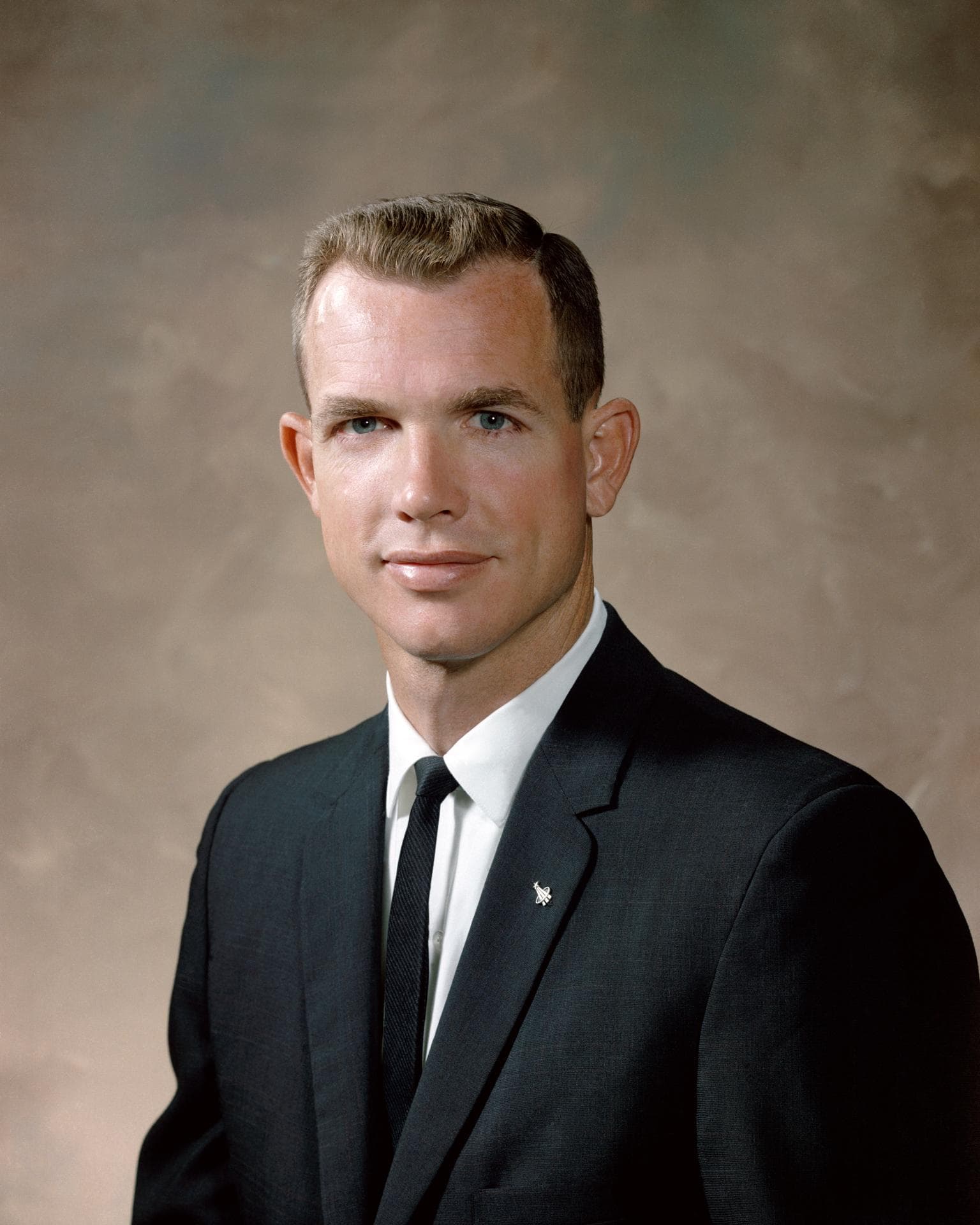
Gemini
Portrait of David Scott
NASA ID: s64-31472
Astronaut David R. Scott ahead of his Gemini 8 flight alongside Neil Armstrong. Scott later flew Apollo 9 and commanded Apollo 15 in 1971, becoming the seventh person to walk on the Moon and the first astronaut to drive the Lunar Roving Vehicle across the lunar surface.
View Image →
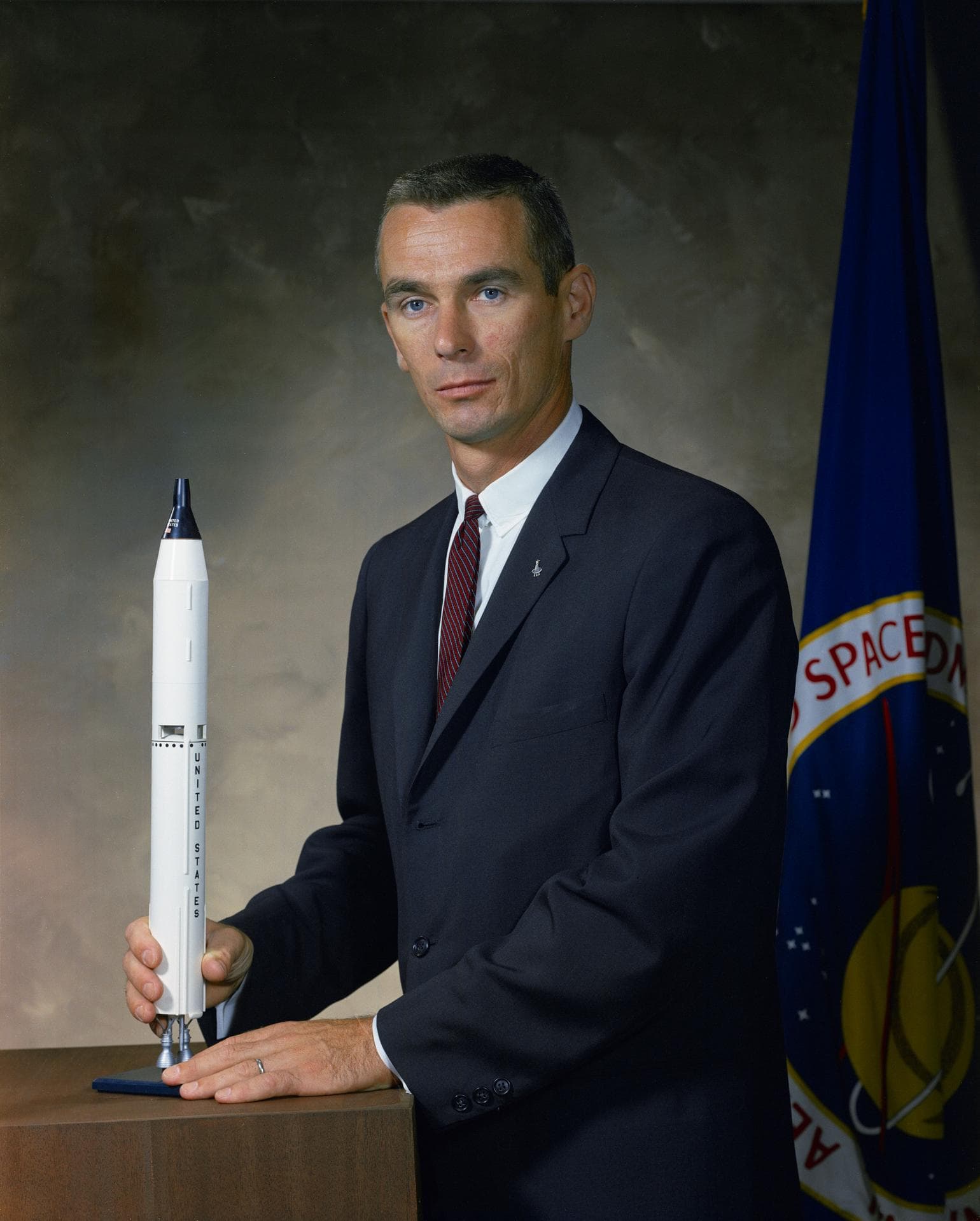
Gemini
Portrait of Gene Cernan
NASA ID: s64-31845
Astronaut Eugene A. Cernan in civilian clothes ahead of his Gemini 9A flight. Cernan later flew to the Moon twice, first aboard Apollo 10 and then as commander of Apollo 17 in 1972, when he became the last person to walk on the lunar surface, a distinction he still holds today.
View Image →
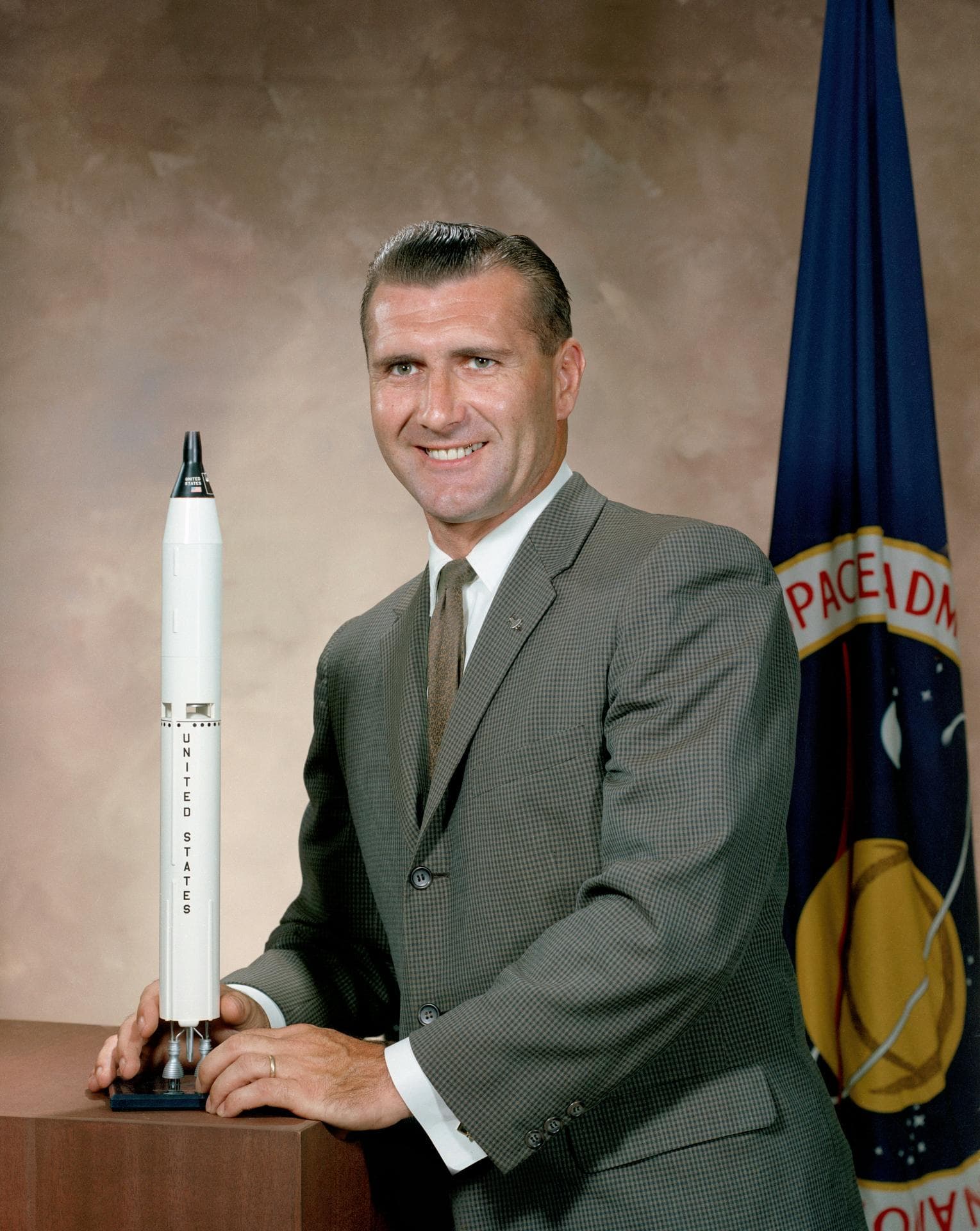
Gemini
Portrait of Richard Gordon
NASA ID: s64-31459
Astronaut Richard F. Gordon Jr. ahead of his Gemini 11 flight, during which he conducted a spacewalk and helped set an altitude record. Gordon later served as command module pilot on Apollo 12, orbiting the Moon alone while his crewmates Pete Conrad and Alan Bean explored the lunar surface below.
View Image →

Gemini
Ed White's Spacewalk
NASA ID: S65-34635
Astronaut Ed White floats outside Gemini 4 during the first American spacewalk, tethered to the spacecraft and maneuvering with a hand-held gas gun. White's excursion lasted about twenty minutes, and after his propellant ran low he pulled himself back toward the spacecraft hand over hand along his tether, a preview of the physically demanding work later Gemini spacewalkers would face.
View Image →
Gemini
Gemini 7 Seen From Gemini 6A
NASA ID: S65-63171
The Gemini 7 spacecraft as seen from the Gemini 6A spacecraft during history's first space rendezvous. The two-seat Gemini capsule, roughly twice the size of the earlier Mercury spacecraft, was designed to test the rendezvous and docking techniques NASA would need for the Apollo Moon landings, and this photograph captured the two spacecraft flying in formation just a few feet apart.
View Image →
Gemini
Agena Target Docking Vehicle
NASA ID: s66-46124
The Agena Target Docking Vehicle photographed from the Gemini 10 spacecraft, with Earth's limb visible below. Built from a modified Agena-D rocket upper stage, the uncrewed vehicle gave Gemini astronauts a target to rendezvous and dock with in orbit, and its onboard engine could be fired after docking to boost the joined spacecraft to a higher altitude.
View Image →