Gemini
Gemini 7
Gemini 7 sent Frank Borman and Jim Lovell on a grueling fourteen-day flight, the longest crewed spaceflight of its era, while also serving as the target for history's first space rendezvous with Gemini 6A.
Launch
December 4, 1965
Duration
13 days, 18 hours, 35 minutes
Crew
2 astronauts
Mission record
Gemini archive entry · Successful
Mission Overview
The mission
Gemini 7 sent Frank Borman and Jim Lovell on a grueling fourteen-day flight, the longest crewed spaceflight of its era, while also serving as the target for history's first space rendezvous with Gemini 6A.
In Depth
The Full Story
Gemini 7 asked two astronauts to do something no one had attempted before: live inside a spacecraft barely larger than the front seat of a car for nearly two weeks. Commanded by Frank Borman with Jim Lovell as pilot, the mission launched on December 4, 1965, with a dual purpose that made it one of the most demanding flights of the entire Gemini program.
The primary goal was endurance. NASA needed proof that astronauts could survive a mission as long as a round trip to the Moon without suffering serious physical or psychological harm, and fourteen days in orbit was the target duration. To make the cramped conditions more bearable, Borman and Lovell became the first American astronauts to remove their pressure suits during flight, wearing lightweight garments instead for most of the mission, a decision that significantly improved their comfort during the long stretch in orbit.
Gemini 7 also carried out one of the most important secondary objectives in the entire Gemini program: serving as the target vehicle for a rendezvous attempt by Gemini 6A, launched eleven days into Gemini 7's flight after 6A's original mission plan collapsed when its own Agena target vehicle failed to reach orbit. On December 15, the two Gemini spacecraft maneuvered to within a few feet of each other in orbit, the first time two crewed spacecraft had ever rendezvoused in space, with Borman and Lovell serving as the patient, stationary target for Schirra and Stafford's approach.
After watching Gemini 6A depart and return home, Borman and Lovell continued their marathon flight for three more days, completing 206 orbits before splashing down on December 18. The mission proved conclusively that long-duration spaceflight was survivable, clearing one of the last major uncertainties standing between Gemini and the eight-day-plus missions Apollo would eventually require.
Mission Details
Official Designation
Gemini-Titan 7 (GT-7)
Mission Type
Long-Duration Endurance Flight
Launch Date
December 4, 1965
Mission Duration
13 days, 18 hours, 35 minutes
Command Pilot
Frank Borman
Pilot
James A. Lovell Jr.
Spacecraft
Gemini Spacecraft 7
Launch Vehicle
Titan II GLV
Launch Site
Launch Complex 19, Cape Canaveral
Orbits Completed
206
Splashdown
Atlantic Ocean
Mission Result
Successful
Historic Achievement
Longest Crewed Spaceflight of Its Era
Mission by the Numbers
Mission Statistics
Mission Type
Long-Duration Endurance Flight
Launch Vehicle
Titan II GLV
Crew
2 astronauts
Status
Successful
The People Behind the Mission
Crew
The astronauts assigned to command, operate, and carry out the mission.
Command Pilot
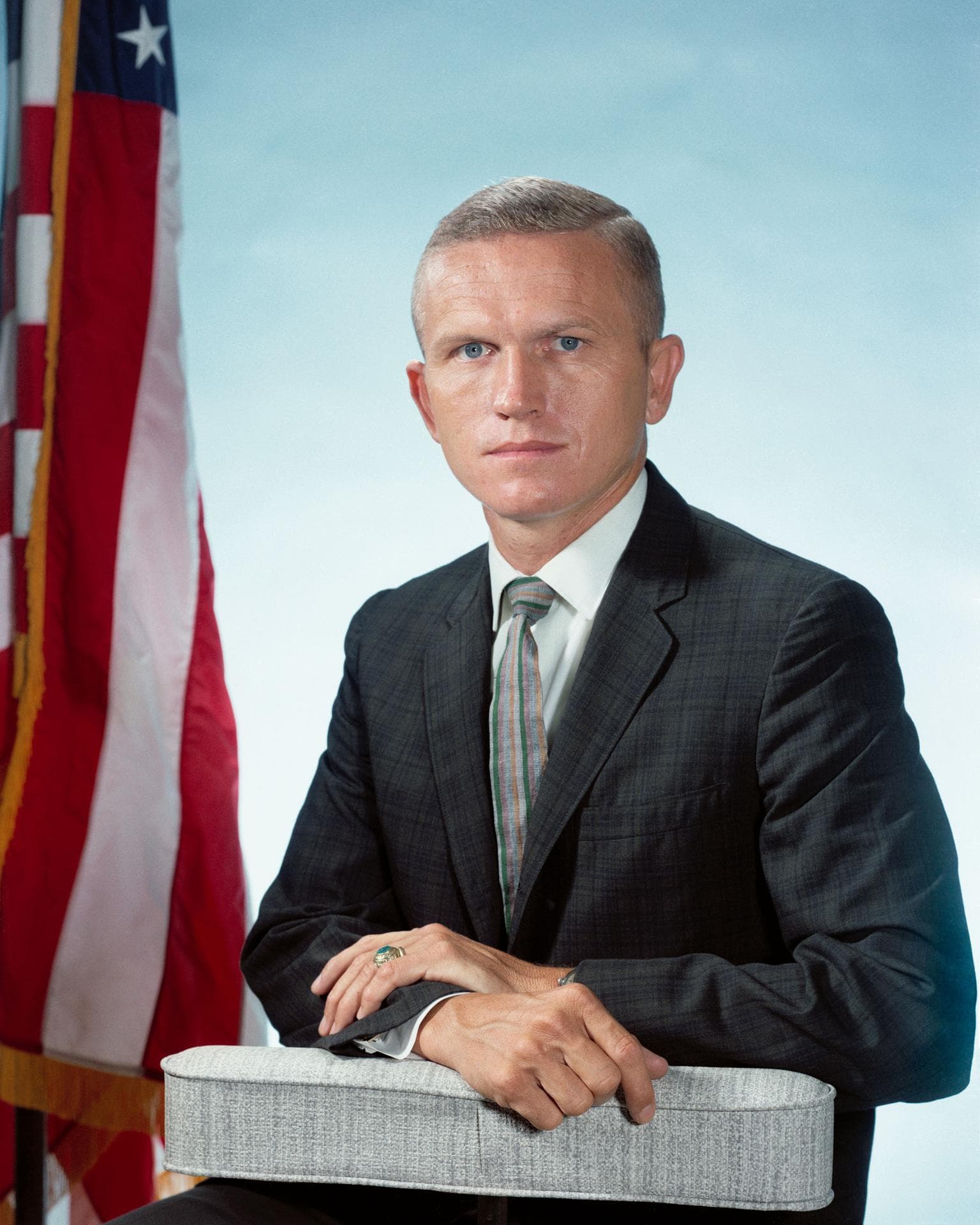
Frank Borman
Frank Borman commanded Gemini 7's 14-day endurance flight and later commanded Apollo 8, the first crewed mission to orbit the Moon.
View Astronaut →
Pilot
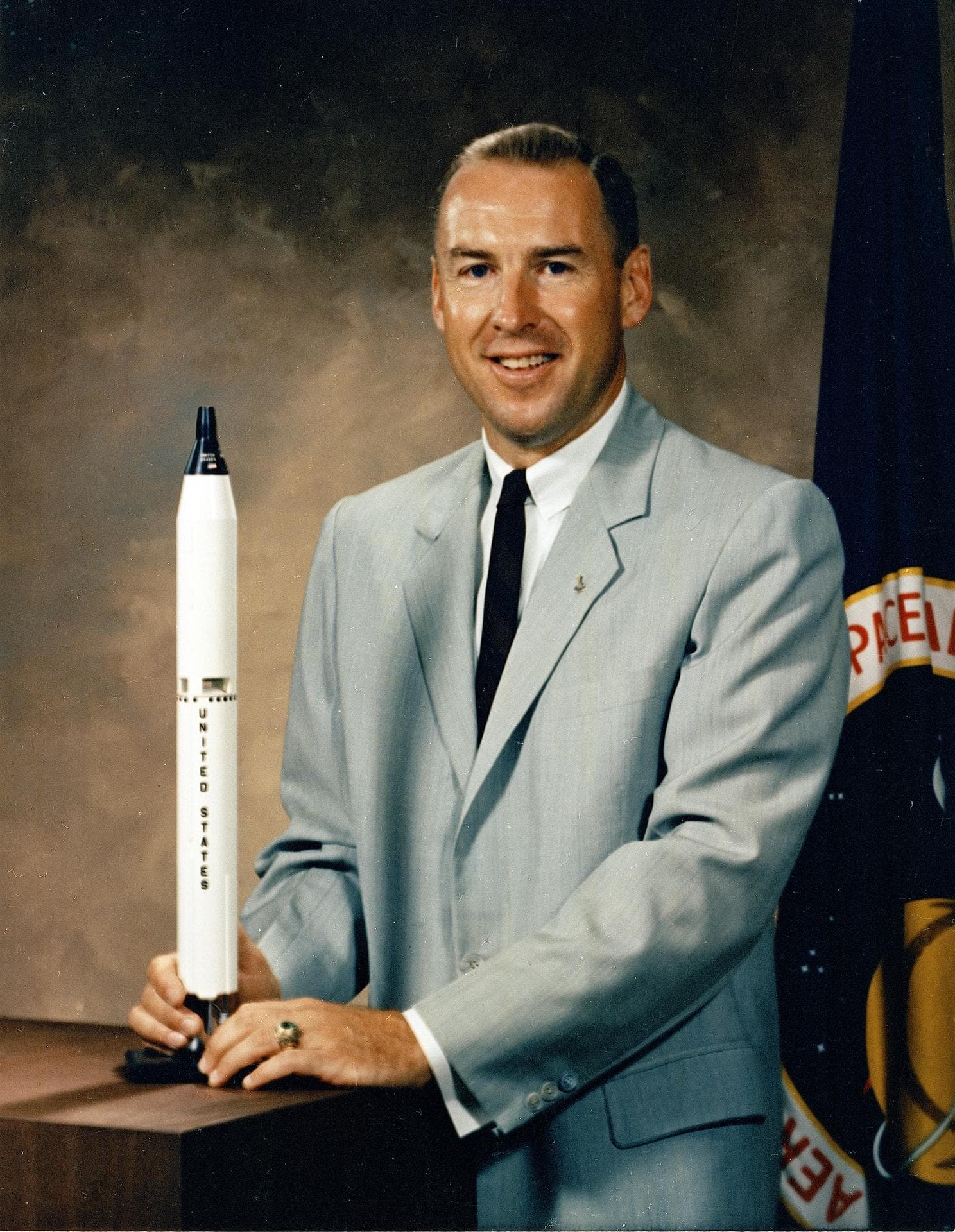
Jim Lovell
Jim Lovell flew Gemini 7 and commanded Gemini 12 before flying to the Moon twice, first aboard Apollo 8 and then as commander of the aborted Apollo 13 mission.
View Astronaut →
Mission Goals
Mission objectives
- 01
Demonstrate that astronauts could endure approximately fourteen days in space.
- 02
Serve as the rendezvous target for Gemini 6A, enabling history's first space rendezvous.
- 03
Evaluate lightweight in-flight garments as an alternative to pressure suits for comfort.
- 04
Study the physiological and psychological effects of long-duration spaceflight.
- 05
Conduct a scientific and medical experiment program across an extended mission.
Fascinating Details
Did You Know?
Key did you know? recorded for this mission.
Gemini 7 was the longest crewed spaceflight in history at the time, at nearly fourteen days.
Borman and Lovell became the first American astronauts to remove their pressure suits during flight for comfort.
Gemini 7 served as the passive target for Gemini 6A, which launched eleven days into the mission specifically to rendezvous with it.
The December 15, 1965 rendezvous with Gemini 6A was the first time two crewed spacecraft had ever met in orbit.
Living conditions were famously cramped; Borman and Lovell had barely more room than the front seat of a small car for nearly two weeks.
Both astronauts went on to command later lunar missions: Borman commanded Apollo 8, and Lovell commanded Apollo 13.
Gemini 7's data on long-duration spaceflight directly informed medical planning for Apollo missions to the Moon.
Mission Timeline
December 4, 1965 · 2:30 p.m. EST
Launch
Gemini 7 lifted off from Launch Complex 19 at Cape Canaveral, carrying Frank Borman and Jim Lovell on a planned fourteen-day flight.
Early in Flight
Suits Removed
Borman and Lovell became the first American astronauts to remove their pressure suits during flight, wearing lightweight garments for most of the mission to improve comfort.
December 15, 1965
Gemini 6A Launches to Rendezvous
Eleven days into Gemini 7's flight, Gemini 6A launched with the goal of rendezvousing with Borman and Lovell's spacecraft in orbit.
December 15, 1965
First Space Rendezvous
Gemini 6A closed to within a few feet of Gemini 7, achieving history's first rendezvous between two crewed spacecraft in orbit.
December 16, 1965
Gemini 6A Departs
Gemini 6A completed its mission and returned to Earth, leaving Borman and Lovell to continue their endurance flight alone.
December 18, 1965
Splashdown
Gemini 7 splashed down in the Atlantic Ocean after nearly fourteen days and 206 orbits, the longest crewed spaceflight of its era.
Mission Legacy
Legacy
Gemini 7 removed one of the last major doubts about whether Apollo's lunar missions were physically survivable. Fourteen days in a cramped capsule proved astronauts could endure far more than a round trip to the Moon would ever require, giving NASA confidence to plan missions of similar or greater duration.
The mission's role as the rendezvous target for Gemini 6A made it a direct partner in one of Gemini's most important technical achievements, without which the historic first space rendezvous of December 15, 1965, could not have happened.
For Borman and Lovell personally, Gemini 7 was a proving ground for the trust and endurance that would define their later careers. Borman would command Apollo 8 to the Moon three years later, and Lovell would command Apollo 13 through one of spaceflight's most dramatic survival stories, both drawing on lessons learned during those fourteen crowded days in orbit.
Mission Photo Archive
NASA ID: S65-61632
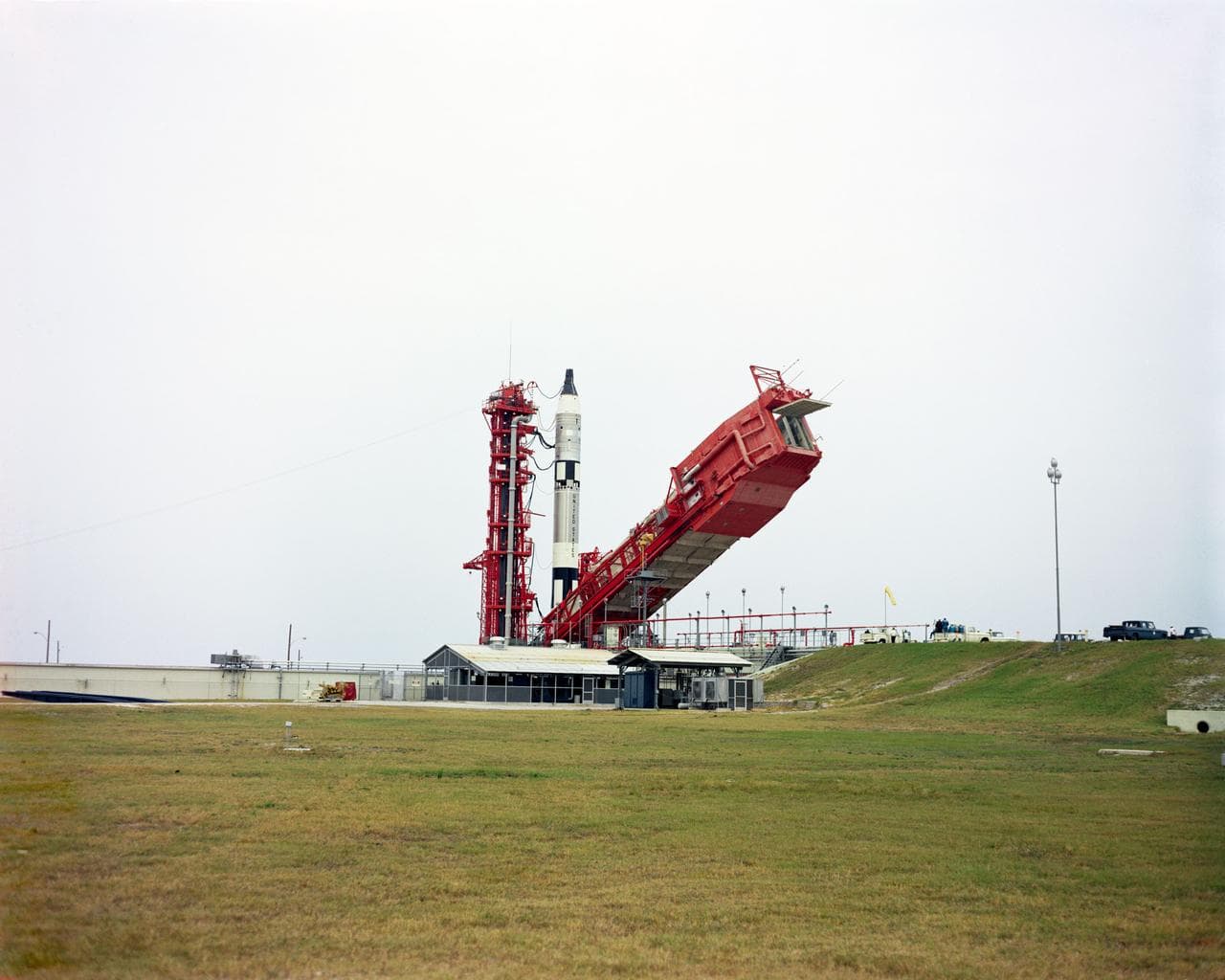
Liftoff of Gemini 7
Gemini 7 launches from Cape Canaveral, carrying Frank Borman and Jim Lovell on a nearly fourteen-day endurance flight, the longest crewed spaceflight of its era. Confined to a cabin roughly the size of the front seat of a car, the two astronauts endured cramped, uncomfortable conditions to prove humans could survive long-duration missions, and the flight also served as the target vehicle for Gemini 6A's historic rendezvous.
View Image →
NASA ID: S65-63171
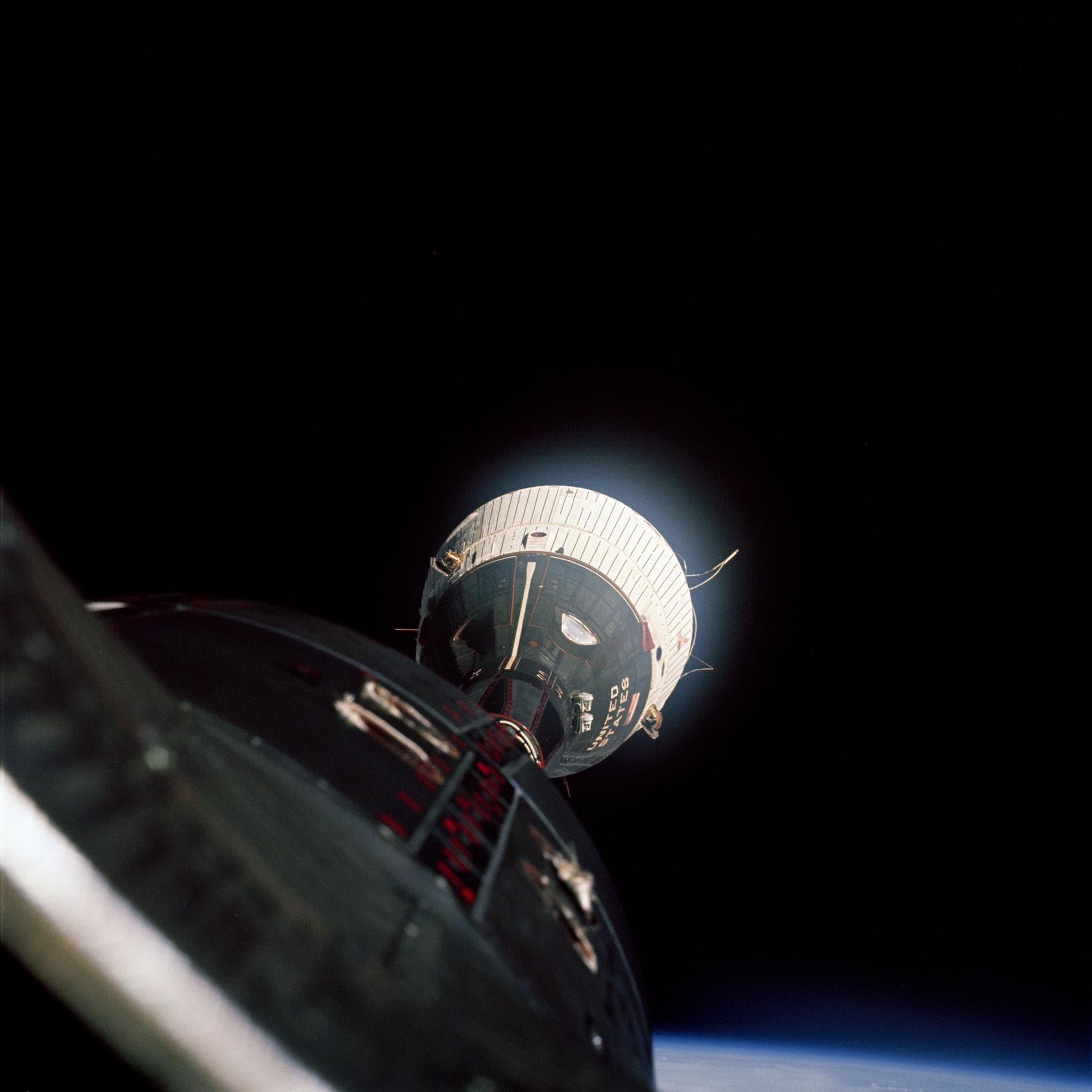
Gemini 7 Seen From Gemini 6A
The Gemini 7 spacecraft as seen from the Gemini 6A spacecraft during history's first space rendezvous. The two-seat Gemini capsule, roughly twice the size of the earlier Mercury spacecraft, was designed to test the rendezvous and docking techniques NASA would need for the Apollo Moon landings, and this photograph captured the two spacecraft flying in formation just a few feet apart.
View Image →
Related Stories
Apollo
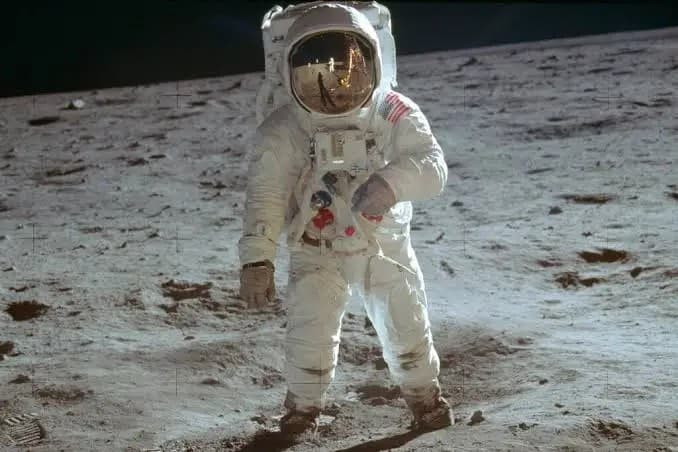
The Moon Photos That Still Feel Impossible
Before social media, astronauts brought back images that changed how humanity saw itself forever.
Read Article →
Artemis
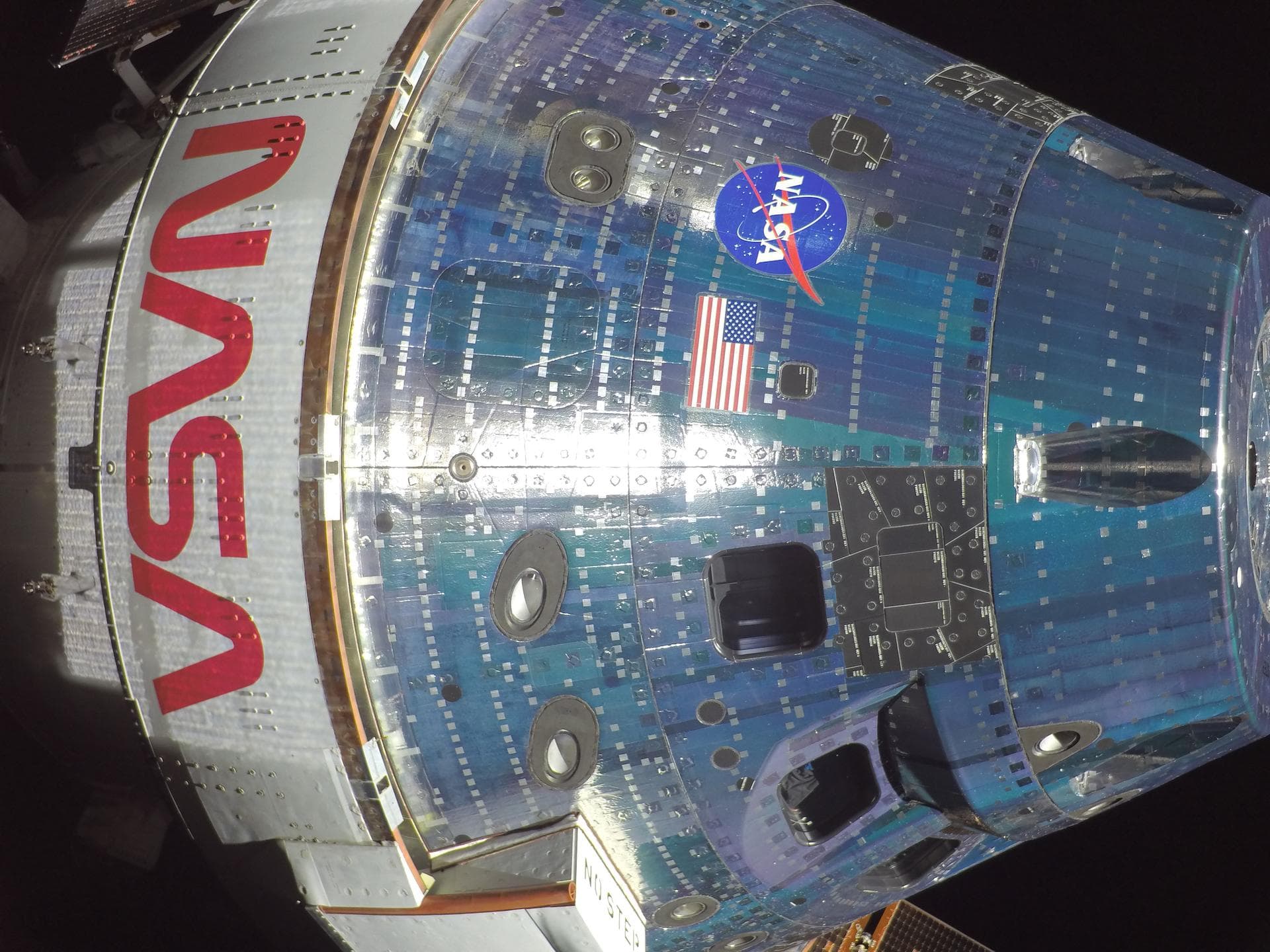
Why Artemis Will Change Lunar Exploration
NASA's return to the Moon is designed to become more sustainable, more international, and more ambitious than Apollo.
Read Article →
ISS
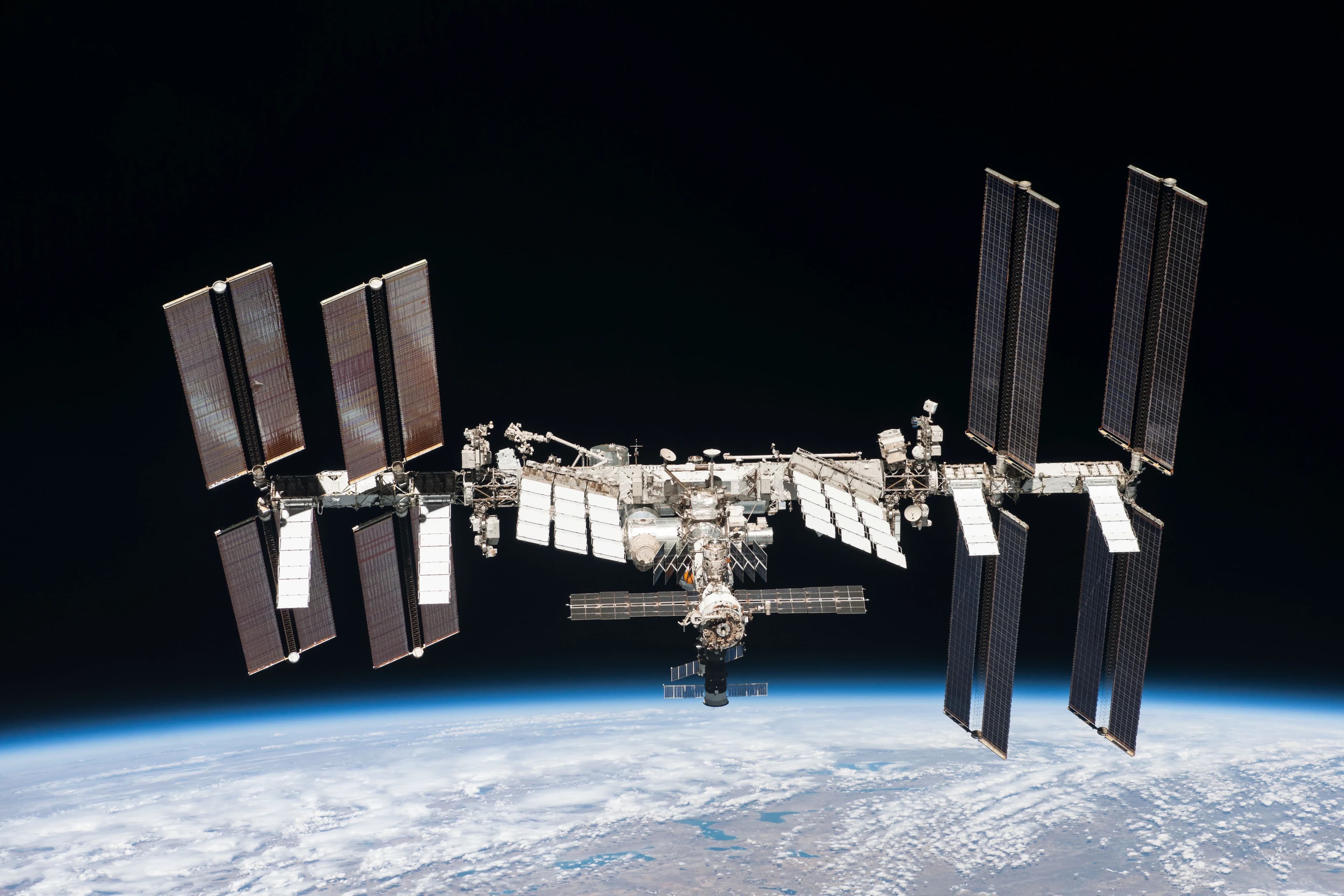
Life 250 Miles Above Earth
Inside the daily routine of astronauts living and working aboard the International Space Station.
Read Article →