Gemini
Gemini 5
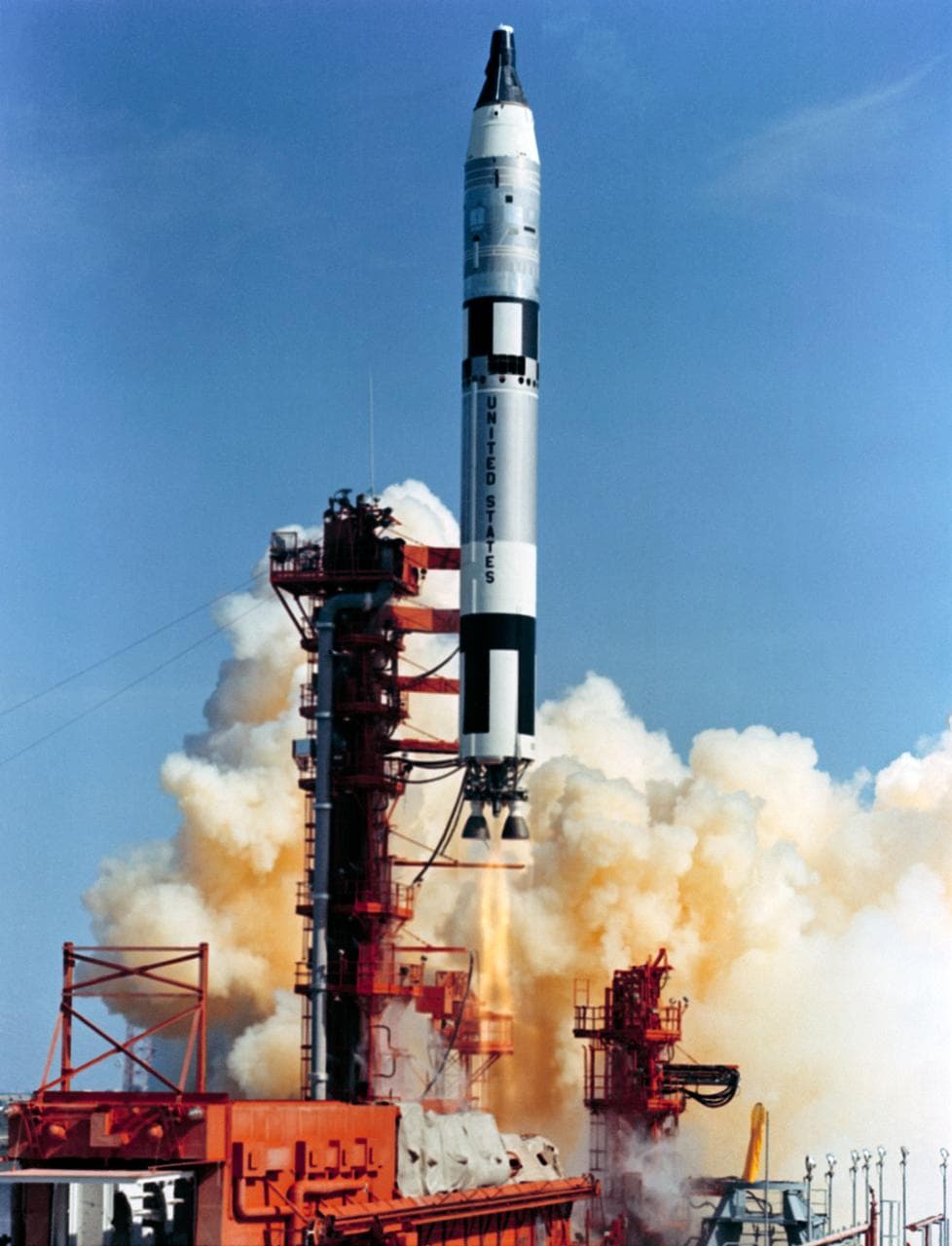
Gemini 5 set a new spaceflight endurance record of nearly eight days, proving astronauts could survive a mission as long as a round trip to the Moon, despite a fuel cell problem that threatened to cut the flight short.
Launch
August 21, 1965
Duration
7 days, 22 hours, 55 minutes
Crew
2 astronauts
Mission record
Gemini archive entry · Successful
Mission Overview
The mission
Gemini 5 set a new spaceflight endurance record of nearly eight days, proving astronauts could survive a mission as long as a round trip to the Moon, despite a fuel cell problem that threatened to cut the flight short.
In Depth
The Full Story
Gemini 5 carried a message on its mission patch before it even flew: a covered wagon beneath the words "8 Days or Bust," a nod to both the flight's ambitious duration goal and the risk that it might not make it. Commanded by Mercury veteran Gordon Cooper with rookie Pete Conrad as pilot, the mission launched on August 21, 1965, targeting the longest American spaceflight yet by a wide margin.
Gemini 5 introduced a new power source for NASA: hydrogen-oxygen fuel cells, replacing the batteries that had limited earlier missions to just a few days. The fuel cells promised enough power for a full eight-day flight, but within hours of launch, pressure in the system's oxygen supply began dropping unexpectedly, threatening to leave the spacecraft without enough electricity to complete the mission.
Mission Control and the crew worked through the problem by powering down non-essential systems and conserving energy wherever possible, effectively flying much of the mission on a knife's edge. A planned rendezvous exercise with a small radar evaluation pod, deployed early in the flight to practice tracking a target, had to be cancelled entirely to save power, a disappointing loss for a mission meant to rehearse rendezvous techniques.
Despite the power scare, Cooper and Conrad pressed on, enduring cramped, uncomfortable conditions for nearly eight days while conducting seventeen scientific and medical experiments. When Gemini 5 finally splashed down on August 29, it had orbited Earth 120 times and proven, for the first time, that human beings could physically endure a spaceflight as long as a round trip to the Moon would require.
Mission Details
Official Designation
Gemini-Titan 5 (GT-5)
Mission Type
Endurance Flight
Launch Date
August 21, 1965
Mission Duration
7 days, 22 hours, 55 minutes
Command Pilot
L. Gordon Cooper Jr.
Pilot
Charles 'Pete' Conrad Jr.
Spacecraft
Gemini Spacecraft 5
Launch Vehicle
Titan II GLV
Launch Site
Launch Complex 19, Cape Canaveral
Orbits Completed
120
Splashdown
Atlantic Ocean
Mission Result
Successful
Historic Achievement
New Spaceflight Endurance Record
Mission by the Numbers
Mission Statistics
Mission Type
Endurance Flight
Launch Vehicle
Titan II GLV
Crew
2 astronauts
Status
Successful
The People Behind the Mission
Crew
The astronauts assigned to command, operate, and carry out the mission.

Command Pilot
Gordon Cooper
Gordon Cooper piloted Faith 7, the final and longest Mercury flight, becoming the first American to spend more than a day in space.
View Astronaut →
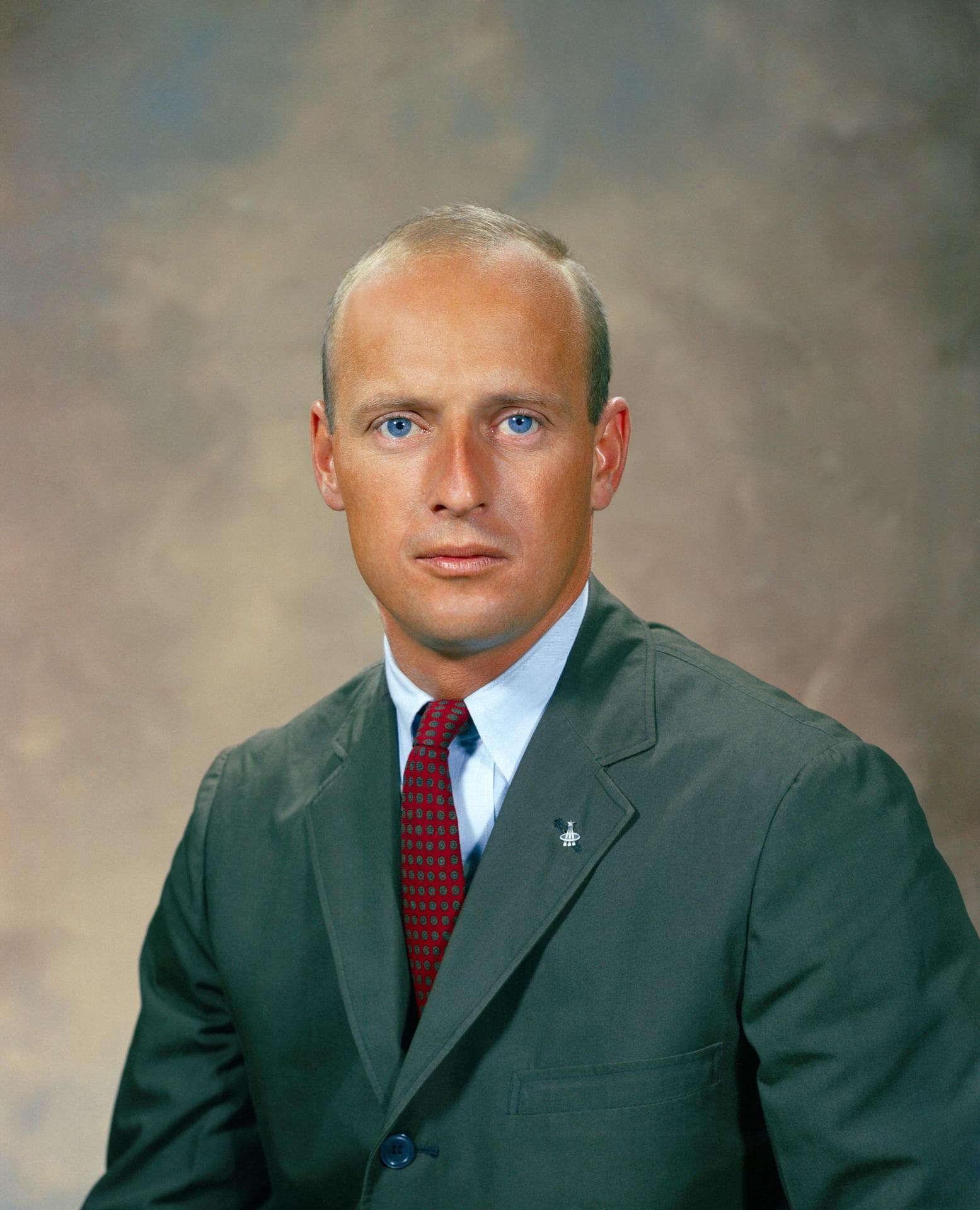
Pilot
Pete Conrad
Pete Conrad flew Gemini 5 and commanded Gemini 11's record-altitude flight before commanding Apollo 12 and becoming the third person to walk on the Moon.
View Astronaut →
Mission Goals
Mission objectives
- 01
Set a new American spaceflight endurance record of approximately eight days.
- 02
Test hydrogen-oxygen fuel cells as a new spacecraft power source.
- 03
Evaluate a radar evaluation pod for future rendezvous exercises.
- 04
Study the physiological effects of extended spaceflight on the crew.
- 05
Conduct scientific and medical experiments across a multi-day mission.
Fascinating Details
Did You Know?
Key did you know? recorded for this mission.
Gemini 5's mission patch showed a covered wagon and the phrase '8 Days or Bust,' foreshadowing the mission's central challenge.
The flight introduced hydrogen-oxygen fuel cells to American spaceflight, a technology later used throughout Apollo and the Space Shuttle.
A drop in fuel cell oxygen pressure just hours after launch nearly forced the mission to be cut dramatically short.
A planned rendezvous practice with a deployed radar pod had to be cancelled entirely to conserve electrical power.
Gordon Cooper became the first person to fly in space twice on a full-duration mission, following his Mercury flight aboard Faith 7.
Gemini 5's 120 orbits and nearly eight-day duration proved humans could endure a flight as long as a round trip to the Moon.
Conditions aboard the small two-person capsule were famously cramped, with almost no room to move for over a week.
Mission Timeline
August 21, 1965 · 9:00 a.m. EST
Launch
Gemini 5 lifted off from Launch Complex 19 at Cape Canaveral, carrying Gordon Cooper and Pete Conrad on a planned eight-day flight.
Hours After Launch
Fuel Cell Problem
Pressure in the fuel cell system's oxygen supply began dropping unexpectedly, threatening the spacecraft's electrical power for the rest of the mission.
Early in Flight
Rendezvous Exercise Cancelled
A planned exercise tracking a deployed radar evaluation pod was cancelled to conserve power, delaying NASA's first rendezvous practice.
Following Days
Careful Power Conservation
Mission Control and the crew powered down non-essential systems, carefully rationing electricity to keep the mission on track for its full duration.
Throughout the Flight
Scientific Program
Cooper and Conrad conducted seventeen scientific and medical experiments despite the cramped, uncomfortable conditions of an extended flight.
August 29, 1965
Splashdown
Gemini 5 splashed down in the Atlantic Ocean after nearly eight days and 120 orbits, setting a new American spaceflight endurance record.
Mission Legacy
Legacy
Gemini 5 answered one of the last major open questions about the feasibility of a Moon mission: could the human body endure a week or more in space without serious harm? The mission's success, even with its power problems, gave NASA the confidence to plan the far longer Gemini 7 flight later that same year.
The fuel cell crisis and the crew's disciplined power conservation became a model for how NASA and its astronauts would handle in-flight emergencies going forward, prioritizing calm troubleshooting over abandoning mission objectives.
Though its planned rendezvous exercise was lost to the power problem, Gemini 5 still validated fuel cell technology that would power every crewed Apollo mission to the Moon, making it an essential, if underappreciated, technical bridge between Gemini and Apollo.
Mission Photo Archive
Related Stories

Apollo
The Moon Photos That Still Feel Impossible
Before social media, astronauts brought back images that changed how humanity saw itself forever.
Read Article →
Artemis
Why Artemis Will Change Lunar Exploration
NASA's return to the Moon is designed to become more sustainable, more international, and more ambitious than Apollo.
Read Article →
ISS
Life 250 Miles Above Earth
Inside the daily routine of astronauts living and working aboard the International Space Station.
Read Article →