Life 250 Miles Above Earth
Inside the daily routine of astronauts living and working aboard the International Space Station.
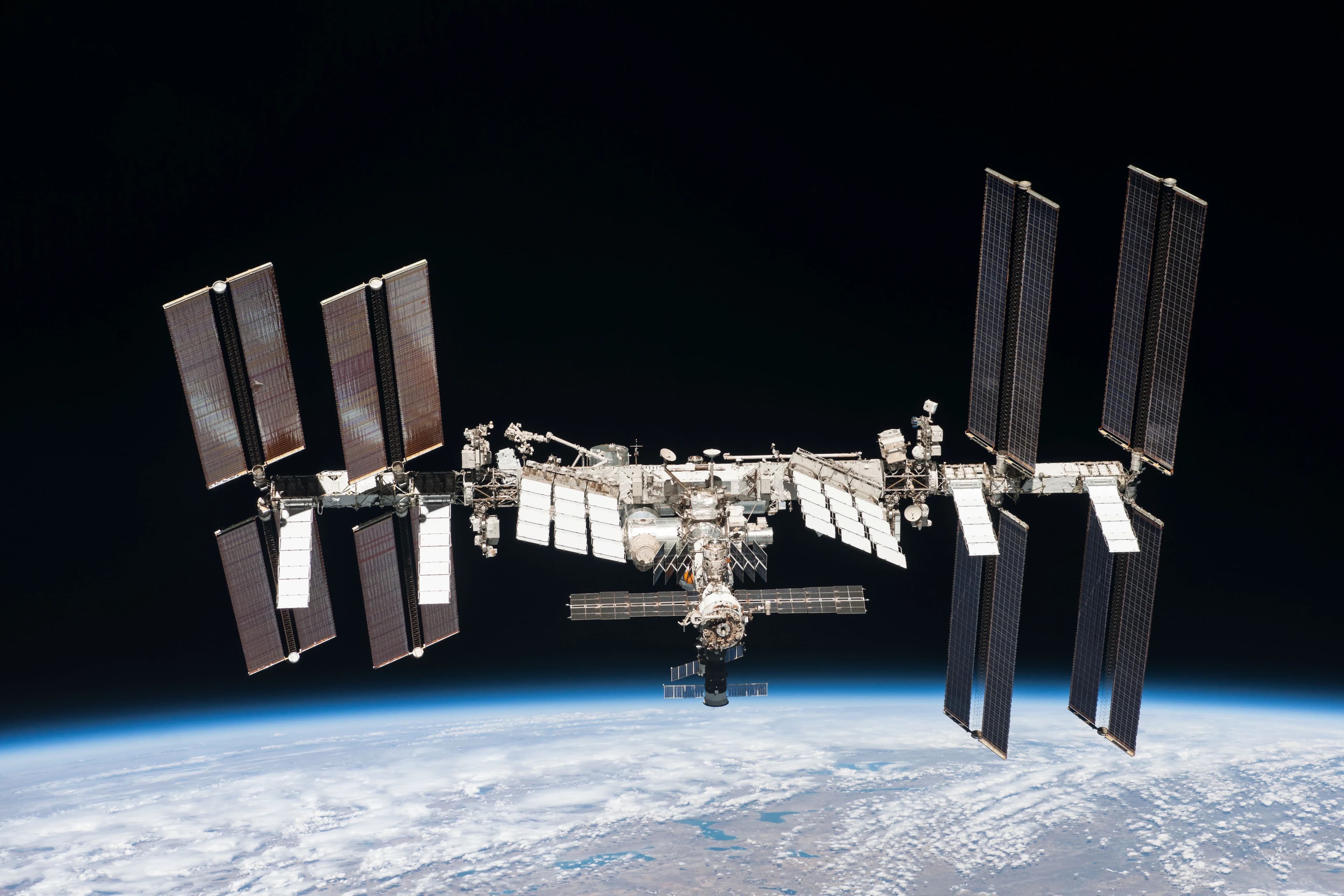
International Space Station orbiting above Earth
OrbitingTruths EditorialLife aboard the International Space Station is not an endless view of Earth. It is a carefully scheduled routine of science, maintenance, exercise, communication, and adaptation.
Living and working in orbit requires astronauts to rethink nearly every ordinary activity.
Meals must be secured, sleeping bags must be attached to a surface, tools must be restrained, and even small objects can become hazards if they drift into equipment.
The station serves as both a home and a laboratory, allowing crews to study how humans, materials, plants, and technologies behave during long periods in microgravity.
Microgravity
A Day Without Up or Down
Inside the station, there is no permanent floor or ceiling. Astronauts move by gently pushing from handrails and surfaces while carefully controlling their momentum.
Every item must be stored or fastened because anything released will continue drifting until it reaches a wall, vent, experiment, or crewmate.
Human health
Exercise Is Essential
Without regular loading from gravity, muscles and bones begin to weaken. Astronauts therefore spend substantial time using specialized exercise equipment.
These routines help protect strength, cardiovascular health, and bone density during extended missions.
Scientific research
A Laboratory in Orbit
The International Space Station provides a research environment that cannot be reproduced completely on Earth.
Experiments aboard the station examine biology, combustion, fluid behavior, materials, medicine, Earth observation, and technologies needed for future exploration.
Key takeaways
What matters most
- Astronauts follow tightly organized daily schedules.
- Regular exercise helps reduce muscle and bone loss.
- Loose objects must be restrained in microgravity.
- The station supports scientific research and technology testing.
Article Details
Destination
International Space Station
Orbit
Low Earth Orbit
Environment
Microgravity
Primary Purpose
Research and Technology Development
Lasting impact
Why it still matters
The station has expanded knowledge about long-duration human spaceflight.
ISS research supports future missions beyond low Earth orbit.
The program demonstrates sustained international cooperation in space.
Connected archive
Continue exploring
Related Stories

Apollo
The Moon Photos That Still Feel Impossible
Before social media, astronauts brought back images that changed how humanity saw itself forever.
Read Article →
Artemis
Why Artemis Will Change Lunar Exploration
NASA's return to the Moon is designed to become more sustainable, more international, and more ambitious than Apollo.
Read Article →
Mars
The Next Giant Leap
What humanity still has to solve before astronauts can safely reach Mars and return home.
Read Article →