Cape Canaveral, Florida
Launch Complex 14
The pad that launched every orbital Mercury-Atlas mission, sending the first Americans, including John Glenn, into orbit around Earth.
4
Missions
28.39°N, 80.55°W
Coordinates
Connected records
The missions
Every mission in the archive tied to Launch Complex 14.
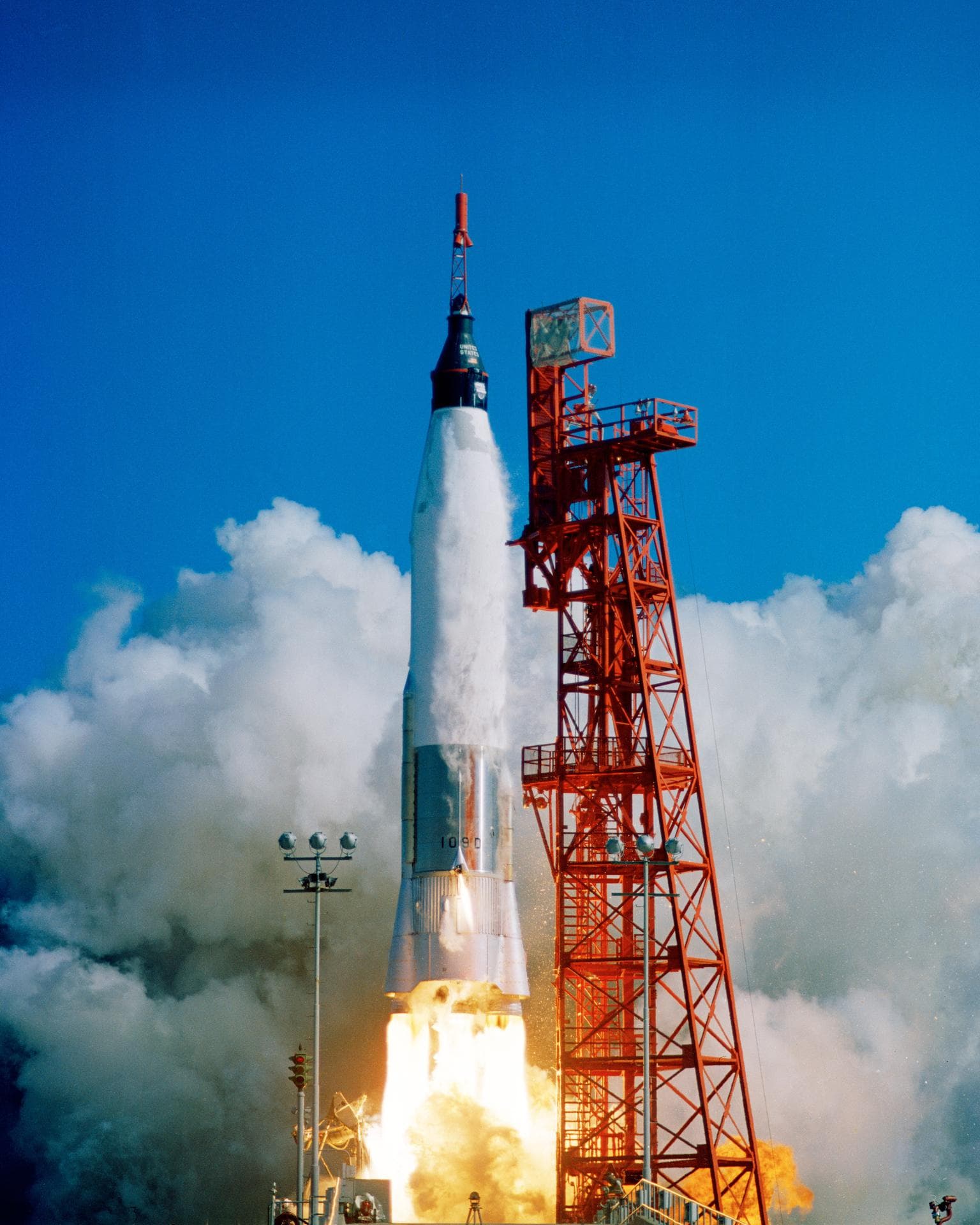
Friendship 7
Launch
February 20, 1962
Status
Successful
Duration
4 hours, 55 minutes, 23 seconds
Crew
Friendship 7 made John Glenn the first American to orbit Earth, completing three orbits in under five hours despite a tense reentry caused by a false sensor warning about the spacecraft's heat shield.
View Mission →
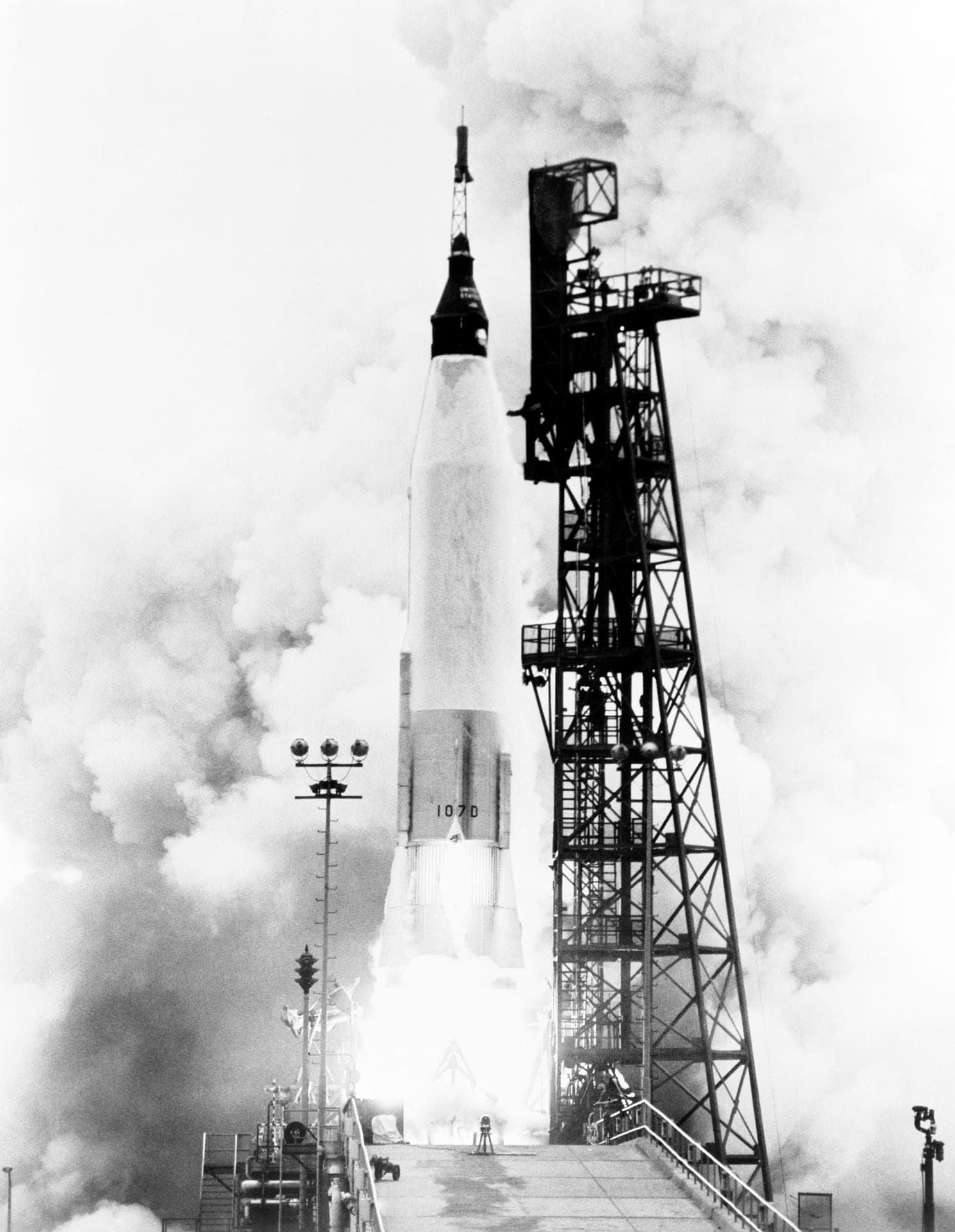
Aurora 7
Launch
May 24, 1962
Status
Successful
Duration
4 hours, 56 minutes, 5 seconds
Crew
Aurora 7 repeated John Glenn's three-orbit flight with Scott Carpenter at the controls, but a late and off-angle retrofire caused the capsule to splash down roughly 250 miles off target, leaving Carpenter adrift and out of contact for nearly forty minutes.
View Mission →
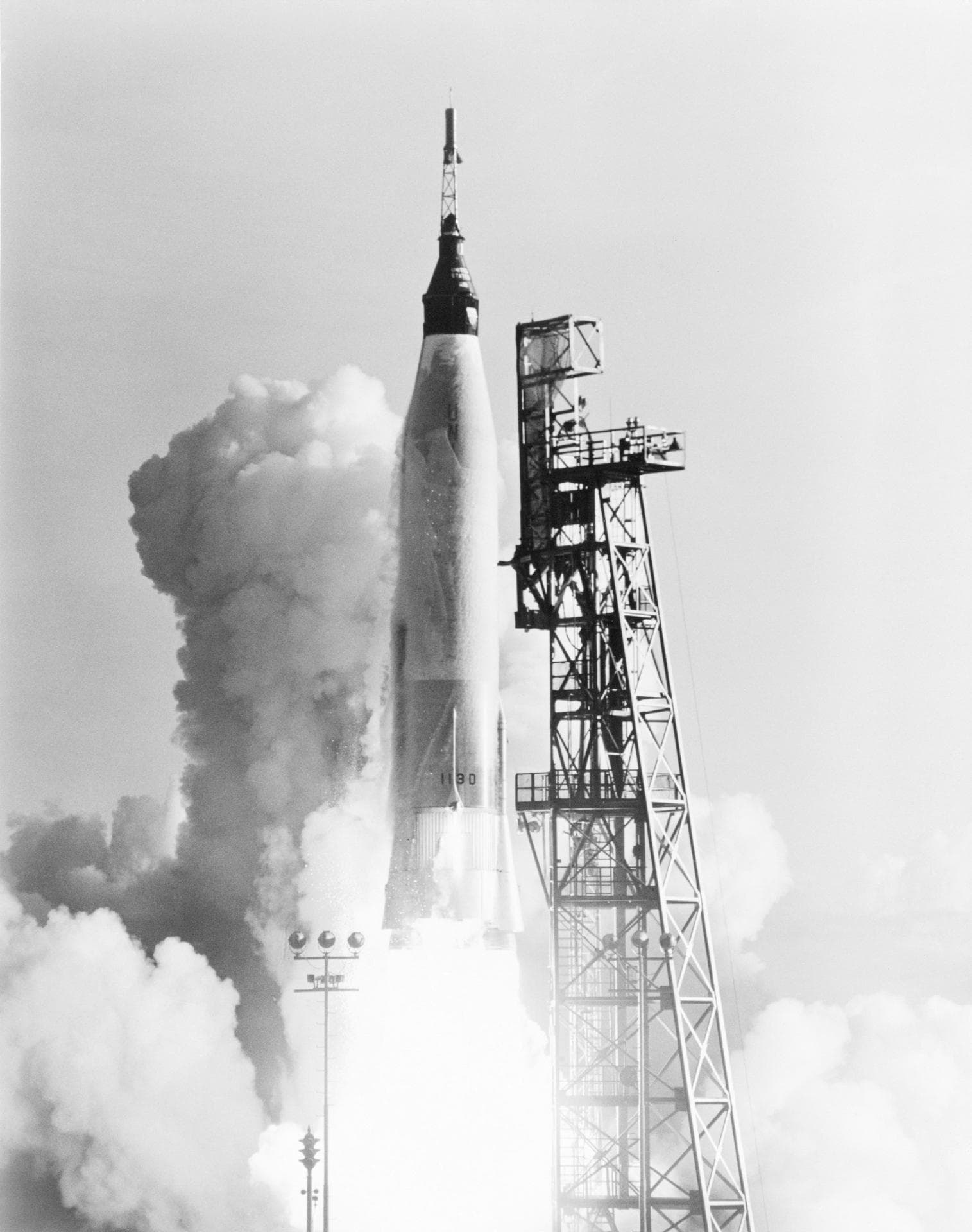
Sigma 7
Launch
October 3, 1962
Status
Successful
Duration
9 hours, 13 minutes, 11 seconds
Crew
Sigma 7 was a near-flawless six-orbit engineering test flight in which Wally Schirra deliberately conserved fuel and flew a highly disciplined mission, splashing down within a few miles of his target in the Pacific Ocean.
View Mission →
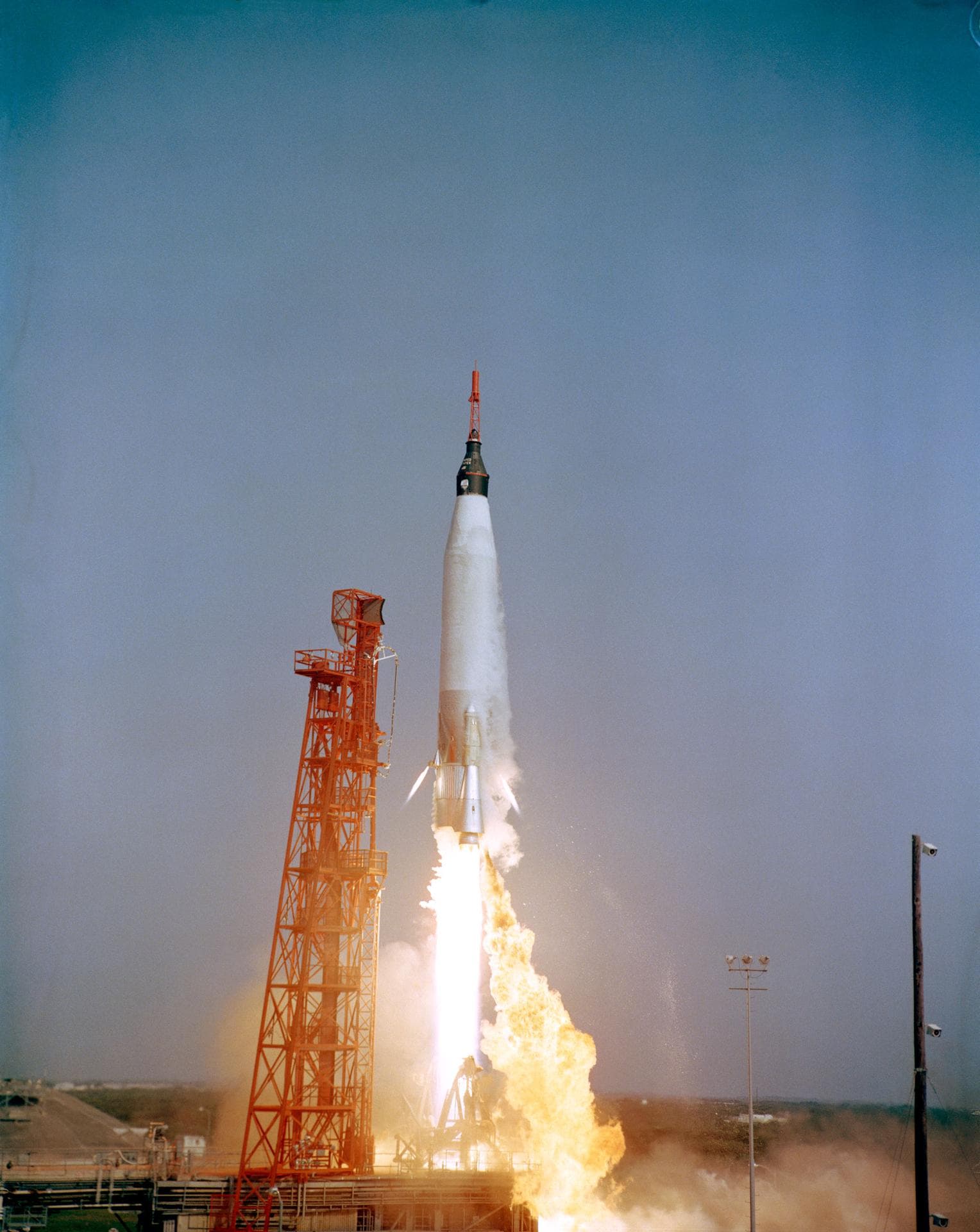
Faith 7
Launch
May 15, 1963
Status
Successful
Duration
34 hours, 19 minutes, 49 seconds
Crew
Faith 7 was the longest and final flight of Project Mercury, sending Gordon Cooper on 22 orbits of Earth over more than 34 hours, during which he became the first American to sleep in space and executed a flawless manual reentry after a series of electrical failures.
View Mission →
Other launch sites
Related locations
Explore the other places connected to this part of the archive.
Launch Complex 5
Cape Canaveral, Florida
A modest pad used to launch the Redstone rockets that carried NASA's first two astronauts on suborbital flights at the dawn of Project Mercury.
Launch Complex 19
Cape Canaveral, Florida
The pad used for every crewed Gemini-Titan launch, sending ten two-person crews into orbit to develop the rendezvous and spacewalk techniques Apollo would depend on.
Launch Complex 34
Cape Canaveral, Florida
The pad where the Apollo 1 fire claimed three astronauts' lives during a launch rehearsal, and where, nearly two years later, Apollo 7 lifted off to prove the redesigned spacecraft was safe.
Launch Complex 37B
Cape Canaveral, Florida
A Saturn IB pad used for uncrewed Apollo hardware testing, including the first flight of the Lunar Module.
Launch Complex 39A
Kennedy Space Center, Florida
The most historic launch pad in spaceflight history. Every crewed Saturn V Moon mission, the first and final Space Shuttle flights, and modern commercial crew launches have all lifted off from Pad A.
Launch Complex 39B
Kennedy Space Center, Florida
Pad 39A's sister pad, used for later Apollo and Space Shuttle missions and now the launch site for NASA's Artemis Moon program.
Space Launch Complex 40
Cape Canaveral, Florida
A Cape Canaveral pad leased by SpaceX, used to launch commercial cargo missions to the International Space Station.
Baikonur Cosmodrome
Kazakhstan
The Russian launch site that sent the International Space Station's first modules and first resident crew into orbit, beginning more than two decades of continuous human presence in space.
Kennedy Space Center
Merritt Island, Florida
NASA's primary launch site for human spaceflight, home to Launch Complex 39 and the agency's current and future crewed missions.