Mercury
Sigma 7
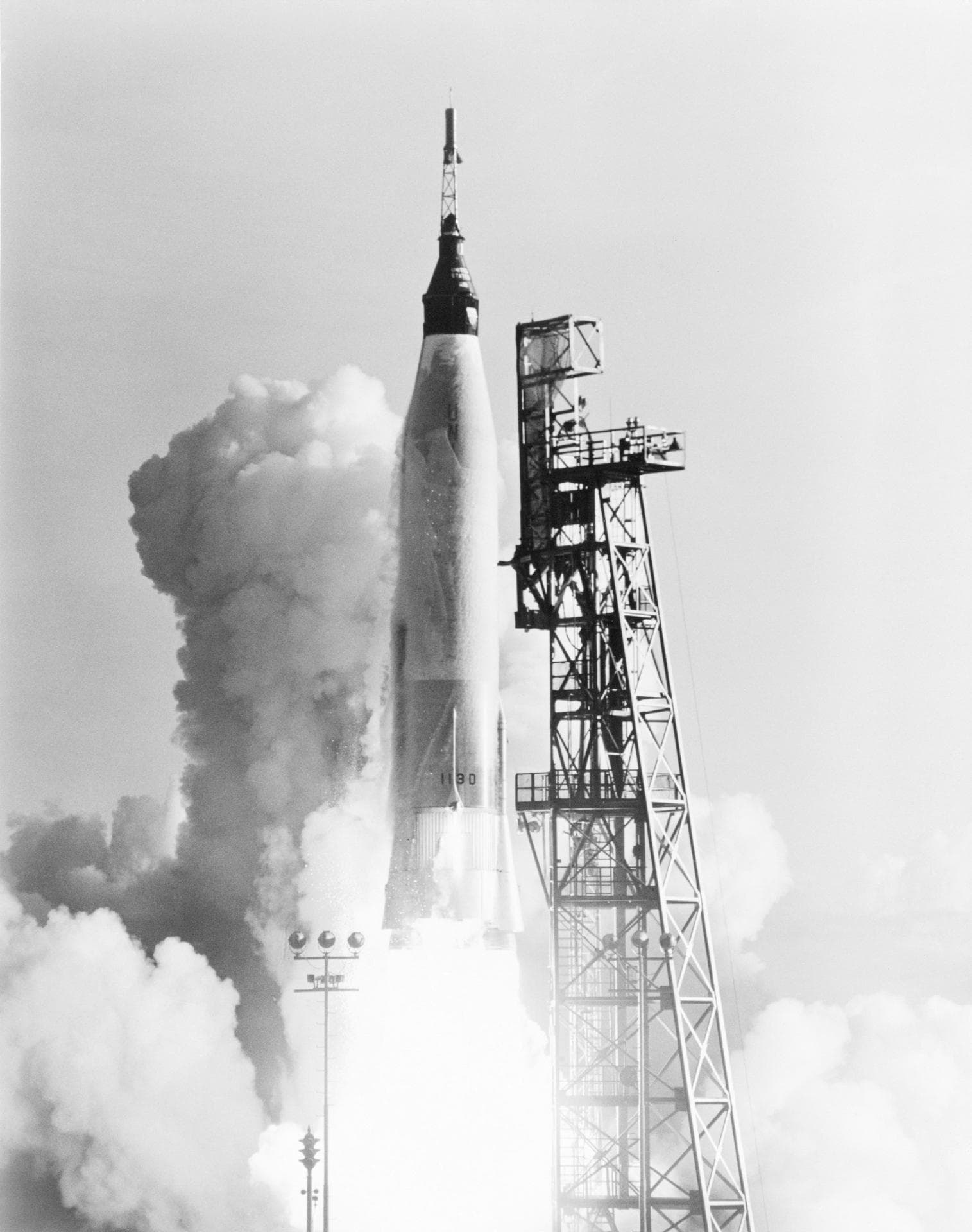
Sigma 7 was a near-flawless six-orbit engineering test flight in which Wally Schirra deliberately conserved fuel and flew a highly disciplined mission, splashing down within a few miles of his target in the Pacific Ocean.
Launch
October 3, 1962
Duration
9 hours, 13 minutes, 11 seconds
Crew
1 astronaut
Mission record
Mercury archive entry · Successful
Mission Overview
The mission
Sigma 7 was a near-flawless six-orbit engineering test flight in which Wally Schirra deliberately conserved fuel and flew a highly disciplined mission, splashing down within a few miles of his target in the Pacific Ocean.
In Depth
The Full Story
Sigma 7 shifted the focus of Project Mercury from records and firsts toward disciplined engineering evaluation. After Scott Carpenter's Aurora 7 flight had ended with a fuel shortage and a long landing overshoot, NASA wanted its next mission to demonstrate careful, conservative piloting and precise spacecraft control.
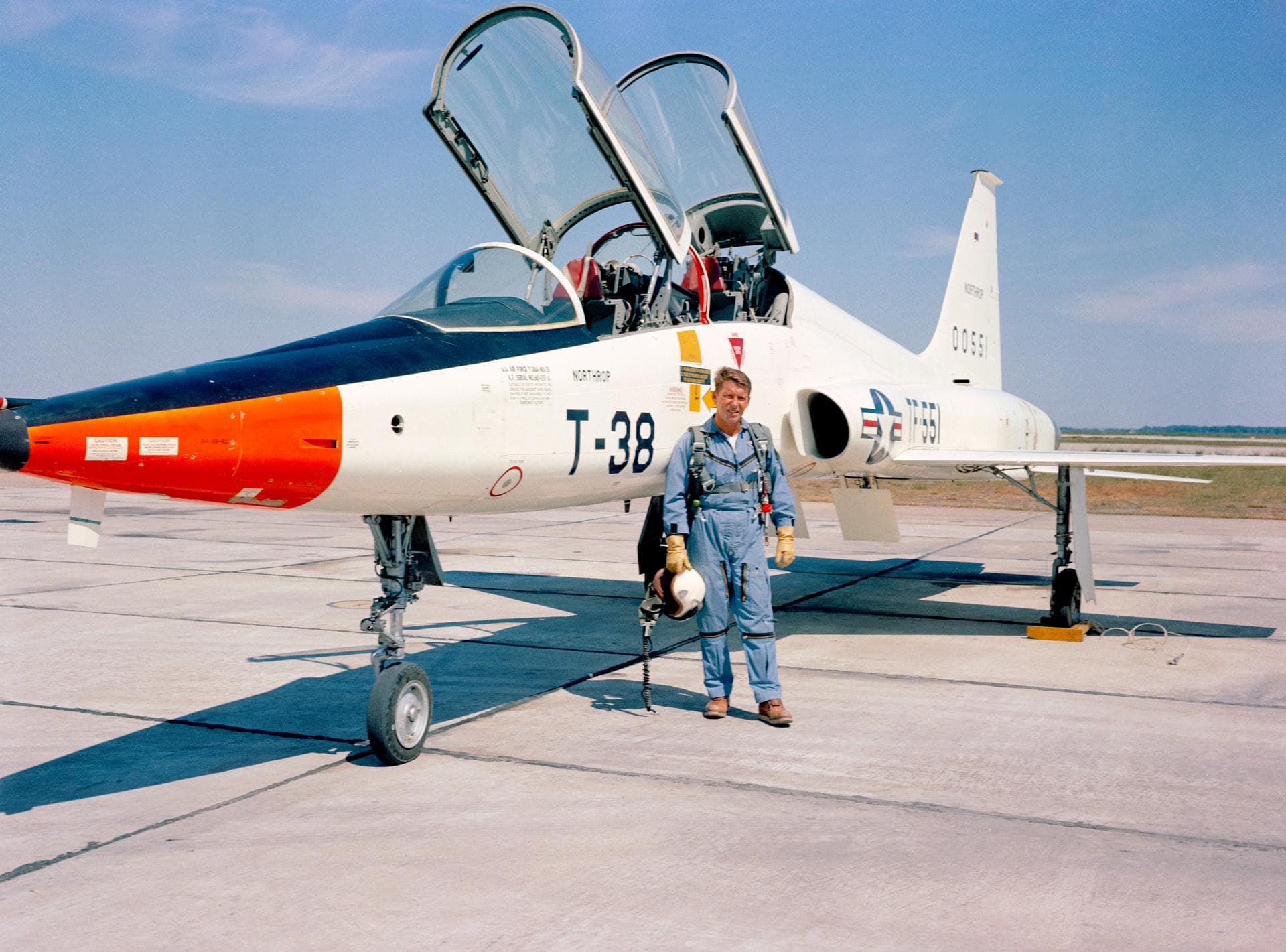
Wally Schirra, one of the original Mercury Seven, was well suited to the assignment. Launched on October 3, 1962, aboard Mercury-Atlas 8, Schirra flew a deliberately minimal mission, limiting unnecessary maneuvering and closely managing his fuel reserves throughout six orbits of Earth over more than nine hours, nearly double the flight time of any previous American mission.
Schirra also used the flight to test a new, lighter Mercury spacesuit and to evaluate its temperature control system, including a period where he deliberately let the suit run warmer than comfortable to study its cooling response. Throughout the mission, he stuck closely to the flight plan, avoiding the kind of task overload and fuel expenditure that had complicated Carpenter's flight.
The discipline paid off. Sigma 7 splashed down in the Pacific Ocean near Midway Island, the first Mercury flight to land in the Pacific rather than the Atlantic, and came down within about 4.5 miles of its planned recovery point. The aircraft carrier USS Kearsarge recovered Schirra and the capsule quickly and without incident, and the mission became widely regarded within NASA as close to a textbook flight.
Mission Details
Official Designation
Mercury-Atlas 8 (MA-8)
Mission Type
Engineering Test Flight
Launch Date
October 3, 1962
Mission Duration
9 hours, 13 minutes, 11 seconds
Pilot
Walter M. 'Wally' Schirra Jr.
Spacecraft
Mercury Capsule 16 'Sigma 7'
Launch Vehicle
Atlas
Launch Site
Launch Complex 14, Cape Canaveral
Orbits Completed
6
Peak Altitude
176 statute miles (283 km)
Splashdown
Pacific Ocean, near Midway Island
Landing Accuracy
Approximately 4.5 miles from target
Recovery Ship
USS Kearsarge
Mission Result
Successful
Mission by the Numbers
Mission Statistics
Mission Type
Engineering Test Flight
Launch Vehicle
Mercury-Atlas 8
Crew
1 astronauts
Status
Successful
The People Behind the Mission
Crew
The astronauts assigned to command, operate, and carry out the mission.
Mission Goals
Mission objectives
- 01
Demonstrate precise, fuel-conservative spacecraft control over an extended flight.
- 02
Complete six orbits of Earth, roughly doubling the duration of previous American orbital flights.
- 03
Evaluate a new, lightweight Mercury spacesuit and its temperature control system.
- 04
Test procedures for a Pacific Ocean splashdown and recovery.
- 05
Further validate spacecraft systems performance across a longer mission.
- 06
Demonstrate accurate retrofire timing and landing point targeting.
Fascinating Details
Did You Know?
Key did you know? recorded for this mission.
Sigma 7 was the first American Mercury flight to splash down in the Pacific Ocean rather than the Atlantic.
Schirra deliberately minimized spacecraft maneuvering to conserve fuel, in direct response to lessons learned from Aurora 7.
Schirra intentionally let his spacesuit run uncomfortably warm during part of the flight to test its cooling system.
The mission lasted more than nine hours, nearly double the length of any previous American crewed spaceflight at the time.
Sigma 7 splashed down within about 4.5 miles of its planned recovery point, an unusually precise landing for the era.
Schirra remains the only astronaut to have flown missions in the Mercury, Gemini, and Apollo programs.
The 'Sigma' in Sigma 7's name was chosen to represent engineering excellence, since sigma is the mathematical symbol for summation.
Mission Timeline
October 3, 1962 · 7:15 a.m. EST
Launch
Mercury-Atlas 8 lifted off from Launch Complex 14 at Cape Canaveral, carrying Wally Schirra into orbit.
Early Orbits
Conservative Flight Plan
Schirra deliberately limited spacecraft maneuvering to conserve fuel, closely following the mission's disciplined flight plan.
Mid-Mission
Spacesuit Temperature Test
Schirra evaluated a new, lightweight Mercury spacesuit, including a period where he allowed the suit to run warmer than comfortable to study its cooling performance.
Sixth Orbit
Retrofire
After completing six orbits over more than nine hours, Schirra executed a precisely timed retrofire to begin the descent toward the Pacific Ocean.
October 3, 1962 · 4:28 p.m. EST
Splashdown
Sigma 7 splashed down in the Pacific Ocean near Midway Island, the first Mercury flight to land in the Pacific, within about 4.5 miles of its planned target.
Shortly After
Recovery
The aircraft carrier USS Kearsarge recovered Schirra and Sigma 7 quickly and without incident.
Mission Legacy
Legacy
Sigma 7 proved that NASA's astronauts could fly Mercury spacecraft with a level of precision and discipline that eliminated the fuel and timing problems seen on earlier flights. Its near-flawless execution restored confidence in the program after Aurora 7's dramatic overshoot.
The mission also validated a longer flight duration and a new spacesuit design, both of which fed directly into planning for Gordon Cooper's day-long Faith 7 flight that would close out Project Mercury the following year.
Schirra's calm, methodical approach to Sigma 7 became something of a model for engineering-focused test flying throughout NASA's early human spaceflight programs, an approach he would carry forward into his later roles commanding Gemini 6A and Apollo 7.
By successfully testing a Pacific Ocean recovery, Sigma 7 also expanded NASA's operational flexibility for future missions, opening up more landing zone options for the increasingly complex flights that followed.
Mission Photo Archive
Related Stories
Apollo
The Moon Photos That Still Feel Impossible
Before social media, astronauts brought back images that changed how humanity saw itself forever.
Read Article →
Artemis
Why Artemis Will Change Lunar Exploration
NASA's return to the Moon is designed to become more sustainable, more international, and more ambitious than Apollo.
Read Article →
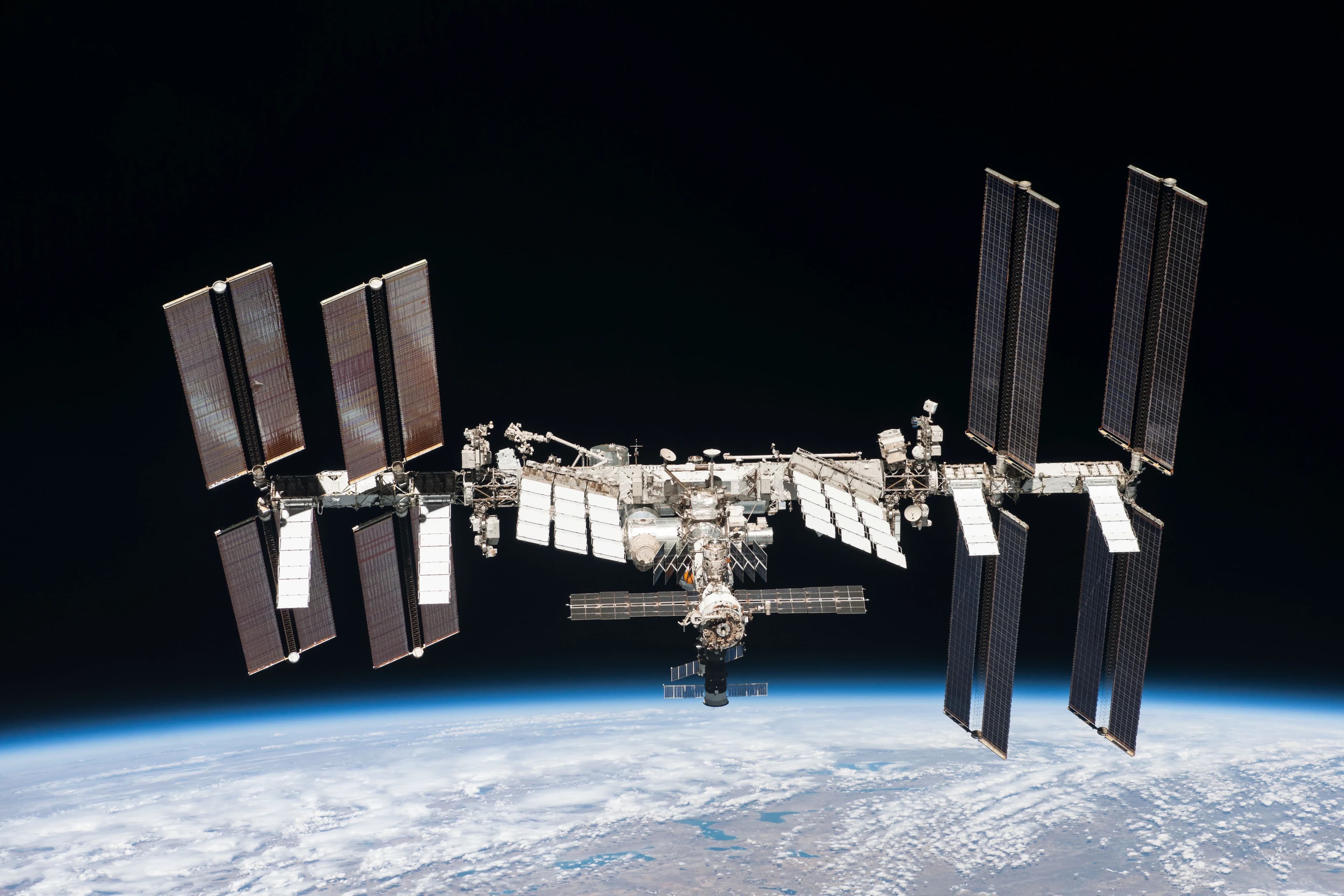
ISS
Life 250 Miles Above Earth
Inside the daily routine of astronauts living and working aboard the International Space Station.
Read Article →