Apollo
Apollo 4
Apollo 4 was the first flight of the Saturn V, the enormous rocket built to carry astronauts to the Moon. The uncrewed mission tested all three rocket stages together, restarted the third stage in space, fired the Apollo spacecraft's main engine, and sent the Command Module back through Earth's atmosphere at nearly the speed of a spacecraft returning from the Moon.
Launch
November 9, 1967
Duration
8 hours, 36 minutes, 59 seconds
Crew
Uncrewed
Mission record
Apollo archive entry · Successful
Mission Overview
The mission
Apollo 4 was the first flight of the Saturn V, the enormous rocket built to carry astronauts to the Moon. The uncrewed mission tested all three rocket stages together, restarted the third stage in space, fired the Apollo spacecraft's main engine, and sent the Command Module back through Earth's atmosphere at nearly the speed of a spacecraft returning from the Moon.
In Depth
The Full Story
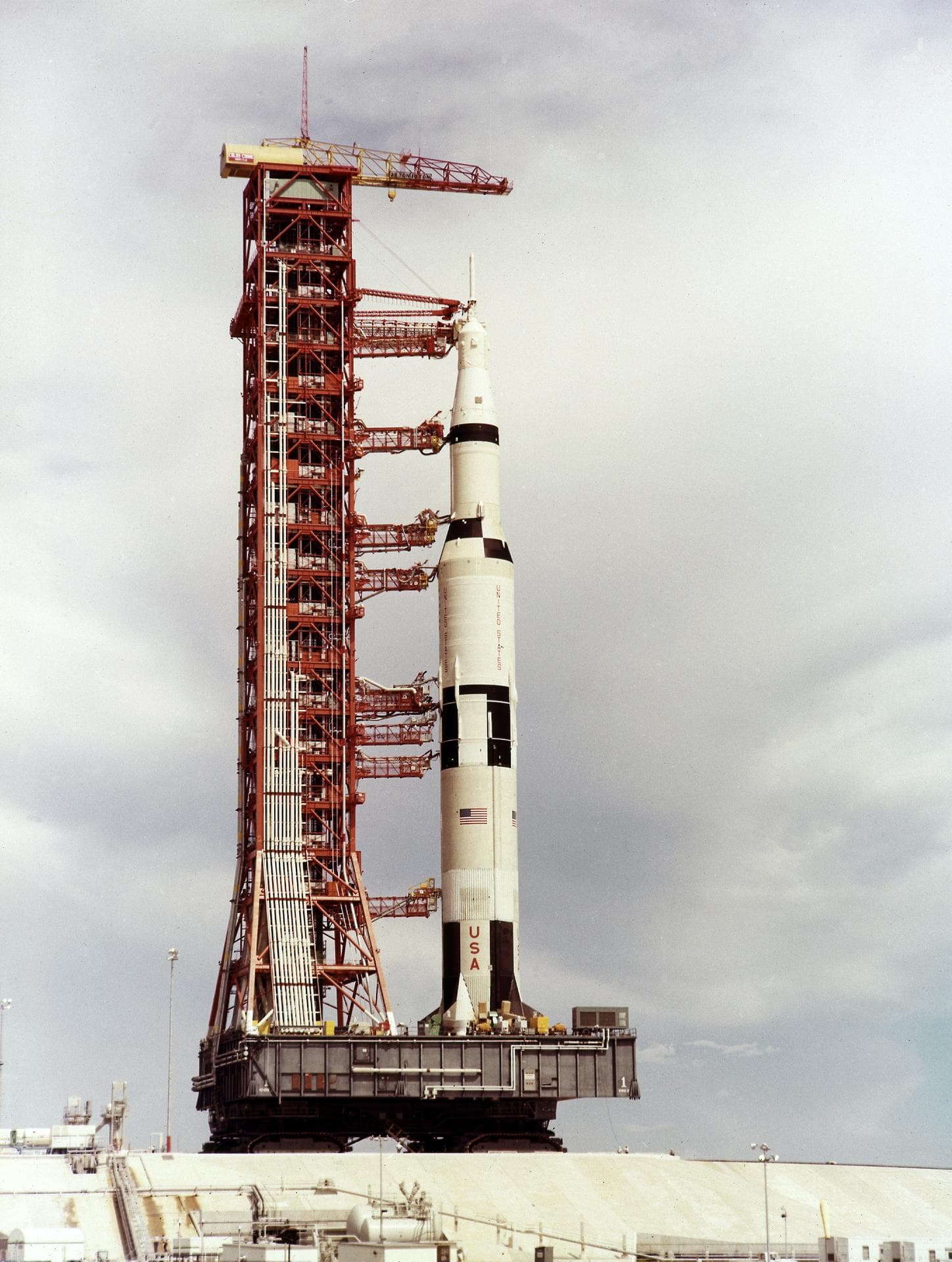
Apollo 4 was one of the boldest test flights in the history of space exploration. On November 9, 1967, NASA launched the complete three-stage Saturn V rocket for the first time, placing an uncrewed Apollo Command and Service Module into Earth orbit.
The mission was officially designated AS-501, identifying it as the first flight of the Saturn V. It was also the first launch from Launch Complex 39A at NASA's Kennedy Space Center in Florida.
Before Apollo 4, NASA often tested new launch vehicles gradually. Individual stages or partial combinations would be flown before engineers attempted a complete mission configuration. Apollo managers chose a more aggressive strategy for the Saturn V.
Known as “all-up” testing, the approach placed all three live Saturn V stages, an operational Apollo Command and Service Module, and a Lunar Module test article on a single flight. Several major systems that had never flown together would be tested simultaneously.
The decision carried significant risk, but it also saved time. NASA was working toward President John F. Kennedy's goal of landing astronauts on the Moon before the end of the decade. Testing the Saturn V one stage at a time could have delayed the program beyond that deadline.
Apollo 4 lifted off from Launch Complex 39A at 7:00:01 a.m. Eastern Standard Time. The Saturn V's five F-1 engines generated approximately 7.5 million pounds of thrust, producing shock waves powerful enough to shake buildings and rattle windows several miles from the launch pad.
The launch marked the first time the public witnessed the full power of the rocket that would eventually carry astronauts toward the Moon.
The Saturn V's three stages performed successfully. After the first and second stages completed their burns and separated, the S-IVB third stage placed the spacecraft into a temporary parking orbit around Earth.
Following two revolutions, the S-IVB engine restarted. This restart was essential because future lunar missions would rely on the third stage to perform translunar injection, the maneuver that would send Apollo crews out of Earth orbit and toward the Moon.
The second S-IVB burn placed Apollo 4 into a highly elliptical trajectory extending thousands of miles from Earth. After separating from the third stage, the Apollo Service Module's main engine fired to raise the spacecraft's highest point even farther.
During the return toward Earth, the Service Propulsion System fired again. This burn accelerated the spacecraft to approximately 24,900 miles per hour, reproducing the punishing velocity that an Apollo Command Module would experience when returning from the Moon.
The Command Module separated from the Service Module, entered Earth's atmosphere, and endured temperatures of several thousand degrees. Its heat shield performed successfully.
Apollo 4 splashed down in the Pacific Ocean near Hawaii after completing a flight of 8 hours, 36 minutes, and 59 seconds. The recovery ship USS Bennington retrieved the spacecraft.
The mission achieved all of its primary objectives. It proved that the Saturn V could fly as an integrated vehicle, that its third stage could restart in orbit, that the Apollo spacecraft's main engine could perform critical burns, and that the Command Module could survive a high-speed lunar-return reentry.
Apollo 4 was especially important because it occurred less than ten months after the Apollo 1 fire. NASA was still recovering from the loss of Virgil Grissom, Edward White, and Roger Chaffee, and confidence in the Apollo Program had been badly damaged.
The success of Apollo 4 demonstrated that the launch vehicle and spacecraft development programs could continue. It did not solve every challenge remaining between Earth and the Moon, but it proved that the basic machinery required for the journey could work.
For the first time, the rocket designed to carry humans to another world had left the ground. The path to the Moon was no longer represented only by plans, test stands, and unfinished hardware. It had become a flight-proven possibility.
Mission Details
Official Designation
AS-501
Mission Type
Uncrewed Saturn V and Apollo spacecraft test
Launch Date
November 9, 1967
Launch Time
7:00:01 a.m. EST
Launch Site
Launch Complex 39A
Launch Vehicle
Saturn V SA-501
Spacecraft
Apollo CSM-017
Crew
Uncrewed
Payload Mass
36,656 kilograms
Mission Duration
8 hours, 36 minutes, 59 seconds
Earth Revolutions
3
Initial Parking Orbit
Approximately 184 by 192 kilometers
Maximum Distance
Approximately 18,216 kilometers from Earth
Reentry Velocity
Approximately 11,140 meters per second
Approximate Reentry Speed
24,900 miles per hour
Landing Date
November 9, 1967
Landing Time
3:37:08 p.m. EST
Landing Site
Pacific Ocean near Hawaii
Recovery Ship
USS Bennington
Mission Result
All primary objectives achieved
Historic First
First flight of the Saturn V
Kennedy Space Center First
First launch from Kennedy Space Center
Mission by the Numbers
Mission Statistics
Mission Type
Uncrewed Saturn V and Apollo Spacecraft Test
Launch Vehicle
Saturn V SA-501
Crew
0 astronauts
Status
Successful
Mission Goals
Mission objectives
- 01
Conduct the first complete flight test of the three-stage Saturn V launch vehicle.
- 02
Demonstrate the structural integrity of the fully assembled Saturn V and Apollo spacecraft configuration.
- 03
Evaluate compatibility between the launch vehicle, spacecraft, ground systems, tracking network, and mission-control facilities.
- 04
Test the operation and separation of the Saturn V's S-IC, S-II, and S-IVB stages.
- 05
Demonstrate the first in-space restart of the S-IVB third-stage engine.
- 06
Simulate the translunar injection maneuver required to send future Apollo crews toward the Moon.
- 07
Evaluate the Apollo Service Propulsion System during multiple engine firings.
- 08
Test the Command Module heat shield at a velocity approaching that of a spacecraft returning from the Moon.
- 09
Evaluate the spacecraft's thermal seals and overall reentry performance.
- 10
Measure launch loads, vibrations, structural behavior, and dynamic forces throughout powered flight.
- 11
Test the Saturn V emergency-detection system and launch-vehicle subsystems.
- 12
Evaluate mission-support facilities, launch operations, tracking systems, and recovery procedures.
- 13
Collect photographs of Earth using the Command Module's automatic camera system.
- 14
Gather structural-load and vibration data using a Lunar Module test article carried inside the spacecraft adapter.
Fascinating Details
Did You Know?
Key did you know? recorded for this mission.
Apollo 4 was the first launch of the complete three-stage Saturn V rocket.
The mission was the first space launch conducted from NASA's Kennedy Space Center.
NASA tested all three Saturn V stages together on their first flight using an unusually bold strategy known as all-up testing.
The Saturn V stood approximately 363 feet tall, taller than the Statue of Liberty from the ground to the tip of its torch.
The rocket's five F-1 first-stage engines produced approximately 7.5 million pounds of thrust at liftoff.
The launch shock waves shook buildings and rattled windows at observation locations several miles from the pad.
CBS broadcaster Walter Cronkite and a producer reportedly held onto a studio window as the Saturn V's vibrations shook their broadcast structure.
Apollo 4 carried no operational Lunar Module, but it carried Lunar Module Test Article 10R to collect structural-load and vibration data.
The S-IVB third stage restarted in orbit to demonstrate the maneuver future crews would use to leave Earth for the Moon.
The Apollo spacecraft traveled more than 11,000 miles from Earth before beginning its high-speed return.
An automatic camera aboard the Command Module photographed Earth from high altitude.
Apollo 4's Command Module reentered at almost 25,000 miles per hour to test conditions similar to a return from the Moon.
The spacecraft landed only about 10 miles from its intended splashdown point.
Apollo 4 was the first Apollo flight after the Apollo 1 tragedy.
The successful mission gave NASA confidence that the Saturn V could support future crewed lunar missions.
Mission Timeline
January 1966
Saturn V Assembly Begins
NASA began assembling the first flight-qualified Saturn V inside the newly completed Vehicle Assembly Building at Kennedy Space Center.
1966–1967
Vehicle Testing and Integration
Engineers assembled, inspected, tested, disassembled, and reassembled portions of the Saturn V while resolving technical problems with the new launch vehicle.
January 27, 1967
Apollo 1 Fire
The Apollo 1 crew died during a ground test, forcing NASA to inspect Apollo 4's spacecraft wiring and reconsider spacecraft safety throughout the program.
August 26, 1967
First Saturn V Rollout
The 363-foot Saturn V traveled from the Vehicle Assembly Building to Launch Complex 39A aboard a crawler-transporter.
October 1967
Countdown Demonstration Test
NASA completed a full countdown rehearsal and used the results to correct problems before launch day.
November 9, 1967 · 7:00:01 a.m. EST
Apollo 4 Launches
The first Saturn V lifted off from Launch Complex 39A with approximately 7.5 million pounds of thrust.
Launch + 2 Minutes 15 Seconds
First Stage Shutdown
The five F-1 engines of the S-IC first stage completed their work, and the stage separated from the vehicle.
Launch + Approximately 9 Minutes
Second Stage Separates
The S-II second stage completed its burn and separated, allowing the S-IVB third stage to continue toward orbit.
Launch + Approximately 12 Minutes
Parking Orbit Achieved
The S-IVB placed the Apollo spacecraft into an initial Earth parking orbit approximately 184 by 192 kilometers high.
After Two Revolutions
S-IVB Restarts
The third-stage engine restarted successfully, simulating the translunar injection burn required for future Moon missions.
High-Elliptical Trajectory
Spacecraft Travels Far from Earth
The S-IVB burn sent Apollo 4 into an elongated orbit carrying the spacecraft thousands of miles above Earth.
Service Module Engine Test
First SPS Burn
The Service Propulsion System fired for approximately 16 seconds to raise the spacecraft's apogee.
Return Toward Earth
Second SPS Burn
The Service Propulsion System fired for approximately 271 seconds, accelerating Apollo 4 to a lunar-return reentry velocity.
November 9, 1967
Command Module Reentry
The Command Module separated from the Service Module and entered Earth's atmosphere at approximately 11,140 meters per second.
November 9, 1967 · 3:37:08 p.m. EST
Pacific Splashdown
Apollo 4 splashed down near Hawaii, approximately 16 kilometers from its planned landing point.
November 9, 1967
Spacecraft Recovered
The aircraft carrier USS Bennington recovered the Command Module and returned it for postflight examination.
Postflight Review
Mission Declared Successful
NASA concluded that Apollo 4 had achieved its mission objectives and validated the first complete Saturn V flight.
Mission Legacy
Legacy
Apollo 4 changed the Moon landing from an engineering ambition into a demonstrated possibility.
Before November 9, 1967, the complete Saturn V existed only as hardware assembled in factories, test facilities, and the Vehicle Assembly Building. Its three stages had never flown together. Its enormous engines had never lifted a full lunar-mission configuration from Earth.
NASA's decision to test the entire vehicle at once carried considerable risk. A failure in any stage could have destroyed the mission before later objectives were attempted. Yet the all-up strategy also allowed engineers to learn more from one flight than a cautious series of partial tests could have provided.
The Saturn V performed exceptionally well. Its stages ignited, operated, and separated as planned. The S-IVB restarted in orbit, proving that the rocket could perform the translunar injection maneuver necessary for a journey to the Moon.
The Apollo spacecraft also completed its most demanding tests. Its Service Propulsion System performed multiple burns, and its heat shield protected the Command Module during a reentry approaching lunar-return velocity.
The mission arrived at a moment when NASA badly needed a success. The Apollo 1 fire had revealed serious weaknesses in the spacecraft and had shaken confidence in the entire lunar program. Apollo 4 showed that NASA could correct problems while continuing to make progress.
Its success did not mean the Saturn V was fully ready to carry astronauts. Apollo 6 would expose serious vibration and engine problems during the second Saturn V flight. Nevertheless, Apollo 4 established that the fundamental design was sound.
Less than fourteen months later, another Saturn V carried the Apollo 8 crew around the Moon. Twenty months after Apollo 4, Apollo 11 lifted off from the same launch pad and carried the first humans to land on another world.
Every crewed Saturn V mission began with the proof delivered by Apollo 4: the giant rocket could fly, its upper stage could restart, the Apollo spacecraft could return from lunar distance, and the machinery required to reach the Moon was no longer theoretical.
Mission Photo Archive
Related Stories
Apollo
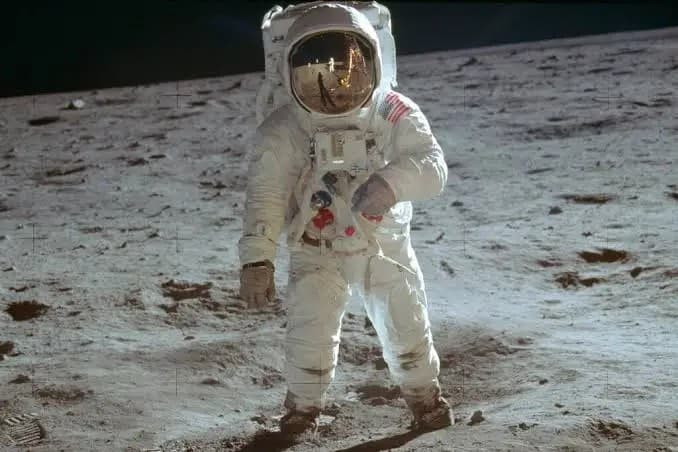
The Moon Photos That Still Feel Impossible
Before social media, astronauts brought back images that changed how humanity saw itself forever.
Read Article →
Artemis
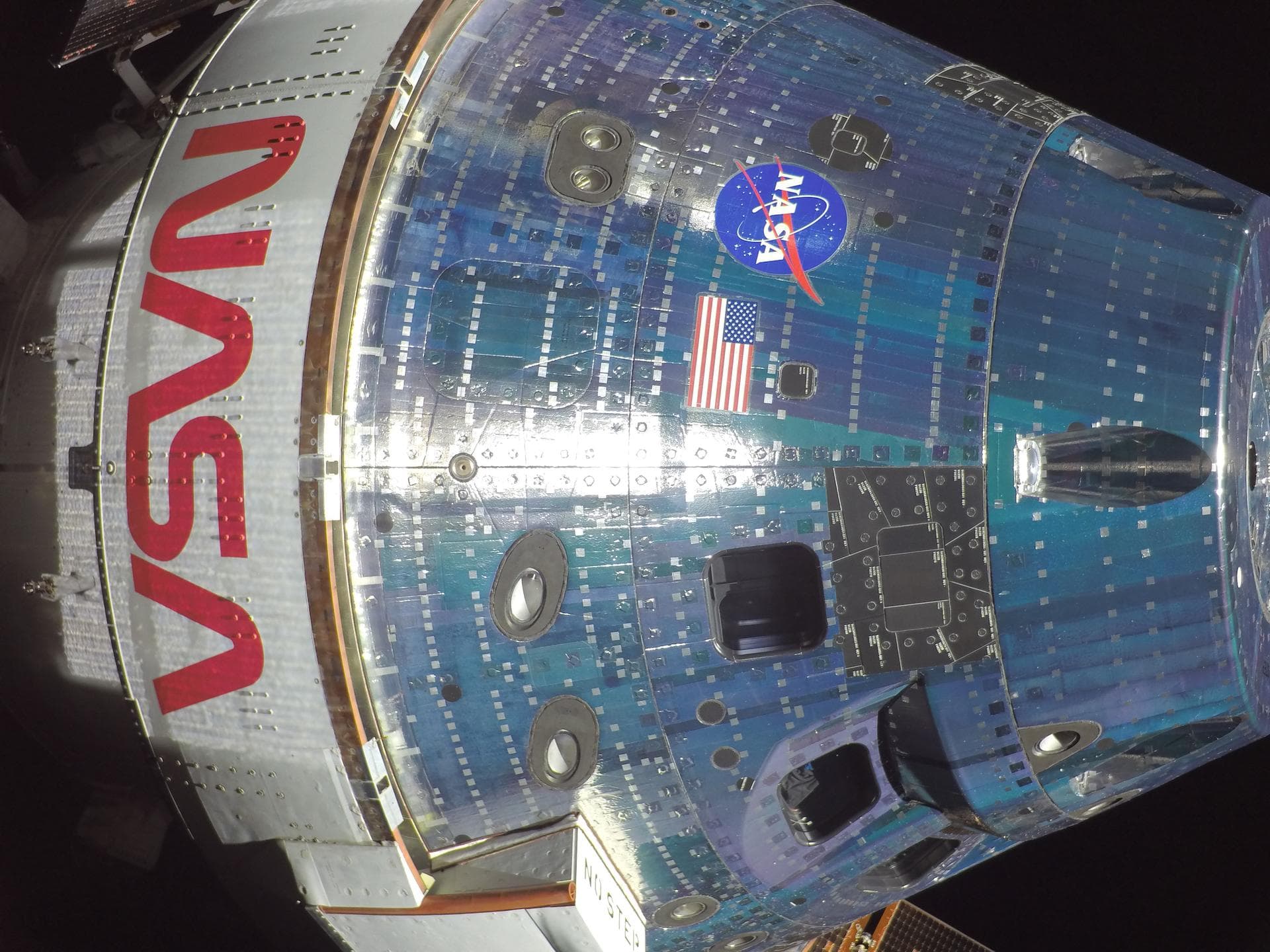
Why Artemis Will Change Lunar Exploration
NASA's return to the Moon is designed to become more sustainable, more international, and more ambitious than Apollo.
Read Article →
ISS
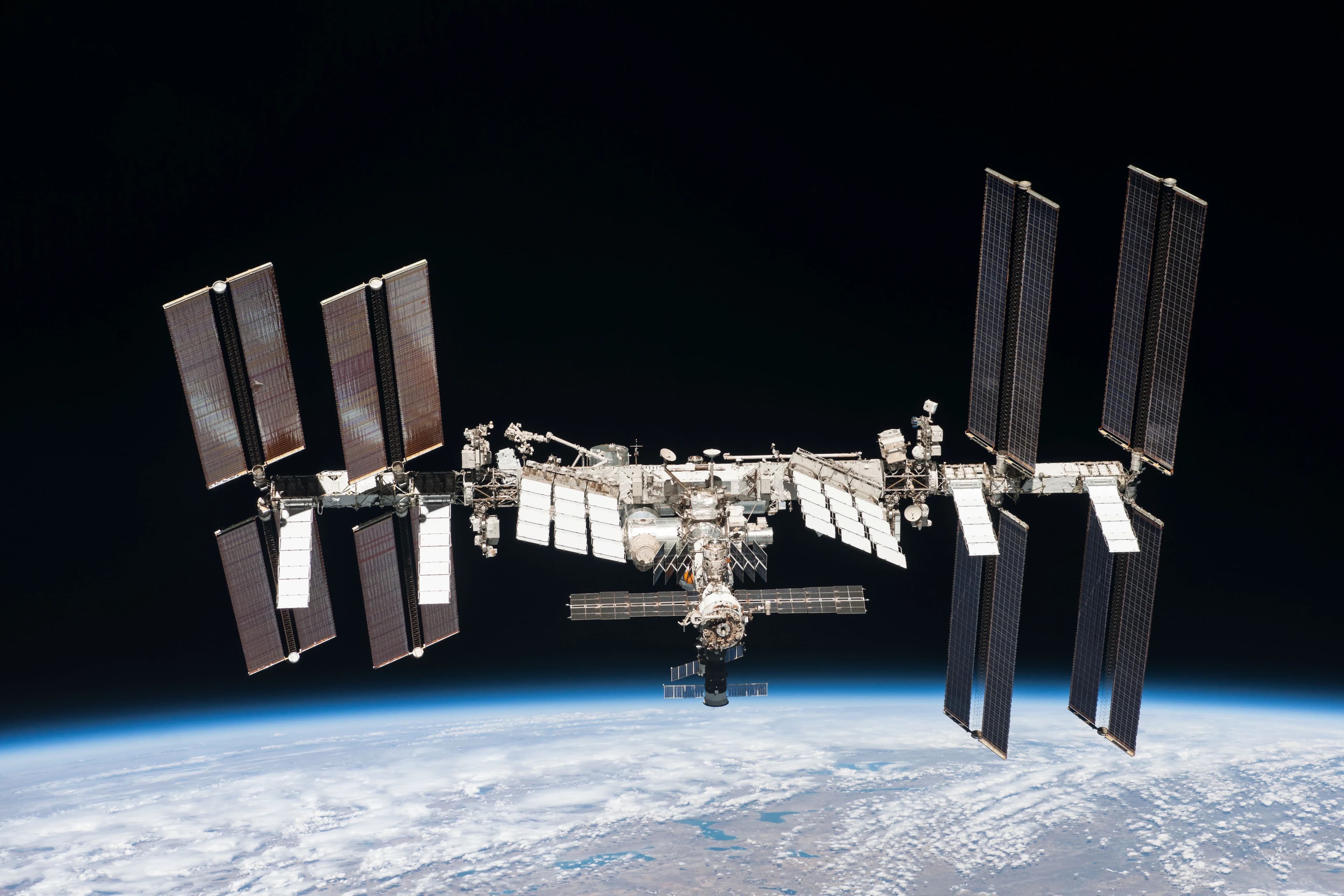
Life 250 Miles Above Earth
Inside the daily routine of astronauts living and working aboard the International Space Station.
Read Article →