Apollo
Apollo 1
Apollo 1 was intended to become the first crewed flight of NASA's Apollo spacecraft. The mission never launched. During a launch rehearsal on January 27, 1967, a cabin fire claimed the lives of astronauts Virgil I. Grissom, Edward H. White II, and Roger B. Chaffee. The tragedy forced NASA to confront serious spacecraft, testing, and safety failures before continuing toward the Moon.
Launch
February 21, 1967
Duration
Mission never launched
Crew
3 astronauts
Mission record
Apollo archive entry · Ground Test Accident
Mission Overview
The mission
Apollo 1 was intended to become the first crewed flight of NASA's Apollo spacecraft. The mission never launched. During a launch rehearsal on January 27, 1967, a cabin fire claimed the lives of astronauts Virgil I. Grissom, Edward H. White II, and Roger B. Chaffee. The tragedy forced NASA to confront serious spacecraft, testing, and safety failures before continuing toward the Moon.
In Depth
The Full Story
Apollo 1 was planned as the first crewed mission of NASA's Apollo Program. Officially designated Apollo-Saturn 204, or AS-204, the flight would have tested an early Block I Apollo Command and Service Module during an extended mission in Earth orbit.
The mission was scheduled to launch on February 21, 1967, aboard a Saturn IB rocket from Launch Complex 34 at Cape Kennedy. Its crew included Command Pilot Virgil I. "Gus" Grissom, Senior Pilot Edward H. White II, and Pilot Roger B. Chaffee.
Grissom was one of NASA's original Mercury astronauts and had already flown aboard Liberty Bell 7 and Gemini 3. White had become the first American to walk in space during Gemini 4. Chaffee, a member of NASA's third astronaut group, was preparing for his first spaceflight.
Apollo 1 was intended to prove that the spacecraft, crew, launch vehicle, tracking network, and mission-control teams could operate together during a long crewed flight. The crew would test the spacecraft's life-support equipment, communications, guidance systems, propulsion systems, and overall performance in Earth orbit.
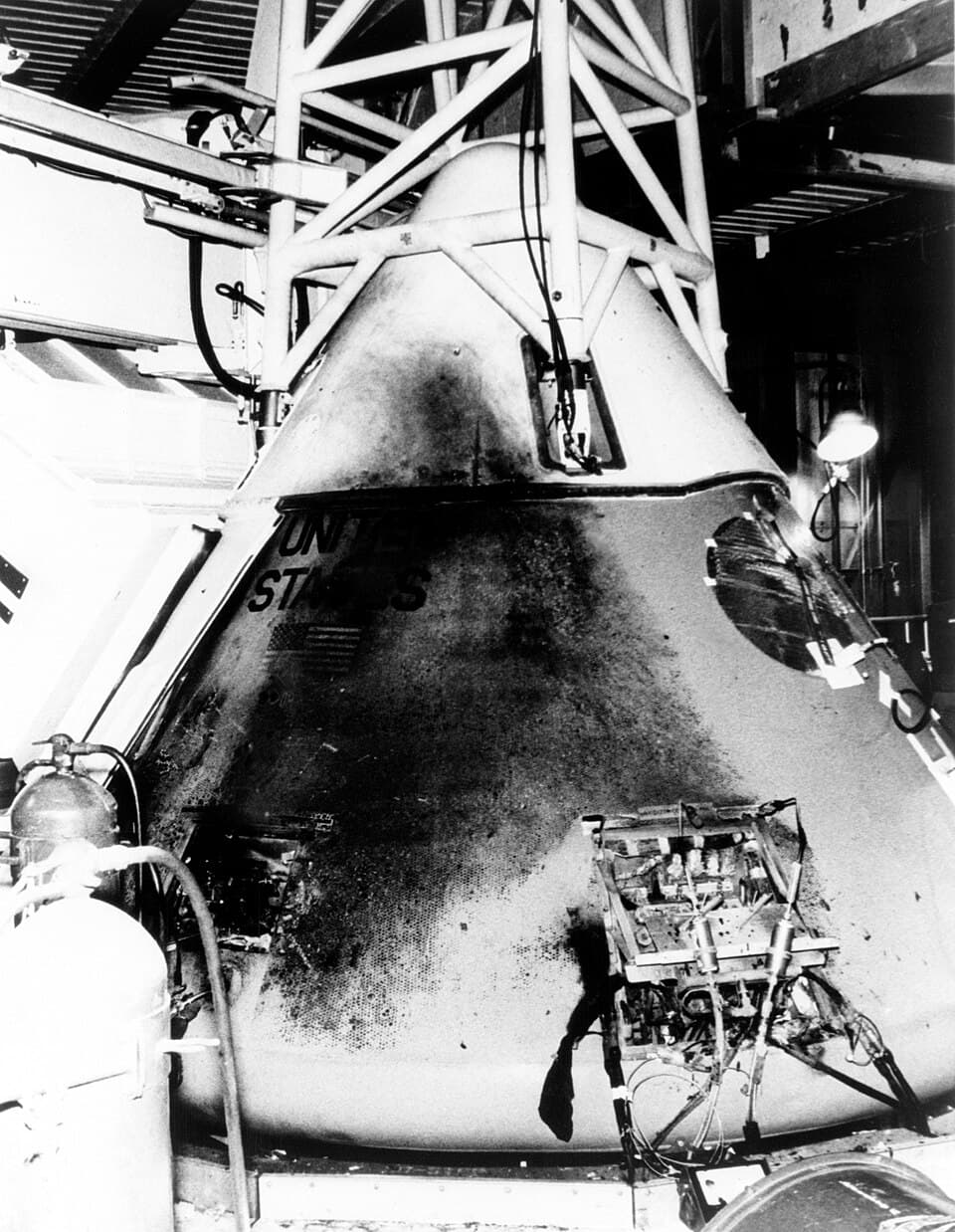
On January 27, 1967, the astronauts entered Command Module 012 at Launch Complex 34 for a countdown rehearsal known as the plugs-out test. The test was intended to simulate portions of the launch countdown while the spacecraft operated on its own internal electrical power.
The Saturn IB rocket was not fueled, and the test was not officially classified as hazardous. Nevertheless, the crew wore pressure suits, the spacecraft hatches were closed, and the cabin was pressurized with pure oxygen at a pressure higher than the surrounding atmosphere.
The test experienced repeated communications and equipment problems. At approximately 6:31 p.m. Eastern Standard Time, the crew reported a fire inside the spacecraft. Flames spread rapidly through combustible materials in the oxygen-rich cabin.
The astronauts attempted to escape, but the spacecraft's complicated three-part hatch system could not be opened quickly. The inner hatch opened inward, and increasing pressure inside the cabin made it impossible to move. Dense smoke, heat, and flames also delayed the launch-pad personnel attempting to reach the crew.
Grissom, White, and Chaffee died before rescuers could open the spacecraft.
NASA suspended crewed Apollo operations and established the Apollo 204 Review Board to investigate the accident. Investigators found that the fire likely began after an electrical failure, although they could not identify one definitive ignition point.
The investigation also exposed broader dangers. The cabin contained extensive combustible material, electrical wiring and plumbing were vulnerable to damage, the hatch could not support rapid emergency escape, and the test environment had not been treated with the level of caution it required.
NASA and its contractors redesigned the Apollo spacecraft, restricted combustible cabin materials, improved wiring and plumbing protection, strengthened quality control, revised emergency procedures, upgraded launch-pad rescue equipment, and created a unified outward-opening hatch.
No crew ever flew in the Block I Apollo spacecraft. When crewed Apollo missions resumed with Apollo 7 in October 1968, the astronauts flew aboard the improved Block II Command and Service Module.
Apollo 1 never left the launch pad, but the lessons learned from the tragedy shaped every Apollo mission that followed. The spacecraft that eventually carried astronauts around the Moon and down to its surface was safer because NASA was forced to correct the failures revealed on January 27, 1967.
Mission Details
Official Designation
Apollo-Saturn 204 (AS-204)
Spacecraft
Command and Service Module CSM-012
Spacecraft Version
Apollo Block I
Launch Vehicle
Saturn IB
Launch Vehicle Number
AS-204
Launch Site
Launch Complex 34
Planned Launch
February 21, 1967
Accident Date
January 27, 1967
Planned Destination
Earth Orbit
Planned Duration
Up to 14 days
Crew Size
3
Mission Outcome
Spacecraft destroyed during a ground test
Command Pilot
Virgil I. Grissom
Senior Pilot
Edward H. White II
Pilot
Roger B. Chaffee
Mission Patch
Designed and approved by the Apollo 1 crew
First Crewed Apollo Flight Afterward
Apollo 7
Mission by the Numbers
Mission Statistics
Mission Type
Planned Crewed Earth-Orbit Test
Launch Vehicle
Saturn IB AS-204
Crew
3 astronauts
Status
Ground Test Accident
The People Behind the Mission
Crew
The astronauts assigned to command, operate, and carry out the mission.
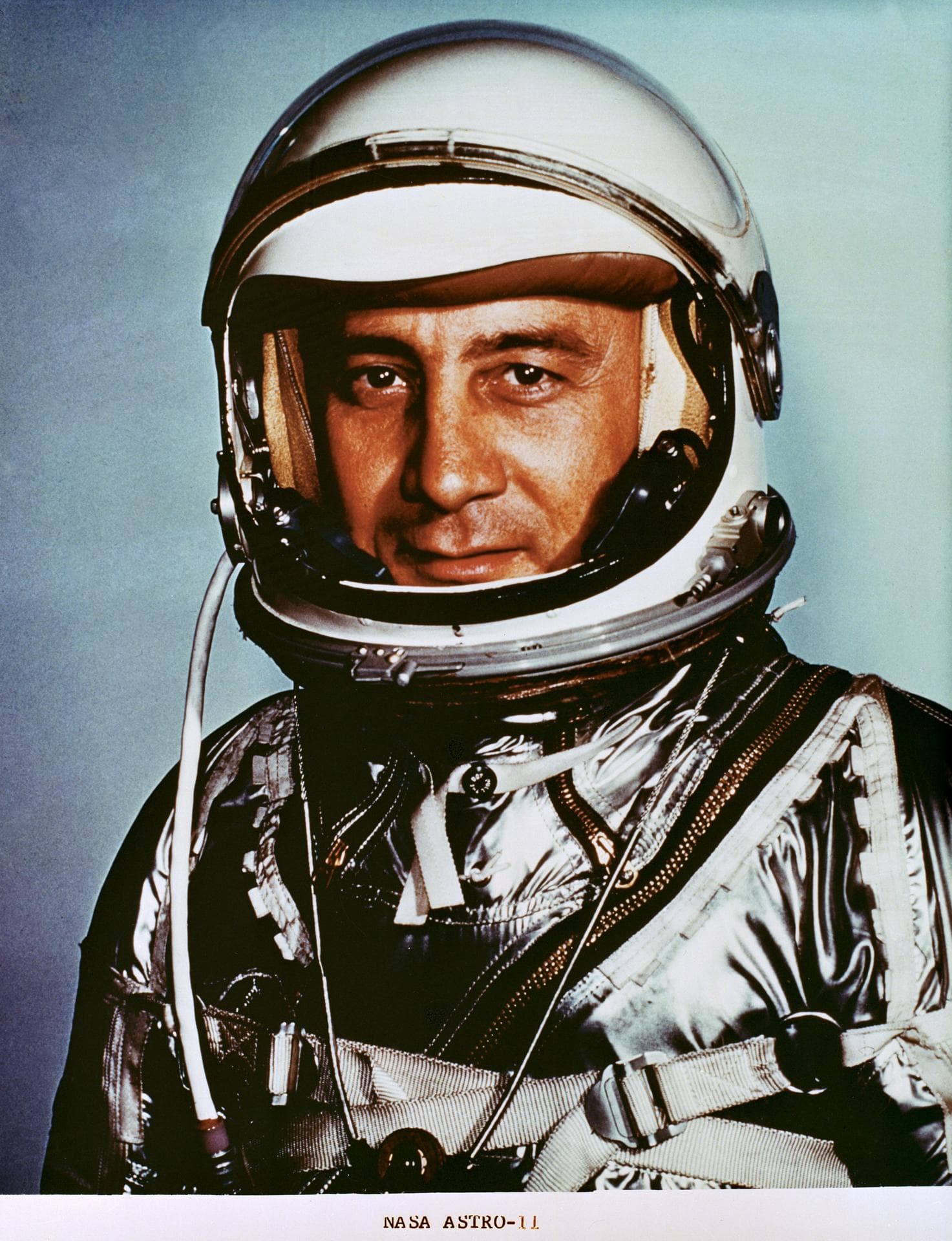
Command Pilot
Gus Grissom
Gus Grissom piloted Liberty Bell 7 on the second American suborbital flight and later commanded the first crewed Gemini mission before his death in the Apollo 1 fire.
View Astronaut →
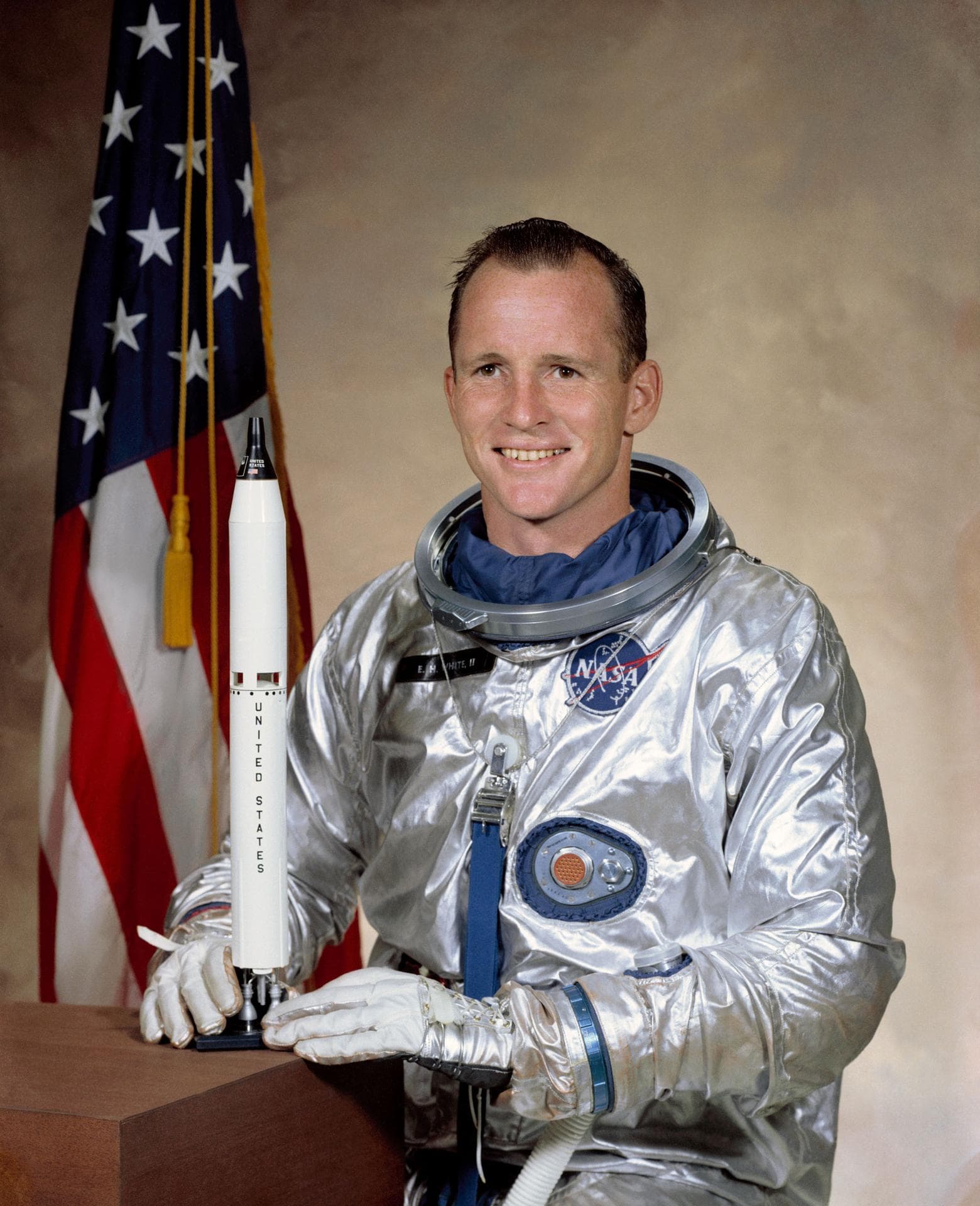
Senior Pilot
Ed White
Ed White became the first American to walk in space during Gemini 4, and was later killed alongside Gus Grissom and Roger Chaffee in the Apollo 1 launch pad fire.
View Astronaut →

Pilot
Roger B. Chaffee
Roger Chaffee never reached space. He died alongside Gus Grissom and Ed White in the Apollo 1 fire during a routine launch pad test, a tragedy that reshaped how NASA built every spacecraft that followed.
View Astronaut →
Mission Goals
Mission objectives
- 01
Complete the first crewed flight of the Apollo Command and Service Module.
- 02
Evaluate the Block I Apollo spacecraft during an extended mission in Earth orbit.
- 03
Test the spacecraft's environmental-control and life-support systems with a crew aboard.
- 04
Demonstrate the performance of the Service Propulsion System during repeated engine firings.
- 05
Evaluate guidance, navigation, communications, electrical, and propulsion systems.
- 06
Confirm compatibility between the spacecraft, Saturn IB launch vehicle, crew, mission-control teams, and ground-support network.
- 07
Develop operational experience for increasingly complex Apollo missions.
- 08
Support NASA's progression toward crewed lunar-orbit and lunar-landing missions.
Fascinating Details
Did You Know?
Key did you know? recorded for this mission.
Apollo 1 was officially designated AS-204 before the accident.
NASA formally named the mission Apollo 1 in honor of Grissom, White, and Chaffee.
No missions or flights were officially designated Apollo 2 or Apollo 3.
The Apollo 1 crew planned to spend as many as 14 days in Earth orbit.
The mission would have tested the Service Propulsion System through several engine firings.
Virgil Grissom had previously flown aboard Liberty Bell 7 and Gemini 3.
Edward White became the first American to perform a spacewalk during Gemini 4.
Apollo 1 would have been Roger Chaffee's first spaceflight.
The spacecraft's inner hatch opened inward, making it impossible to open while cabin pressure remained high.
The plugs-out test was not initially classified as a hazardous operation, despite the sealed and pressurized cabin.
NASA prohibited crews from flying aboard the Block I spacecraft after the accident.
The redesigned Block II hatch opened outward and could be opened rapidly from inside or outside the spacecraft.
Mission Timeline
March 21, 1966
Prime Crew Announced
NASA announced Virgil Grissom, Edward White, and Roger Chaffee as the prime crew for the first crewed Apollo mission.
August 26, 1966
Spacecraft Arrives in Florida
Command and Service Module 012 arrived at Kennedy Space Center for testing, integration, and launch preparations.
November 1966
Backup Crew Reassigned
Walter Schirra, Donn Eisele, and Walter Cunningham became the mission's backup crew following changes to NASA's Apollo schedule.
January 23, 1967
Launch Date Confirmed
NASA publicly confirmed that AS-204 was scheduled to launch on February 21, 1967.
January 25, 1967
Plugs-In Test
The backup crew participated in a spacecraft test that used external ground power and encountered several technical problems.
January 27, 1967
Crew Enters the Spacecraft
Grissom, White, and Chaffee entered Command Module 012 at Launch Complex 34 for the plugs-out countdown rehearsal.
January 27, 1967
Cabin Sealed
The spacecraft's three-part hatch system was closed, and the cabin was pressurized with a pure-oxygen atmosphere.
January 27, 1967
Communications Problems Delay Test
Repeated communication failures and equipment issues prevented the simulated countdown from progressing normally.
January 27, 1967 · 6:31 p.m. EST
Fire Reported
The crew reported a fire inside the spacecraft. Flames spread rapidly through materials in the oxygen-rich cabin.
January 27, 1967
Escape Attempt
The astronauts attempted to open the inner hatch, but rising cabin pressure and the inward-opening design prevented escape.
January 27, 1967
Crew Lost
Launch-pad personnel opened the spacecraft after fighting through intense heat and dense smoke, but all three astronauts had died.
January 28, 1967
Investigation Begins
NASA began examining the accident and soon formed the Apollo 204 Review Board.
April 1967
Review Board Report Completed
The investigation identified major spacecraft, testing, manufacturing, quality-control, and emergency-response deficiencies.
Spring 1967
Mission Named Apollo 1
NASA officially assigned the name Apollo 1 to the mission in honor of Grissom, White, and Chaffee.
1967–1968
Apollo Spacecraft Redesigned
NASA and its contractors redesigned critical spacecraft systems and adopted a new outward-opening unified hatch.
October 11, 1968
Crewed Apollo Flights Resume
Apollo 7 launched aboard a Saturn IB and successfully tested the redesigned Block II Command and Service Module in Earth orbit.
Mission Legacy
Legacy
Apollo 1 became one of the defining moments in NASA history. It demonstrated that the race to the Moon could not be separated from the responsibility to protect the people making that journey.
The accident was not treated as the failure of a single component. NASA's investigation exposed a chain of engineering, manufacturing, testing, communication, and management problems. That broader understanding drove changes extending far beyond the damaged spacecraft.
Combustible materials were tightly controlled. Electrical wiring and plumbing received greater protection. Spacecraft workmanship and inspection standards were strengthened. Ground crews received improved emergency training, and launch facilities gained better rescue and firefighting equipment.
The original three-part hatch was replaced by a unified outward-opening design that could be opened rapidly. NASA also changed how cabin atmospheres were managed during ground operations, reducing the extreme fire danger created by high-pressure pure oxygen.
The next crewed Apollo spacecraft, flown on Apollo 7, incorporated those improvements. Apollo 7's success restored confidence in the program and cleared the way for Apollo 8 to orbit the Moon less than three months later.
The Apollo 1 crew did not live to see those missions. Yet every astronaut who later flew aboard Apollo benefited from the changes made after their deaths.
Their names remain inseparable from the Moon landings, not because Apollo 1 reached space, but because its lessons helped ensure that the missions that followed could.
Related Stories
Apollo
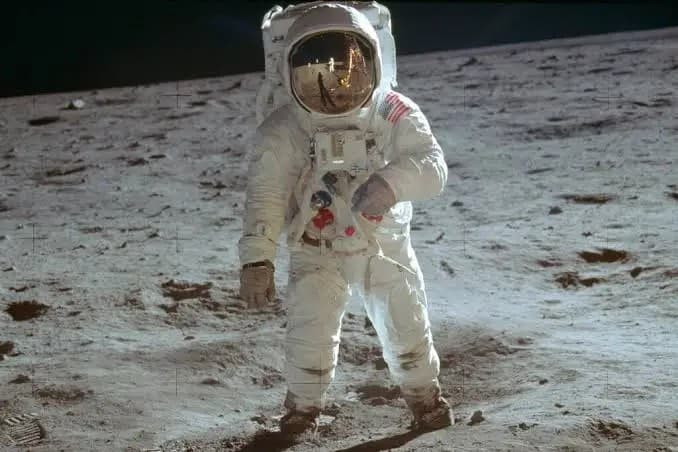
The Moon Photos That Still Feel Impossible
Before social media, astronauts brought back images that changed how humanity saw itself forever.
Read Article →
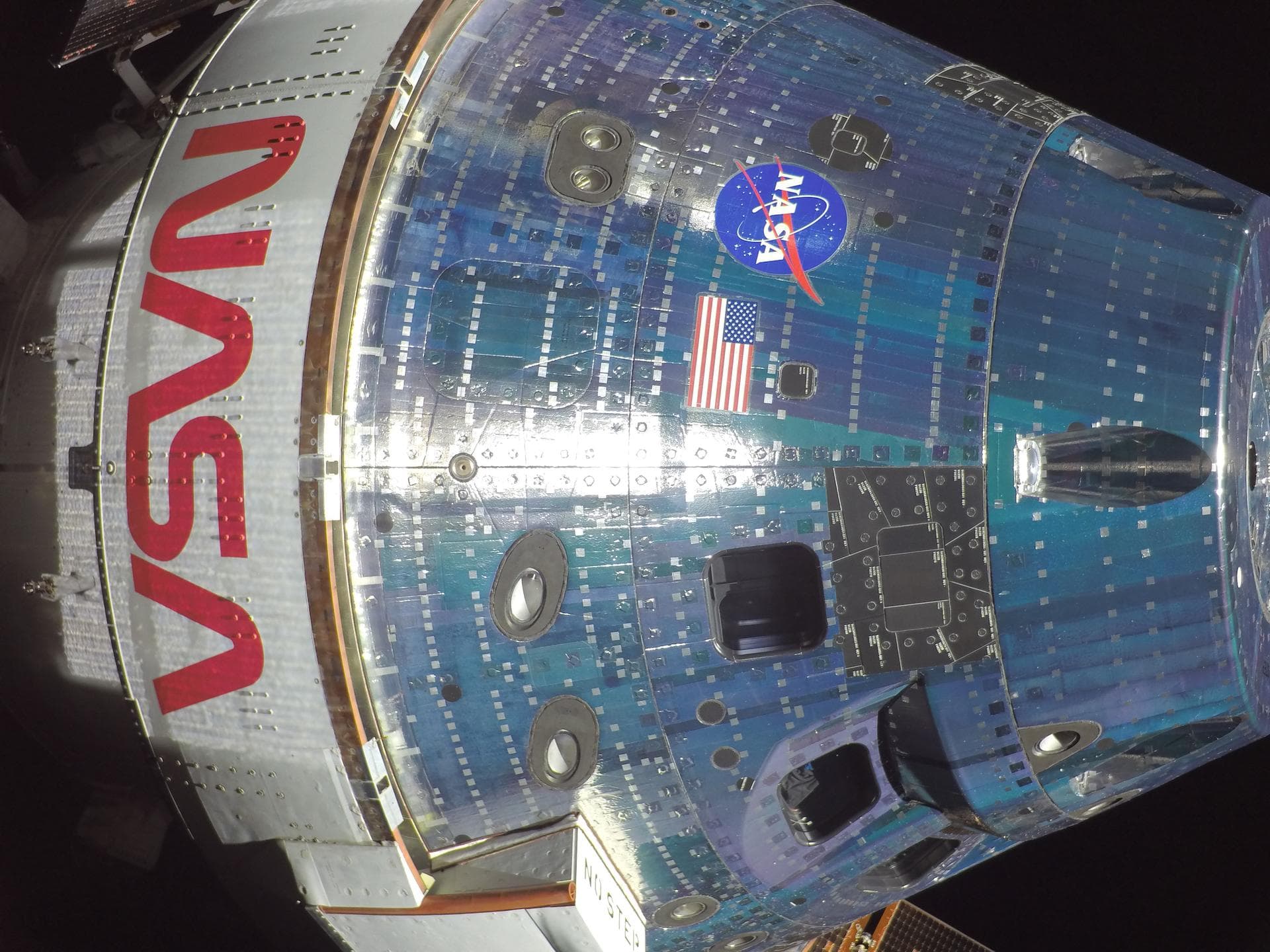
Artemis
Why Artemis Will Change Lunar Exploration
NASA's return to the Moon is designed to become more sustainable, more international, and more ambitious than Apollo.
Read Article →
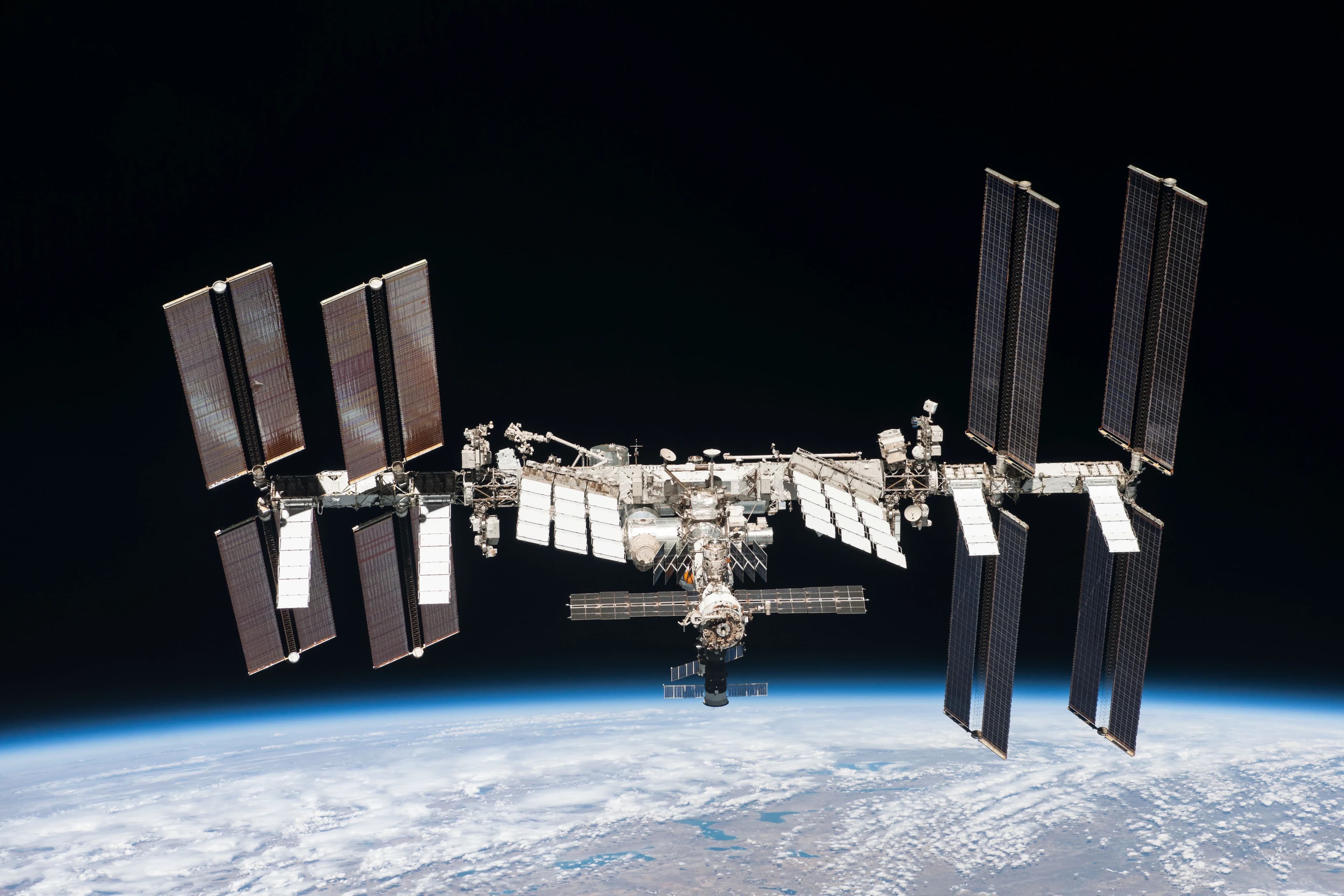
ISS
Life 250 Miles Above Earth
Inside the daily routine of astronauts living and working aboard the International Space Station.
Read Article →