Spacecraft Archive
Wide-field Infrared Explorer
Space Telescopes
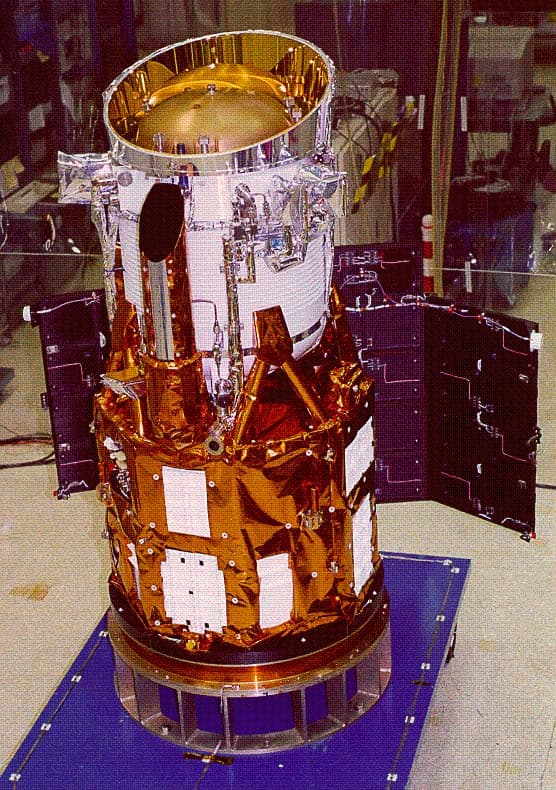
Launched in 1999 as part of NASA's Small Explorer program, WIRE was designed to survey the sky in infrared light and study distant starburst galaxies. A design flaw caused its telescope cover to eject prematurely, boiling off its solid hydrogen coolant within about a day and ending its primary science mission almost before it began — though the spacecraft's star tracker was later repurposed to study the oscillations of nearby stars until it reentered Earth's atmosphere in 2011.
OrbitingTruths Archive
Space Telescopes • Retired
Overview
Built for the mission
Launched in 1999 as part of NASA's Small Explorer program, WIRE was designed to survey the sky in infrared light and study distant starburst galaxies. A design flaw caused its telescope cover to eject prematurely, boiling off its solid hydrogen coolant within about a day and ending its primary science mission almost before it began — though the spacecraft's star tracker was later repurposed to study the oscillations of nearby stars until it reentered Earth's atmosphere in 2011.
Spacecraft Details
Type
Space Telescope
Manufacturer
Space Dynamics Laboratory, Utah State University
Launch Date
March 5, 1999
Launch Vehicle
Pegasus XL, air-launched from Vandenberg Air Force Base, California
Primary Mirror
30 cm (11.8 in) Cassegrain telescope
Orbit
Low Earth Orbit, approximately 540 km altitude
Program
Space Telescopes
Status
Retired; primary mission ended within days of launch, spacecraft reentered May 10, 2011
Operator
NASA Goddard Space Flight Center
Related Program
Space Telescopes
NASA's uncrewed observatories, launched above Earth's atmosphere to see the universe with a clarity no ground-based telescope can match.
Explore Program