Apollo
Apollo 12
Apollo 12 demonstrated that NASA could land on the Moon with pinpoint accuracy. Despite being struck by lightning twice during launch, the mission successfully landed beside the Surveyor 3 spacecraft, performed two lunar EVAs, deployed advanced scientific experiments, and returned pieces of Surveyor 3 to Earth for analysis.
Launch
November 14, 1969
Duration
10 days, 4 hours, 36 minutes, 24 seconds
Crew
3 astronauts
Mission record
Apollo archive entry · Successful
Mission Overview
The mission
Apollo 12 demonstrated that NASA could land on the Moon with pinpoint accuracy. Despite being struck by lightning twice during launch, the mission successfully landed beside the Surveyor 3 spacecraft, performed two lunar EVAs, deployed advanced scientific experiments, and returned pieces of Surveyor 3 to Earth for analysis.
In Depth
The Full Story
Apollo 12 was NASA's second crewed lunar landing mission and the first designed to demonstrate precision landing capability. Following Apollo 11's historic success, the focus shifted from proving a landing was possible to proving astronauts could land exactly where mission planners intended.
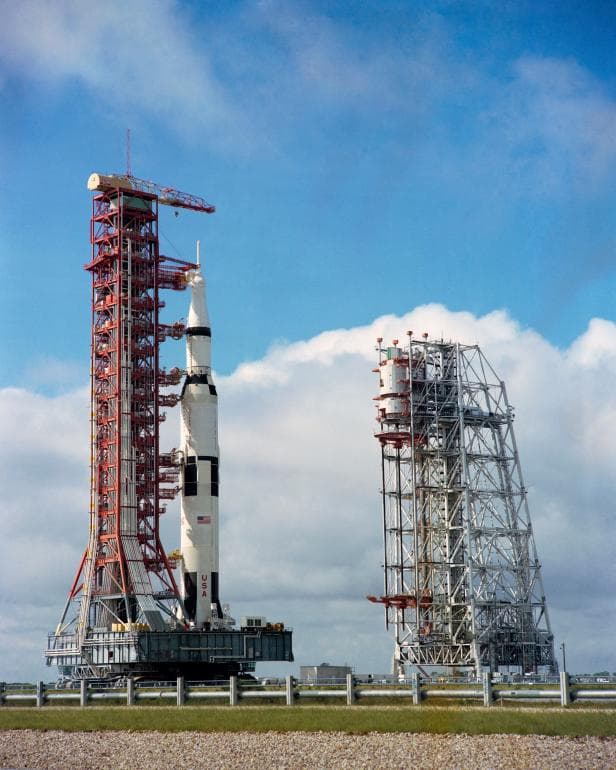
Launched on November 14, 1969, Apollo 12 encountered one of the most dramatic moments in the history of the Apollo Program only thirty-six seconds after liftoff. Saturn V AS-507 was struck by lightning, temporarily knocking multiple spacecraft systems offline. Just moments later, a second lightning strike caused additional electrical failures. Mission Control rapidly diagnosed the problem, and Electrical, Environmental and Consumables Manager John Aaron famously instructed Flight Director Gerry Griffin to tell the crew, "Try SCE to AUX." Lunar Module Pilot Alan Bean recognized the obscure switch and restored the spacecraft's telemetry, allowing the mission to continue.
After a successful journey to the Moon, Commander Pete Conrad and Alan Bean guided the Lunar Module Intrepid to a landing within walking distance of the robotic Surveyor 3 spacecraft, which had landed in April 1967. It was the first demonstration that astronauts could accurately target a predetermined landing site on another world.
During two moonwalks totaling nearly eight hours, Conrad and Bean deployed the Apollo Lunar Surface Experiments Package (ALSEP), collected geological samples, explored nearby craters, and visited Surveyor 3. They removed several components from the robotic spacecraft, including its television camera, which scientists later studied to understand how prolonged exposure to the lunar environment affected materials.
Meanwhile, Richard Gordon orbited alone aboard the Command Module Yankee Clipper, conducting photography and scientific observations while awaiting the Lunar Module's return.
Apollo 12 significantly expanded scientific operations on the Moon, demonstrated remarkable landing precision, and showed that lunar exploration could move beyond simple survival into sustained field science. The mission marked the beginning of Apollo's transition from exploration to systematic scientific investigation.
Mission Details
Official Designation
Apollo 12
Mission Type
Precision Crewed Lunar Landing
Launch Date
November 14, 1969
Landing Date
November 19, 1969
Mission Duration
10 days, 4 hours, 36 minutes, 24 seconds
Crew Size
3 Astronauts
Commander
Charles 'Pete' Conrad Jr.
Command Module Pilot
Richard F. Gordon Jr.
Lunar Module Pilot
Alan L. Bean
Command Module
CSM-108 'Yankee Clipper'
Lunar Module
LM-6 'Intrepid'
Launch Vehicle
Saturn V AS-507
Launch Site
Launch Complex 39A
Landing Site
Oceanus Procellarum
Surface Stay
31 hours, 31 minutes
Total EVA Time
7 hours, 45 minutes
Lunar Samples Returned
34.35 kg (75.7 lb)
Lunar Orbits
45
Mission Result
Successful
Historic Achievement
First Precision Lunar Landing
Mission by the Numbers
Mission Statistics
Mission Type
Precision Crewed Lunar Landing
Launch Vehicle
Saturn V AS-507
Crew
3 astronauts
Status
Successful
The People Behind the Mission
Crew
The astronauts assigned to command, operate, and carry out the mission.
Commander
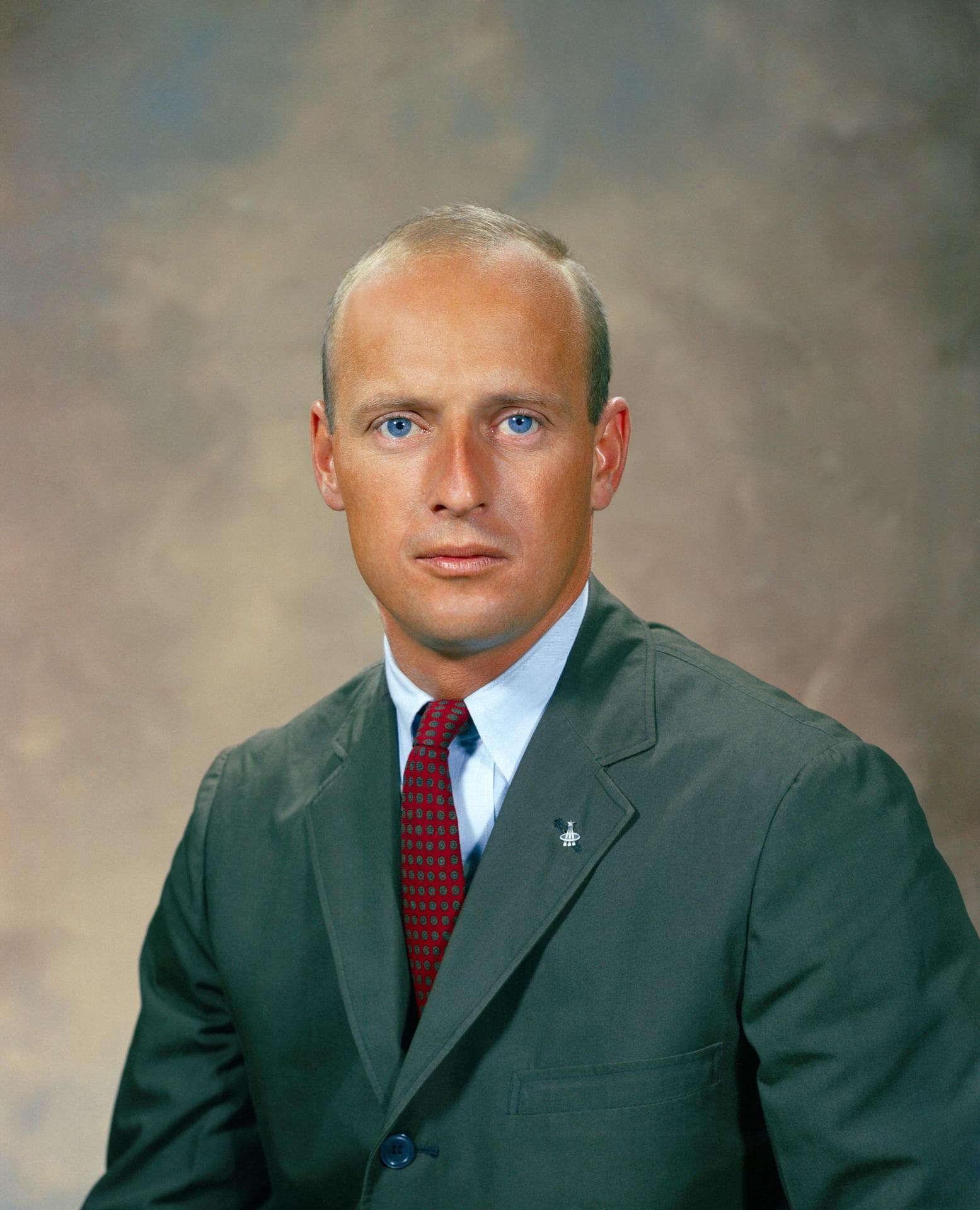
Pete Conrad
Pete Conrad flew Gemini 5 and commanded Gemini 11's record-altitude flight before commanding Apollo 12 and becoming the third person to walk on the Moon.
View Astronaut →
Command Module Pilot
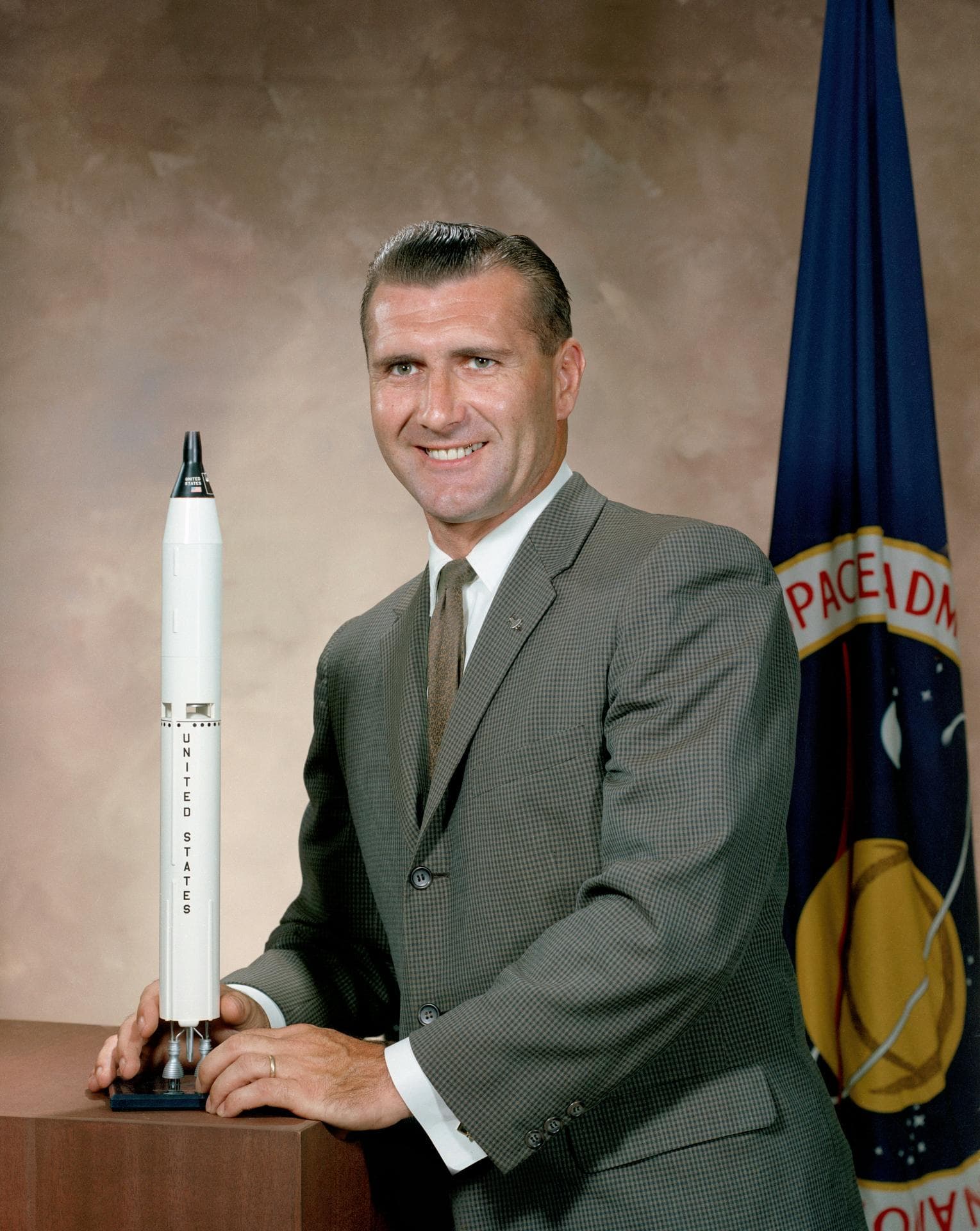
Richard Gordon
Richard Gordon flew on Gemini 11's record-altitude flight and later orbited the Moon as Command Module Pilot on Apollo 12.
View Astronaut →

Lunar Module Pilot
Alan L. Bean
Alan Bean became the fourth person to walk on the Moon aboard Apollo 12, then spent nearly two months in orbit commanding Skylab 3 before leaving NASA to paint the Moon he had seen firsthand.
View Astronaut →
Mission Goals
Mission objectives
- 01
Demonstrate precision lunar landing capability.
- 02
Safely transport astronauts to and from the Moon.
- 03
Land within walking distance of Surveyor 3.
- 04
Deploy the Apollo Lunar Surface Experiments Package (ALSEP).
- 05
Conduct two lunar extravehicular activities.
- 06
Collect diverse lunar rock and soil samples.
- 07
Recover components from Surveyor 3 for return to Earth.
- 08
Photograph the landing region in detail.
- 09
Evaluate extended surface operations.
- 10
Demonstrate improved lunar navigation techniques.
- 11
Perform successful lunar rendezvous and docking.
- 12
Expand scientific exploration beyond Apollo 11.
- 13
Return scientific samples safely to Earth.
- 14
Continue validating Apollo hardware for future lunar missions.
- 15
Advance humanity's understanding of the Moon's geology.
Fascinating Details
Did You Know?
Key did you know? recorded for this mission.
Apollo 12 was struck by lightning twice during launch yet continued to the Moon after a quick-thinking solution from Mission Control.
The famous 'SCE to AUX' call referred to the Signal Conditioning Equipment switch that restored the spacecraft's telemetry.
Alan Bean was one of the few astronauts who immediately knew where the SCE switch was located.
Pete Conrad intentionally made a humorous comment after stepping onto the Moon to prove his first words were not scripted.
Apollo 12 landed only about 535 feet (163 meters) from Surveyor 3, an extraordinary feat of precision for 1969.
The astronauts became the first humans to visit a robotic spacecraft on another world.
Scientists studied returned Surveyor 3 components to learn how years of exposure to the lunar environment affected spacecraft materials.
Apollo 12 deployed the first complete Apollo Lunar Surface Experiments Package (ALSEP), which continued transmitting scientific data long after the crew departed.
Richard Gordon orbited the Moon alone while his crewmates conducted nearly eight hours of exploration on the surface.
Apollo 12 returned more than 34 kilograms of lunar rocks and soil, significantly expanding knowledge of lunar geology.
The mission proved NASA could repeatedly land within a carefully selected scientific target zone.
Many procedures developed during Apollo 12 became standard for the remaining lunar landing missions.
The lightning strike remains one of the most famous launch anomalies in spaceflight history.
Apollo 12 demonstrated that lunar exploration had evolved from proving capability to conducting systematic field science.
Without Apollo 12's success, later precision landings at scientifically valuable sites would have carried far greater risk.
Mission Timeline
November 14, 1969 · 11:22 a.m. EST
Launch
Apollo 12 lifted off from Launch Complex 39A aboard Saturn V AS-507, beginning humanity's second lunar landing mission.
36 Seconds After Liftoff
Lightning Strike
Saturn V was struck by lightning, causing multiple electrical systems and telemetry to fail aboard the spacecraft.
52 Seconds After Liftoff
Second Lightning Strike
A second lightning strike created additional electrical failures, briefly placing the mission in jeopardy during ascent.
Launch Ascent
"SCE to AUX"
Mission Control engineer John Aaron recognized the electrical signature and instructed Flight Director Gerry Griffin to tell the crew, 'Try SCE to AUX.' Alan Bean switched the Signal Conditioning Equipment to Auxiliary power, restoring telemetry and allowing the mission to continue.
Earth Orbit
Parking Orbit
After confirming all critical spacecraft systems were functioning normally, Mission Control cleared Apollo 12 to proceed toward the Moon.
Trans-Lunar Injection
Departure for the Moon
The S-IVB third stage successfully accelerated Apollo 12 onto its trajectory toward the Moon.
Deep Space
Cruise Phase
The crew completed navigation updates, spacecraft inspections, television broadcasts, and scientific observations during the three-day journey.
November 18, 1969
Lunar Orbit Insertion
Apollo 12 entered lunar orbit in preparation for its precision landing near the Surveyor 3 spacecraft.
November 19, 1969
Intrepid Separates
Pete Conrad and Alan Bean entered the Lunar Module Intrepid and undocked from Richard Gordon aboard the Command Module Yankee Clipper to begin their descent to the lunar surface.
Powered Descent Initiation
Precision Landing Begins
Using improved guidance procedures refined after Apollo 11, Intrepid began its powered descent toward Oceanus Procellarum with the goal of landing within walking distance of Surveyor 3.
November 19, 1969 · 06:54 UTC
Landing at Oceanus Procellarum
Pete Conrad manually guided Intrepid to a remarkably precise landing approximately 535 feet (163 meters) from Surveyor 3, proving astronauts could accurately target predetermined landing sites on the Moon.
Surface Operations
Preparing for EVA-1
Following landing, the crew configured Intrepid for surface operations, completed post-landing checklists, and prepared their Portable Life Support Systems before opening the hatch.
First Moonwalk
Deploying ALSEP
Conrad and Bean deployed the Apollo Lunar Surface Experiments Package (ALSEP), including instruments to measure seismic activity, solar wind, magnetic fields, and the lunar atmosphere.
EVA-1
Initial Geological Survey
The astronauts collected rock and soil samples, photographed the surrounding terrain, and evaluated movement and work efficiency during extended lunar surface operations.
Second Moonwalk
Visit to Surveyor 3
During their second EVA, Conrad and Bean reached Surveyor 3, the robotic spacecraft that had landed on the Moon in April 1967, becoming the first humans to visit another spacecraft on another celestial body.
Surveyor 3 Operations
Recovery of Spacecraft Components
The crew removed the television camera, scoop, tubing, and other hardware from Surveyor 3 for scientific analysis after their return to Earth, allowing engineers to study the long-term effects of the lunar environment on spacecraft materials.
End of Surface Stay
Preparing for Departure
After completing two successful EVAs totaling nearly eight hours, Conrad and Bean secured their samples, experiments, and recovered Surveyor components before preparing Intrepid for liftoff.
November 20, 1969
Lunar Liftoff
Intrepid's ascent stage successfully lifted off from the Moon, leaving its descent stage behind while beginning rendezvous operations with Yankee Clipper.
Lunar Orbit
Rendezvous and Docking
Pete Conrad and Alan Bean successfully docked with Richard Gordon, transferred themselves and more than 34 kilograms of lunar material into the Command Module, and jettisoned Intrepid's ascent stage.
November 21, 1969
Trans-Earth Injection
Apollo 12 departed lunar orbit and began its return journey after completing one of the most productive lunar exploration missions of the Apollo Program.
November 24, 1969
Splashdown
Apollo 12 safely splashed down in the Pacific Ocean and was recovered by USS Hornet, concluding a mission that greatly expanded scientific exploration of the Moon.
Mission Complete
Precision Exploration Proven
Apollo 12 demonstrated that future Apollo missions could routinely perform precision landings and conduct increasingly sophisticated scientific exploration on the lunar surface.
Mission Legacy
Legacy
Apollo 12 transformed lunar exploration from a proof of concept into a repeatable scientific expedition.
Its precision landing near Surveyor 3 demonstrated that NASA could reliably place astronauts at carefully selected locations, opening the door to increasingly ambitious scientific objectives on later Apollo missions. Rather than simply reaching the Moon, astronauts could now explore specific geological formations, craters, and volcanic regions chosen years in advance.
The mission also validated the remarkable resilience of both the Saturn V launch system and the Apollo spacecraft. The dramatic lightning strikes during ascent tested Mission Control, the flight crew, and spacecraft systems under extraordinary circumstances. The successful recovery became a textbook example of engineering knowledge, crew training, and calm decision-making under pressure.
Apollo 12 greatly expanded the scientific return of the Apollo Program. The ALSEP instruments continued collecting valuable data for years, while the returned Surveyor 3 components provided the first opportunity to study how spacecraft hardware aged after prolonged exposure to the harsh lunar environment.
Equally important, Apollo 12 established the operational model that every remaining lunar landing mission would follow: precision navigation, extended surface exploration, comprehensive scientific experiments, and efficient field geology.
The mission proved that humanity could do more than simply visit another world. It showed that we could work there with confidence, precision, and purpose.
Related Stories
Apollo
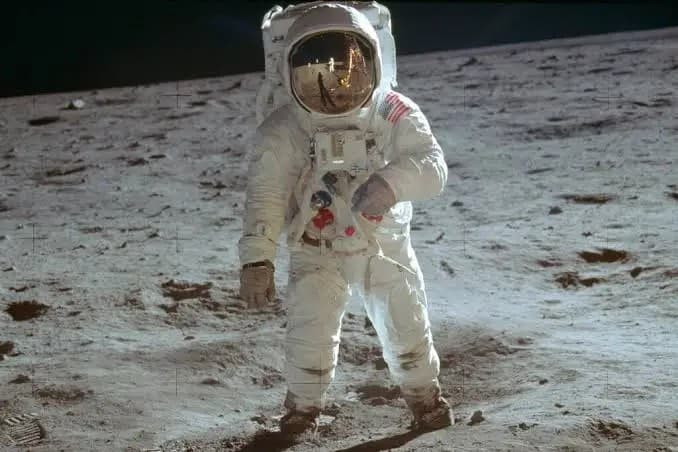
The Moon Photos That Still Feel Impossible
Before social media, astronauts brought back images that changed how humanity saw itself forever.
Read Article →
Artemis
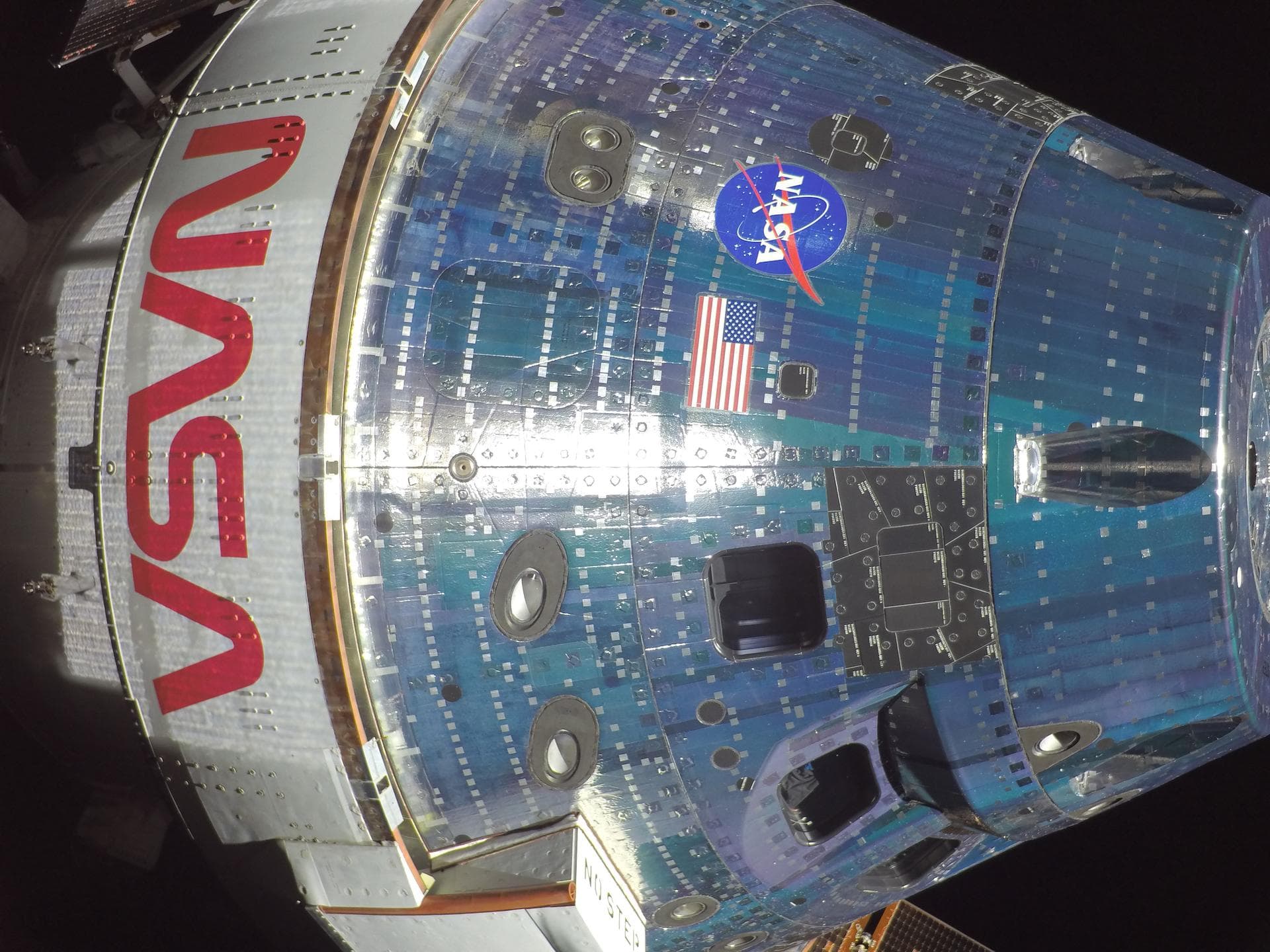
Why Artemis Will Change Lunar Exploration
NASA's return to the Moon is designed to become more sustainable, more international, and more ambitious than Apollo.
Read Article →
ISS
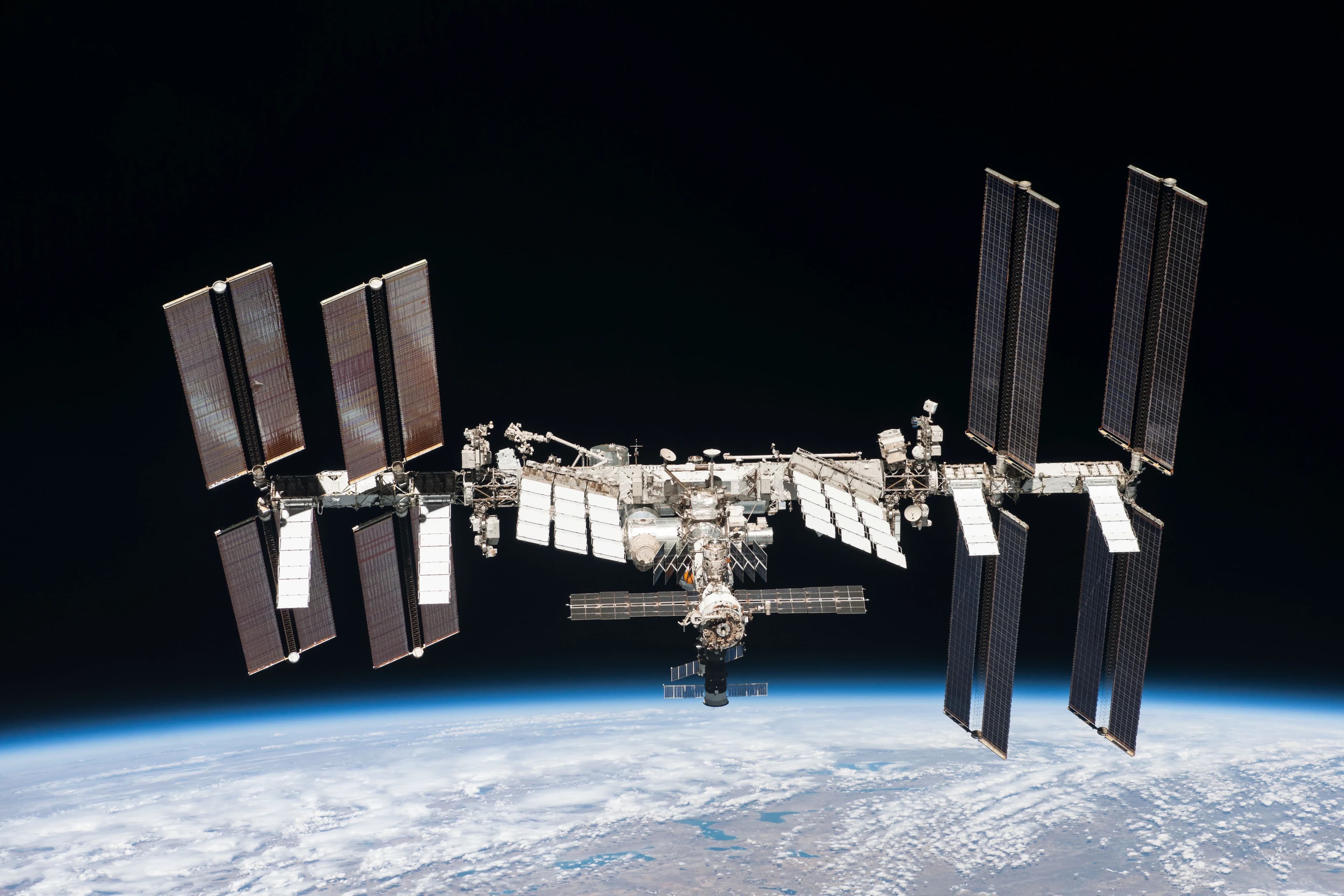
Life 250 Miles Above Earth
Inside the daily routine of astronauts living and working aboard the International Space Station.
Read Article →