The Loneliest Man in History
While Neil Armstrong and Buzz Aldrin became household names, Michael Collins spent Apollo 11's most famous day alone in lunar orbit, farther from another human being than anyone before him.
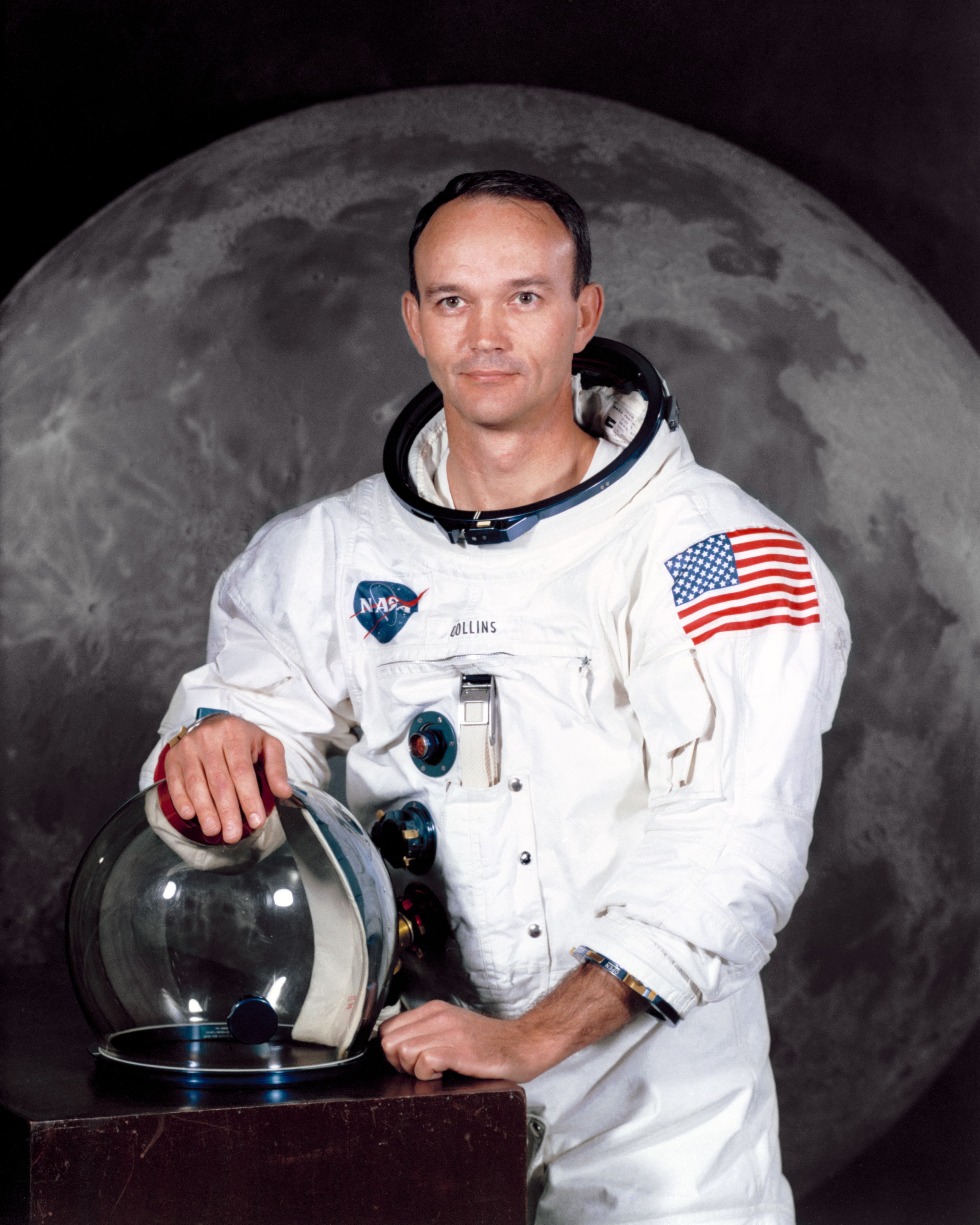
Astronaut Michael Collins, Apollo 11 Command Module Pilot
OrbitingTruths EditorialEveryone remembers the two men who walked on the Moon. Almost no one remembers the man who made sure they could get back.
On July 20, 1969, while Neil Armstrong and Buzz Aldrin became the first human beings to stand on another world, a third astronaut was circling above them, utterly alone.
Michael Collins never set foot on the lunar surface. His job was to fly the Command Module Columbia in lunar orbit, alone, for more than twenty-one hours, while his two crewmates carried out humanity's most famous voyage a few thousand miles below.
For roughly forty-eight minutes of every two-hour orbit, Columbia passed behind the far side of the Moon, and Collins lost all radio contact with both his crewmates and Earth. During those windows, he was, by any reasonable definition, the most isolated human being who had ever lived.
Total isolation
Farther From Another Person Than Anyone in History
When Columbia swung around the far side of the Moon, Collins was separated from Armstrong and Aldrin on the surface by roughly 2,000 miles of solid rock, and from every other human being on Earth by nearly a quarter of a million miles beyond that.
No person before him had ever been that far from every other member of the species at once, and for those brief windows out of radio contact, no one on Earth could reach him even if something went wrong.
Collins later described the sensation with striking honesty in his memoir, Carrying the Fire: "I am alone now, truly alone, and absolutely isolated from any known life. I am it."
The unspoken risk
The Contingency No One Talked About
Collins carried a quiet, specific fear that rarely makes it into the popular telling of Apollo 11: that the Lunar Module's single ascent engine, a piece of hardware with no backup, might fail to ignite and leave Armstrong and Aldrin stranded on the surface.
If that happened, mission rules gave Collins no choice but to leave his crewmates behind and return to Earth alone. The White House reportedly had a contingency statement prepared in case the worst happened, a speech written to be delivered if the world's first Moon landing became its first Moon burial.
Collins never had to face that decision. But he trained for the possibility, understood it fully, and flew the mission anyway.
In his own words
Not Lonely, Exactly
Despite the popular framing of Collins as a tragic, lonely figure, he pushed back on that narrative for the rest of his life. He insisted he was too busy, too focused on flying Columbia correctly, to feel sorry for himself.
"I don't mean to deny a feeling of solitude," he later said. "It is there, reinforced by the fact that radio contact with the Earth abruptly cuts off... But I feel this powerfully, not as fear or loneliness, but as awareness, anticipation, satisfaction, confidence, almost exultation."
It was a more complicated, more human experience than either "hero" or "forgotten man" fully captures, which may be exactly why it has been easy for history to simplify.
Key takeaways
What matters most
- Michael Collins orbited the Moon alone for more than twenty-one hours while Armstrong and Aldrin explored the surface.
- For about forty-eight minutes of every orbit, he lost all radio contact with Earth and his crewmates on the far side of the Moon.
- If the Lunar Module's ascent engine had failed, mission rules required Collins to return to Earth without Armstrong and Aldrin.
- Collins rejected the popular image of himself as tragically lonely, describing the experience as confidence and awareness rather than fear.
Article Details
Mission
Apollo 11
Role
Command Module Pilot
Spacecraft
Command Module Columbia
Time Alone in Orbit
More than 21 hours
Radio Blackout Per Orbit
Approximately 48 minutes
Lunar Orbits Completed
30
Later Career
Director, National Air and Space Museum
Lasting impact
Why it still matters
Collins became the first person to experience true radio silence from the rest of humanity while another crew explored an alien world nearby.
His measured, unsentimental account of the mission in Carrying the Fire is widely regarded as one of the best astronaut memoirs ever written.
Collins went on to lead the Smithsonian's National Air and Space Museum, helping shape how the public would come to understand the mission he quietly made possible.
NASA Sources
Primary Archive
NASA Apollo 11 Mission Overview
Command Module
Columbia
Memoir
Carrying the Fire, Michael Collins (1974)
Credit
NASA / Johnson Space Center
Connected archive
Continue exploring
Related Stories
Apollo
The Moon Photos That Still Feel Impossible
Before social media, astronauts brought back images that changed how humanity saw itself forever.
Read Article →
Artemis
Why Artemis Will Change Lunar Exploration
NASA's return to the Moon is designed to become more sustainable, more international, and more ambitious than Apollo.
Read Article →
ISS
Life 250 Miles Above Earth
Inside the daily routine of astronauts living and working aboard the International Space Station.
Read Article →